
Another bank announces rate rises! More first-home buyers enter the market after the sharp OCR increase!
Last Wednesday, Reserve Bank of New Zealand (RBNZ) Governor Adrian Orr announced an increase of 75 basis points in the official cash rate (OCR), taking it to 4.25%, its highest level in almost 13 years. Since then, more and more “bad news” has emerged from the market.
Last Wednesday, Reserve Bank of New Zealand (RBNZ) Governor Adrian Orr announced an increase of 75 basis points in the official cash rate (OCR), taking it to 4.25%, its highest level in almost 13 years. Since then, more and more “bad news” has emerged from the market.
The Reserve Bank now forecasts that the OCR will peak at 5.5% by mid-2023. It expects clear signs of recession in New Zealand next year, alongside rising unemployment. High inflation, the main driver of OCR movements, is expected to persist, with relief potentially arriving only in the second half of next year. New Zealand house prices are forecast to fall 20% from their peak at the end of 2021.
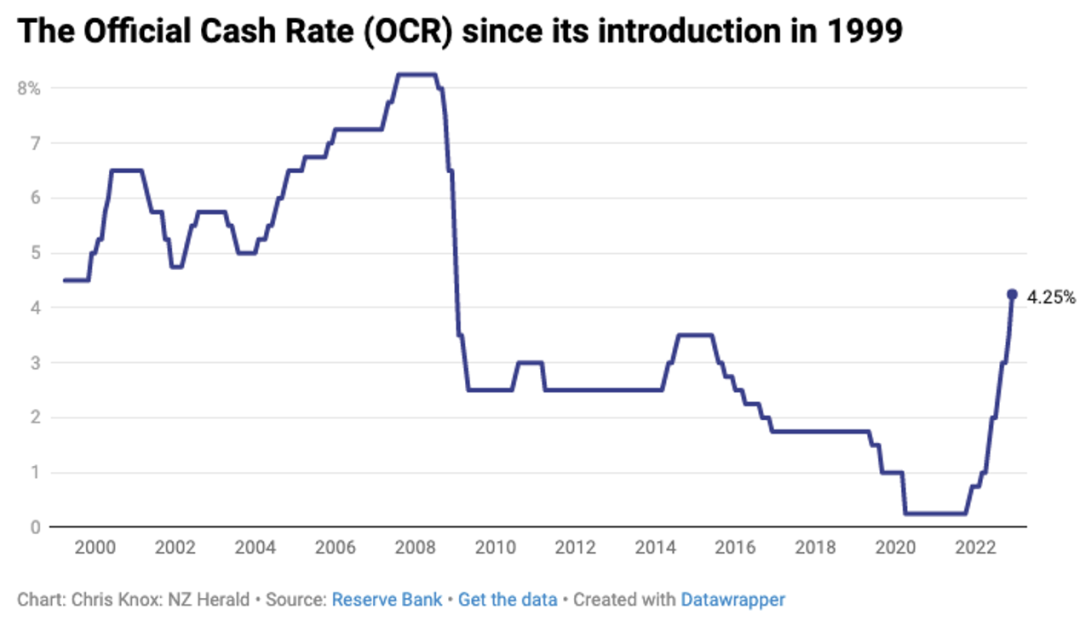
Since 1999, the OCR trend since its introduction
How the Reserve Bank’s rate rise affects most borrowers
Following the rate rise outlined above, the two-year swap rate, which has a major influence on mortgage rates, has risen 28 basis points to 5.30%, while the ten-year swap rate has risen 10 basis points to 4.55%. Although many economists believe financial markets had already priced in 70% of the impact of the Reserve Bank’s 75-basis-point increase, many people are still feeling unprecedented pressure:
First, mortgage rates will soon rise to 7% or higher, further limiting the amount new borrowers can access. Second, with 20% of existing borrowers due to refix their mortgages within the next 6 months, household disposable incomes will face further pressure from both high prices and higher borrowing costs.
In fact, New Zealand’s major banks have all announced rate rises in recent days, which will inevitably affect more borrowers.
Westpac announces rate rises
Westpac today announced increases in its home loan rates of 40 to 64 basis points, effective tomorrow.
Like ANZ, all of Westpac’s fixed mortgage rates will rise above 7%. Its one-year fixed mortgage rate will rise to 7.09%, and its two-year fixed mortgage rate to 7.29%. Floating and offset rates will rise 64 basis points to 7.99%.
Westpac will also raise its savings and term deposit rates. Its one-year term deposit rate will rise 60 basis points to 5.1%.
Industry professionals believe other banks will soon follow suit.
First-home buyers remain keen to borrow a higher proportion of the purchase price
The latest mortgage lending data released by the Reserve Bank of New Zealand shows that 15118 home purchase mortgage applications were approved in October, the lowest total for any October since 2014. Notably, first-home buyers accounted for the highest proportion among the different types of buyers in the current property market, at 22%. The data also shows that they are borrowing as much as possible from banks, with first-home buyers accounting for 75% of banks’ low-deposit mortgage applications.
How first-home buyers’ attitudes have changed since the Reserve Bank’s rate rise

Some first-home buyers hope to buy before their pre-approvals expire
Many real estate agents say the number of first-home buyers in the market is increasing sharply. These buyers are feeling unprecedented pressure: they fear the Reserve Bank’s rate rises will push mortgage rates even higher and hope to secure their first home before their loan pre-approval expires. Otherwise, they may be able to borrow less when they apply again.
One real estate agent said enquiries about entry-level properties had increased noticeably over the past week. Since the Reserve Bank announced its sharp OCR increase, his phone had been “ringing off the hook” with buyer enquiries.
Harcourts Epsom real estate agent Glen Foster said many first-home buyers felt a greater sense of urgency and were trying to buy before their banks’ 90-day loan pre-approvals expired. They were concerned that, following the OCR increase to 4.25%, banks would soon raise the stress-test rates used to assess their ability to repay. Foster said last week’s sharp OCR rise had even prompted one of his buyers to decline to bid at an auction.
Foster successfully auctioned an entry-level property on Blockhouse Bay Road last Wednesday evening. Before he had time to update the listing to show it had sold, he had already received more than a dozen enquiries by email and phone. One prospective buyer told him: “Do you have anything similar? We want to buy. We need to buy before our bank pre-approval expires.” Clearly, this buyer was feeling considerable pressure from the OCR increase.
Meanwhile, another first-home buyer he was helping had also faced a difficult journey. Despite offering NZ$30,000 above their budget, the buyer had missed out on 7 opportunities to purchase, leaving them feeling desperate.
Chase Gray, an agent with Hamilton real estate company Lodge, said he had shown properties to three groups of first-home buyers within a day of the latest OCR increase. He had also noticed a sharp increase in first-home buyers attending open homes for entry-level properties over the weekend.
Chase Gray said he held open homes for about 6 entry-level properties priced below NZ$750,000 in Hamilton last weekend. He was surprised to find that about 15 groups were first-home buyers. He believed everyone understood how significantly OCR increases affected first-home buyers.
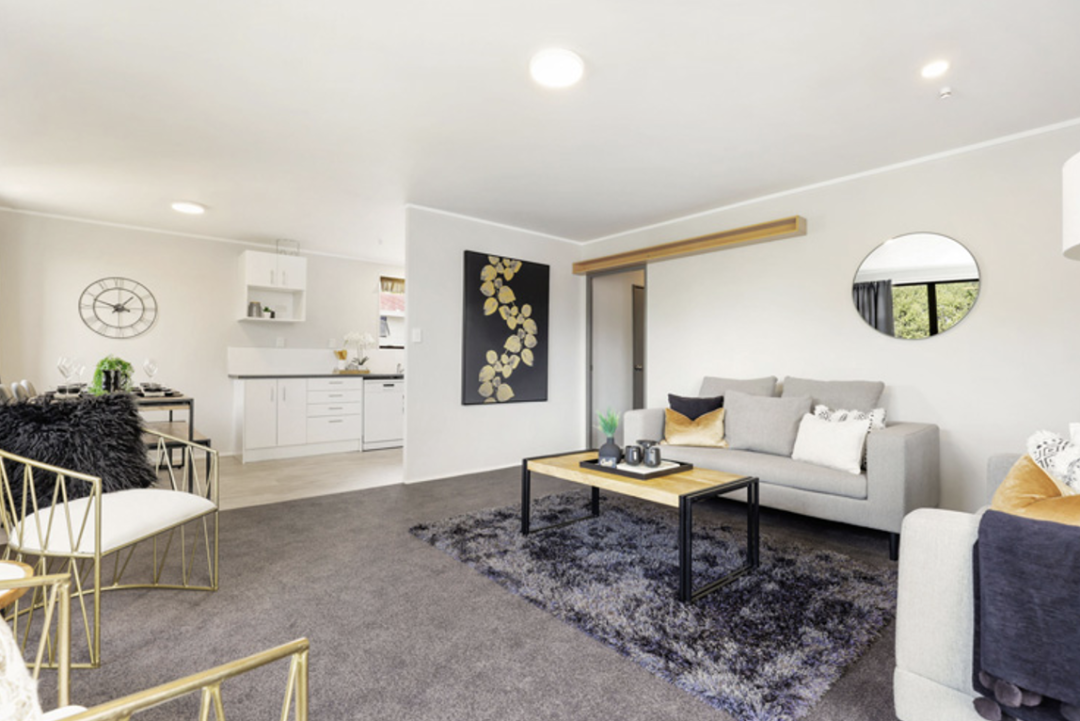
Located in Hamilton Dinsdale, the property at 41A Winning Terrace has an asking price of just 569,000 New Zealand dollars
Unexpectedly, a property he was selling at 41A Winning Terrace in Dinsdale, which had been on the market for 5 months, attracted 5 groups of first-home buyers last week. He considered this a good result for a property that had been listed for so long. Some buyers were beginning to realise that banks were very likely to raise their stress-test rates, prompting many to seek an early purchase.
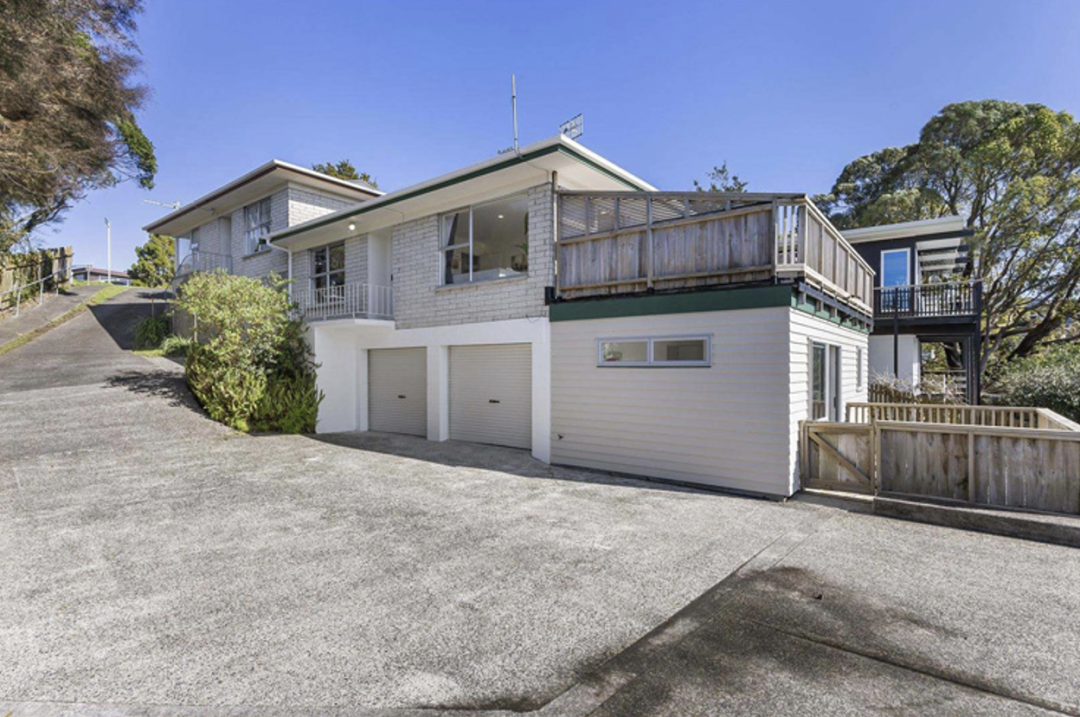
Entry-level properties such as the home at 2/8 Havana Place, Glenfield, priced at$940,000, with three bedrooms, are very popular with first-home buyers
Harcourts Glenfield real estate agent David Ding said one of his clients cancelled a property purchase last Wednesday because they feared they could not afford the repayments resulting from higher mortgage rates. Although he had not seen a large influx of first-home buyers over the past few days, entry-level properties priced below NZ$1,000,000 in his sales area, Glenfield, had attracted considerable interest and offers from several buyers.
David Ding said first-home buyers currently accounted for about 30% of the buyers he dealt with, followed by those upsizing, downsizing or moving overseas. For example, an entry-level cross-lease property with three bedrooms and two living areas at 2/8 Havana Place in Glenfield attracted about 40 groups to its open homes over the previous two weeks. Ding said plainly that entry-level North Shore properties priced between NZ$900,000 and NZ$1,000,000 were certainly more attractive to the market than properties priced at NZ$1,300,000 or NZ$1,500,000.