
Panic is the greatest gift: Auckland faces a 2023 full of opportunities
Last week, the latest survey of real estate agents by economist Tony Alexander and the Real Estate Institute of New Zealand (REINZ) indicated that another wave of house price falls was on the way.

Is the property market facing another downturn?
Possibly. Last week, the latest survey of real estate agents by economist Tony Alexander and the Real Estate Institute of New Zealand (REINZ) indicated that another wave of house price falls was on the way. The report on the latest survey findings noted that REINZ’s House Price Index had edged up 0.2% in month 10, but this now appeared to be an outlier amid the fluctuations.
The report said: “Our monthly survey shows that real estate agents have already observed falling prices, suggesting that monthly price declines are about to return.” Its figures showed that at the end of month 11, the proportion of agents reporting falling prices in their area exceeded those reporting rising prices by 74%, up from 45% at the end of month 10. The survey also found other signs of further cooling, including sharp falls in attendance at open homes and auctions, in stark contrast to October.
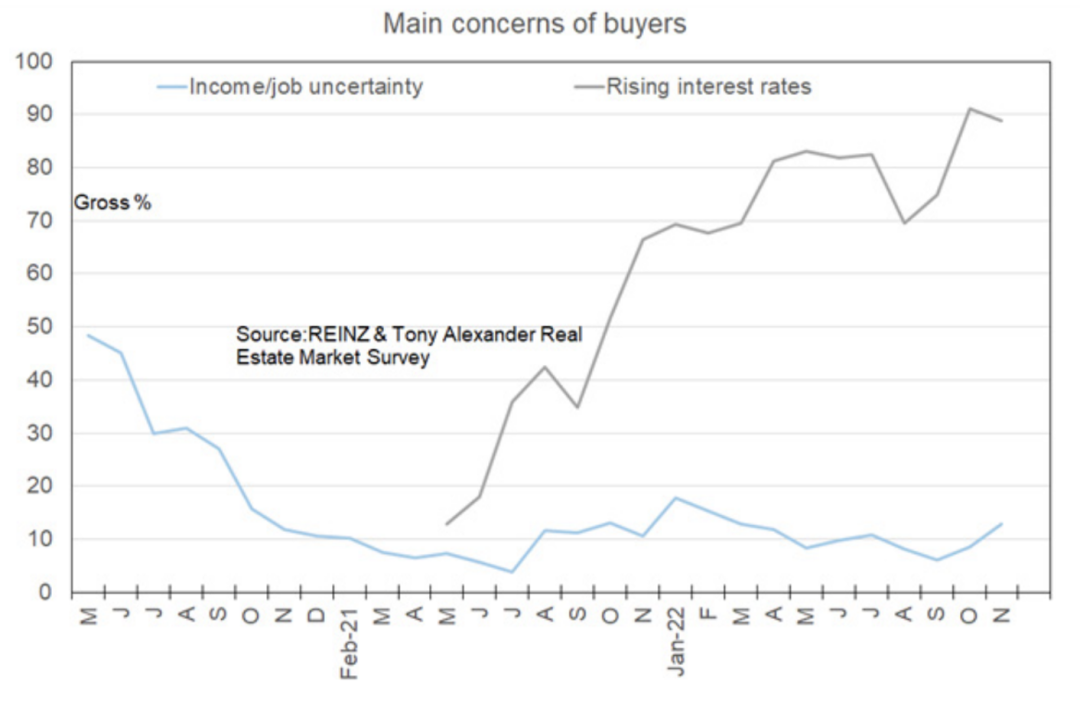
The independent economist attributed falling house prices to the following:
“The central bank recently raised interest rates by 75 basis points, taking the OCR to 4.25%, and forecast in its statement that the OCR would eventually peak at 5.5%. This rhetoric has prompted buyers to step back from the market for now.”
How much further can prices really fall?
This survey provides up-to-date market information, rather than transaction statistics that typically lag by 1–2 months. Yet it merely points out what everyone can see: house prices are still falling. The real question is: how much further will they fall?
Looking at Auckland, further falls may be limited. In its November Monetary Policy Statement, the Reserve Bank of New Zealand forecast a peak-to-trough decline of up to 20%. Auckland house prices have in fact led the national market down and have already fallen 16%.
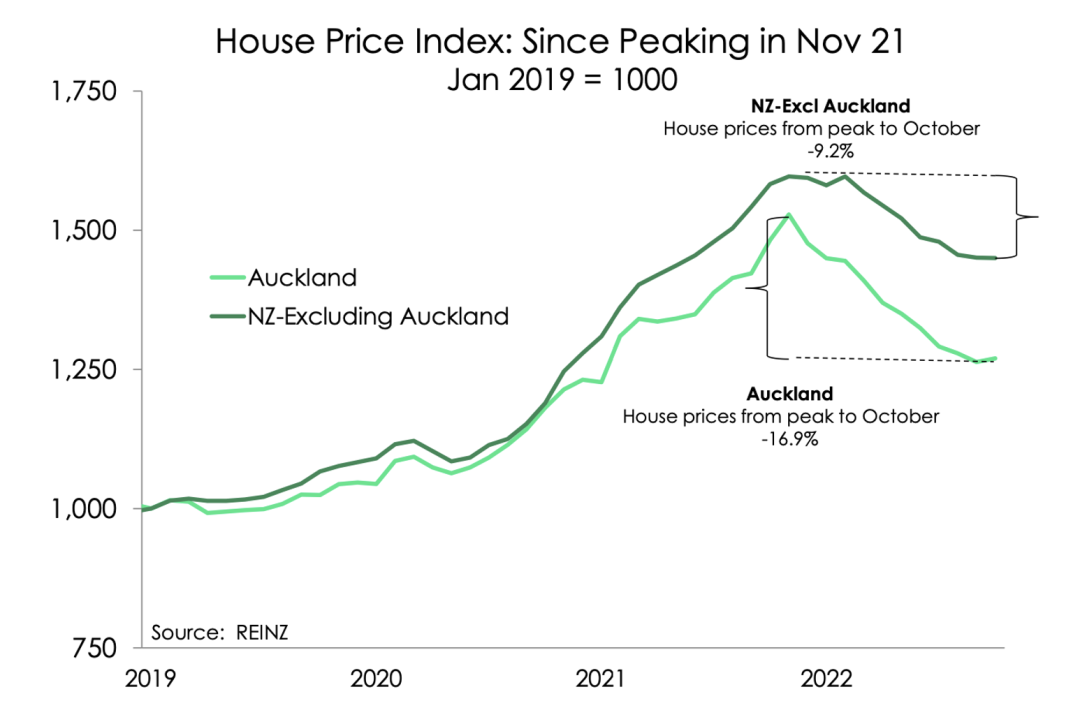
Assuming a normal annual fluctuation of 2–3%, Auckland house prices may already be very close to the bottom. Looking at the long-term trend, with a base of 1000 in 2019, and long-term house price growth of around 6% over the past 20 years, the index would approach 1250 over the 4 years to 2023. It currently sits at around 1260.
Rents are the real driving force
Market house prices emerge from the interplay between buyers and sellers and incorporate both sides’ expectations of the future. With the Reserve Bank of New Zealand continuing to raise rates and mortgage rates rising again, pessimism about the future is normal. Falling prices already reflect these expectations, yet new market opportunities may be taking shape amid the panic.
Let us consider another important property market signal: rental growth. Rents are far calmer than house prices because they contain little in the way of future expectations. Most agreements operate on an annual basis, renting is largely an essential expense, and rents are less affected by financial conditions. They therefore more closely reflect a property’s intrinsic value.
By the end of November, rents had risen 3.6% over the previous 1 year, with rents outside Auckland up 10%.
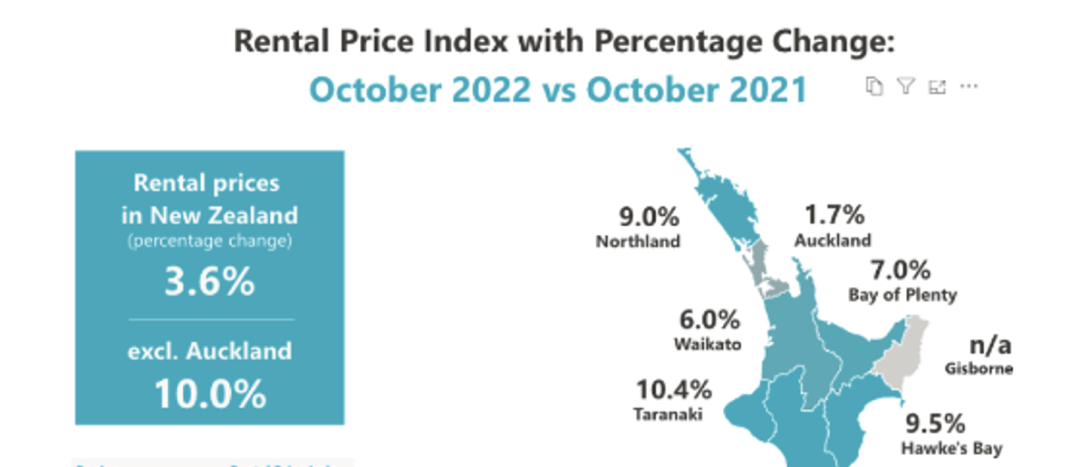
For Auckland, Barfoot & Thompson’s November rental report shows rents rising again after 6 months of stagnation, with average weekly rent reaching a new high.
One-bedroom apartments recorded Auckland’s largest rental increase. Rents for central Auckland apartments had been falling throughout the 3 years since the pandemic began. These apartments serve as temporary accommodation for arriving tourists and people settling long term before they buy a home. Vacancy levels over the past 3 years have improved significantly, filling the biggest hole in Auckland’s rental market. This trend is expected to become more pronounced as the tourist season arrives.
The chart below shows Barfoot & Thompson’s rental report. Compared with the same report from month 1 this year, rents for 1-3-bedroom homes have risen by around 3.2-3.5%, with 1-bedroom homes recording the fastest growth.
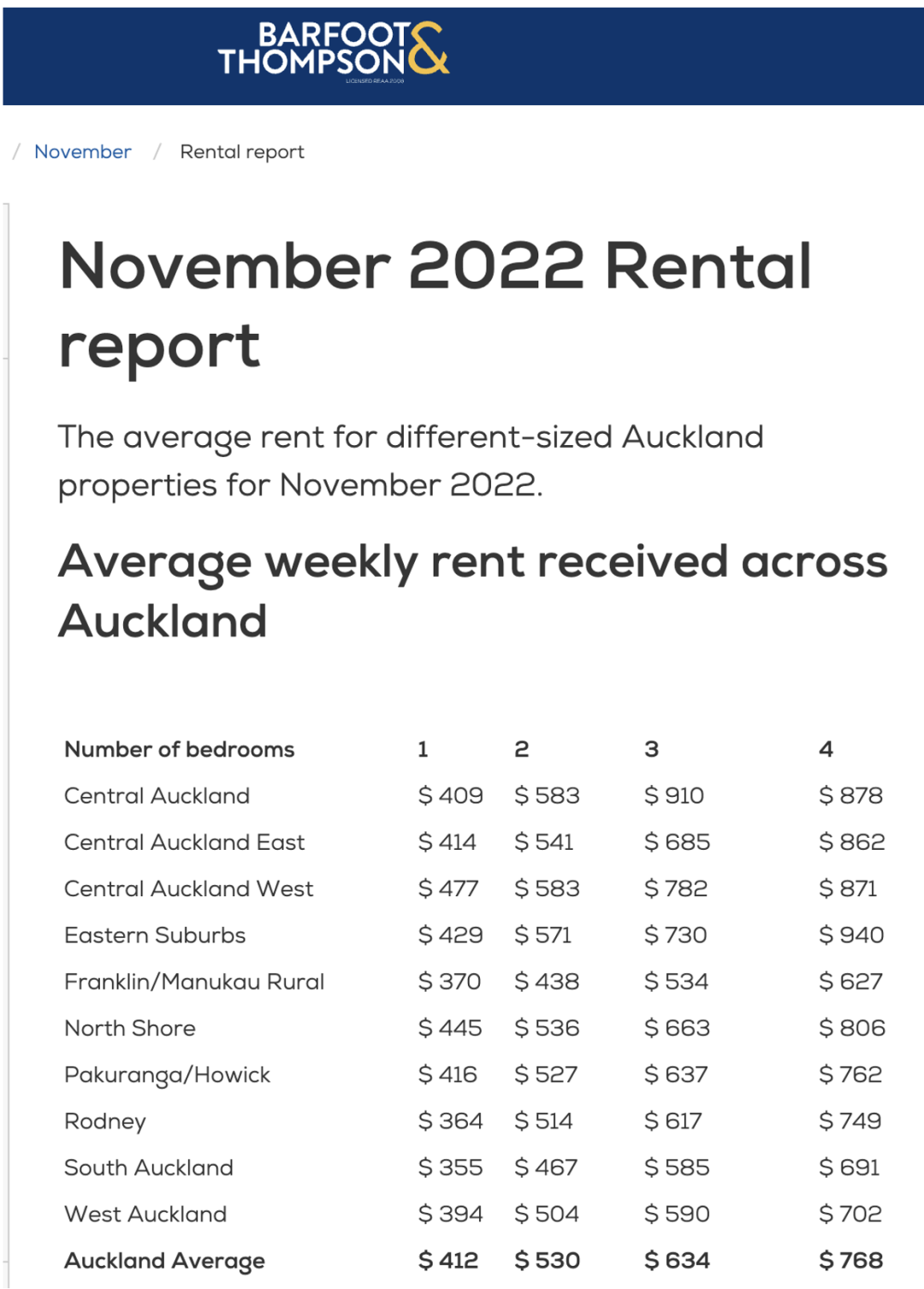
For Auckland, this suggests that the population outflow that began last year has reversed and become a net inflow. The substantial annual rental increase of 10% outside Auckland also indicates that the relative price advantage of housing elsewhere is disappearing. Moving from Auckland to another city is not cheap.
Viewed through rental changes, the market is therefore returning to balance. The approaching 2023 will be a year of balance and opportunity.
Looking ahead to 2023, will the Reserve Bank of New Zealand stand alone?
According to the view of independent statistician Tony cited at the beginning of this article, the new wave of falls stems from the Reserve Bank of New Zealand’s continued rapid rate rises and signals of further accelerated increases towards a higher peak in 2023. Looking ahead, how long can the Reserve Bank of New Zealand keep raising rates in 2023?
As well as considering the Reserve Bank of New Zealand’s own statements, we need to look at other central banks around the world. Their current messages are out of step with those of the Reserve Bank of New Zealand.
1
In early December, the Reserve Bank of Australia announced its latest monetary policy decision, raising rates by just 25 basis points. This was its 2 consecutive increases of 25 basis points, and its 2 consecutive decisions below the market expectation of 50 basis points. The accompanying policy documents included comments suggesting the bank believed it could stop raising rates at any time.
2
Also in early December, the Bank of Canada announced a 50-basis-point increase, below market expectations of 75 basis points. Its accompanying policy documents likewise stated that any further increases would depend on economic conditions, suggesting it too could stop raising rates at any time.
3
The bond market, measured in trillions, usually leads the way. In the US bond market, the 10-year Treasury yield has fallen from a high of 4.5% during the period from month 10 to November to 3.5%. This suggests that the end of rate rises is very close. Although the Federal Reserve remains committed to raising rates above 5%, it is already nearing the finish line.
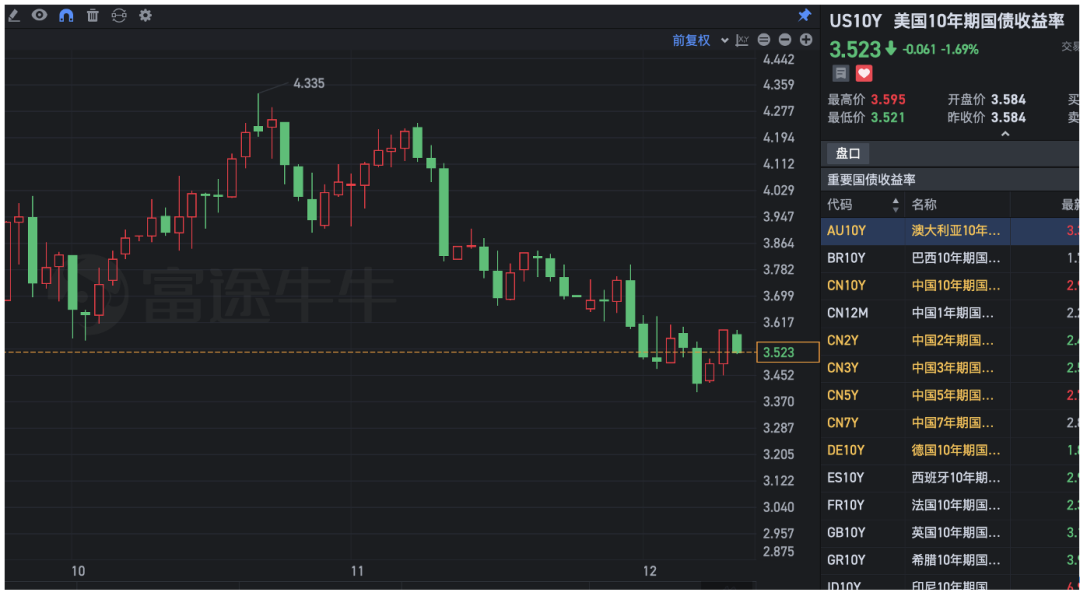
As a small economy without a complete industrial structure, New Zealand is affected by the global economy and can hardly operate independently of it. New Zealand’s monetary policy needs to follow the pace of central banks worldwide. On that basis, even if New Zealand raises interest rates over the coming months, rates may remain at their peak for only a very short time, making the ultimate peak less significant for the market.
Kiwibank’s analysis of future economic scenarios produced the following curves. The green curve in the chart below represents current market expectations for the Reserve Bank of New Zealand. These expectations of continued rapid rate rises have caused the current market panic, but are unlikely to materialise. The blue curve shows the most likely scenario under current economic conditions, while the red curve represents a rapid economic downturn requiring swift rate cuts.
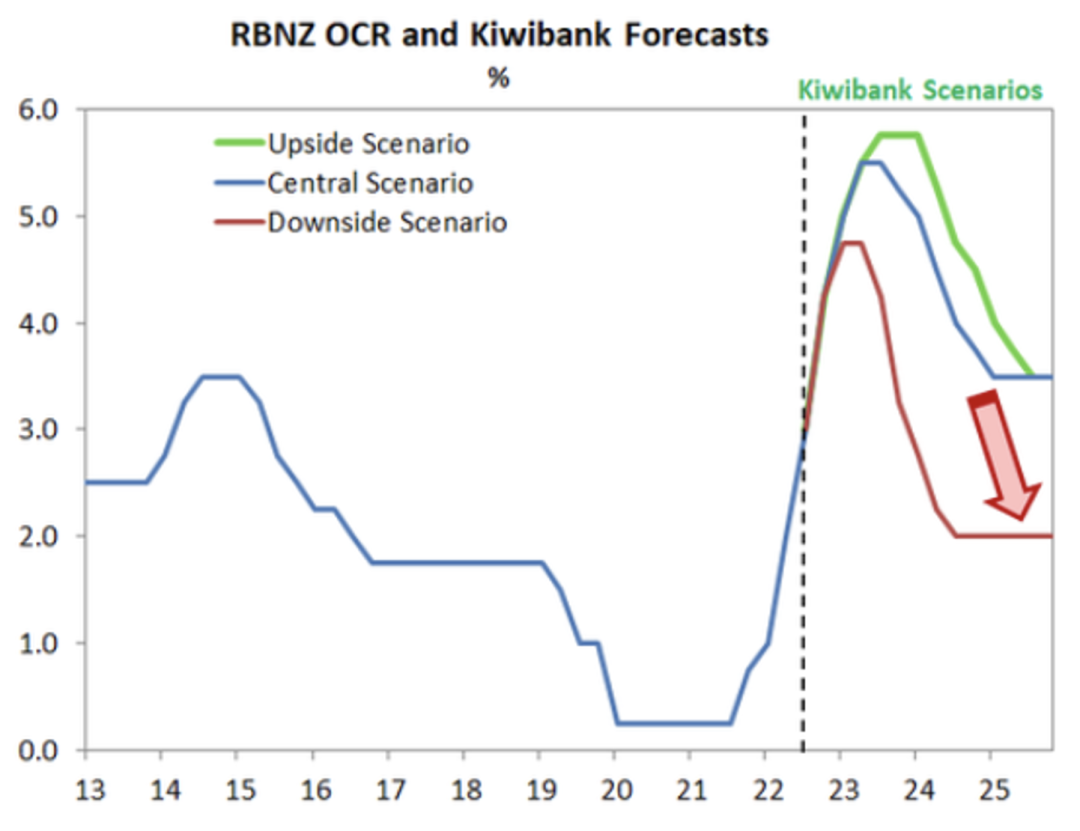
This shows that fear of rapid rate rises is driving further market declines, even though the actual outcome is very likely to be different.
Market fear creates opportunities
For property investors, rental growth is a tangible, slightly lagging measure that reflects current supply and demand in the property market without interference from short-term factors.
House prices, meanwhile, incorporate future expectations. Often, the moment of greatest market fear is also when the best opportunities emerge.
The opposing directions of rents and house prices suggest that once certain factors disappear, such as rate rises, everything will reverse quickly. Rational investors and homebuyers can use the rental market and other data to understand the underlying supply and demand. It is precisely widespread market panic that creates good buying opportunities, allowing experienced investors to build a sound asset base for their future at the bottom of the market.
Looking ahead to 2023, the market is full of opportunities
We can see that:
1
New Zealand property retains its long-term value. Fluctuations in population inflows and outflows are receding, and ongoing conflict in the Northern Hemisphere will give New Zealand more opportunities to attract people. Property can maintain its long-term appeal.
2
With house prices falling and incomes rising, New Zealand’s house-price-to-income ratio has returned to a normal range. In 2021, the ratio was nearly 3 tenths higher than before the pandemic, whereas it is now almost back to its pre-pandemic level.
3
Reopening the borders has brought tangible population inflows and economic recovery. That recovery is continuing, while the traditional tourism and international education sectors still contribute a very small share of New Zealand’s current economic activity.
4
China has only just begun reopening, and the number of Chinese visitors to New Zealand will increase significantly.
5
Whatever happens, the Reserve Bank of New Zealand will stop raising rates in 2023, so the bottom of this property correction will also occur in 2023. The current panic stems from rhetoric suggesting the Reserve Bank of New Zealand will keep raising rates beyond expectations. The international environment does not in fact support this, so the panic is temporary.
6
2023 is an election year. Whether or not the governing party changes, new industry policies are highly likely.
Property transactions have their own characteristics: they take a long time and involve a wide variety of properties, particularly in New Zealand’s diverse residential market. Even experienced investors need considerable time to find suitable properties, negotiate and arrange finance afterwards. A great deal of preparation is needed, and it is easy to imagine 2023 being a busy year for experienced investors.
Owner-occupiers need to consider more possibilities for how their future living needs may expand, making the choice even more complex. With housing stock on the market being absorbed, people continuing to arrive and rents beginning a sustained rise, 2023 may be one of the few windows in which buyers can choose freely.
Trying to identify the absolute bottom is difficult even for experienced people, let alone newcomers to the property market. Searching for that precise low point is more likely to result in missed opportunities. First-home buyers should therefore enter the market once they are ready. Once house prices rise again in the future, small price differences around the bottom will be insignificant.
As we welcome 2023, we wish every reader a 2023 full of opportunities.