
Have house prices in New Zealand's luxury suburbs fallen by more than NZ$300,000? Overall prices are still 25% above pre-pandemic levels
Median house prices in some of New Zealand's most exclusive suburbs are now at least NZ$300,000 below the market peak in November 2021.
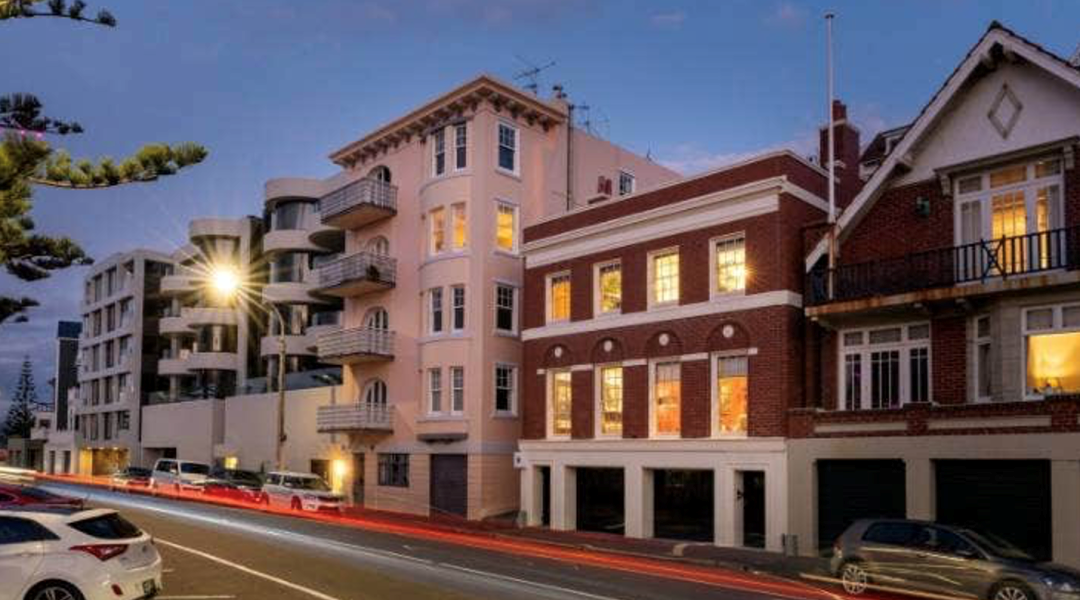
Recent media reports that median house prices in some of New Zealand's most exclusive suburbs are now at least NZ$300,000 below the market peak in November 2021 have sparked widespread public discussion.
According to CoreLogic's quarterly survey of house prices across 923 New Zealand suburbs, the largest house price falls have been in Wellington and surrounding areas. In the year to 1 March 2023, the median house price in this area fell by NZ$389,800, with Plimmerton down NZ$359,950, Southgate down NZ$333,150 and Karaka Bays down NZ$329,900. In Auckland, suburbs with the largest house price declines include Westmere, St Marys Bay and Orakei.

CoreLogic's chief property economist, Kelvin Davidson
CoreLogic chief property economist Kelvin Davidson says the latest report shows house prices in 10 suburbs across New Zealand have fallen by at least NZ$300,000, with most classified as exclusive luxury suburbs. He says it is worth remembering that property in these suburbs was already relatively expensive before prices rose. Owners who bought at the market peak and are now trying to sell will feel the full impact of the substantial price falls. More notably, the declines are not confined to the top end of the market: last year, more than 1/3 of New Zealand suburbs recorded double-digit house price falls, with around 31 suburbs recording declines of at least 20%, of which 30 were in Greater Wellington.
In stark contrast, prices in some smaller urban areas of the South Island rose against the market trend, with 4 suburbs recording double-digit gains. The strongest growth was in Tuatapere in Southland, Reefton on the West Coast, Waimate in South Canterbury and Riverton in Southland, where prices rose by between 10% and 11%. Another 30 suburbs recorded price growth of 5% or more.
{ad}
Expert commentary
Davidson believes incomes per person in regional areas tend to be lower than in the main centres, but so are house prices, and the lower prices in these markets may allow greater price flexibility. The property market faces major challenges, including high mortgage rates for new borrowers and interest rate resets for existing borrowers. He acknowledges that even if house prices and market activity bottom out this year as expected, the property market is likely to remain subdued in 2024. However, suburbs where prices fell first could recover sooner. In other words, areas with the biggest falls could also see the biggest gains in the near term.
Let us look at house price data recently released by another authoritative New Zealand organisation. According to Quotable Value (QV), although house prices nationwide have fallen substantially over the past year, they remain 24.5% above pre-pandemic levels. The national average house price in February 2020 was NZ$722,475, which is NZ$197,891 below the current national average. QV national spokesperson Simon Petersen says that if prices continue falling at their current pace, it could take another two years for them to return to pre-pandemic levels. However, he also calls this a fairly “bold” assumption, as the market is expected to stabilise and recover before then.
Wellington house prices are still 14.7% above their level in February 2020.
He uses Wellington as an example. Among New Zealand's cities, it has been one of the hardest hit by the market downturn. Its average property value fell 21% (NZ$109,609) over the 12 months to February 2023, reaching NZ$854,092, but remained 14.7% above the average in February 2020. The gaps in Auckland and Christchurch are even larger, with prices still more than NZ$200,000 above pre-pandemic levels. Specifically, Auckland's average house price in February was NZ$1,280,000, down 15.3% over the past year but still 19.3% above its level in February 2020. Christchurch's decline was relatively modest: its average price in February was NZ$745,905, down 6.7% annually but 45.3% above pre-pandemic levels.
Expert commentary
Petersen believes that if the market continues declining, it may simply be a matter of time before house prices return to their levels of three years ago. The Reserve Bank of New Zealand's recent increase in the Official Cash Rate, for example, will keep the market on a downward path for now, while rising interest rates and credit restrictions will continue to constrain a recovery. Many prospective buyers will refuse to buy while borrowing costs are so high, while others remain on the sidelines, waiting for the market to bottom out.
Meanwhile, ANZ economists say the market has already completed 2/3 of their forecast 22% price decline. Westpac expects house prices to fall a further 7% over the remainder of this year before the market bottoms out.