
Interest rates are rising and house prices are falling. Does buying now make financial sense? Let's do the sums!
Interest rates are rising while house prices are falling. Which change is greater, and does buying now really make financial sense? Today, YIJU does the sums.

In a property market downturn like the current one, prospective buyers may face a dilemma. Falling prices make homes cheaper and lower the barriers to buying, reducing the deposit buyers need. On the other hand, the recent surge in interest rates has pushed up borrowing costs, limiting what buyers can afford.
Interest rates are rising while house prices are falling. Which change is greater, and does buying now really make financial sense? Today, YIJU does the sums!

For homebuyers, the biggest financial challenges are usually saving enough for a deposit and making mortgage repayments.
According to the latest OneRoof House Price Report, the national average property value fell 11.5% over the past 12 months to NZ$971,000. This NZ$69,000 drop has significant implications for those saving a 20% deposit. Last year, first-home buyers needed a deposit of NZ$208,000. Now, the deposit required has fallen by NZ$15,000. The savings are even greater in more expensive property markets.
Take Auckland, for example. Last year, a 20% deposit based on the city's average house price at the time was as much as NZ$312,000. Now, a 20% deposit is NZ$266,000. In Wellington, the deposit required fell from NZ$265,000 to NZ$200,000 over the same 12 months. In Christchurch, where prices are lower and the market decline has been smaller, the deposit required fell by just NZ$9,000.
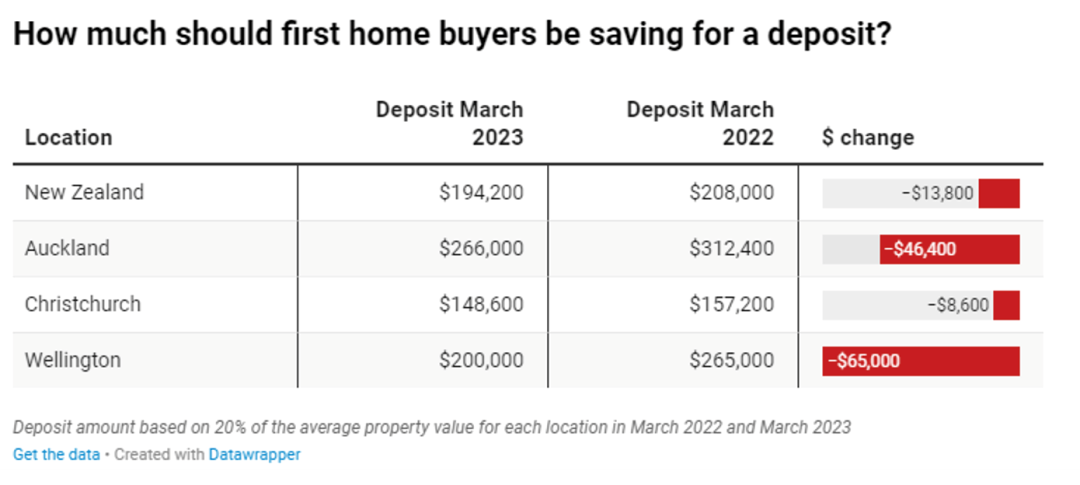
Although deposit requirements have fallen, rising interest rates could offset these price advantages. Specifically, one-year fixed rates have jumped from 2.21% in June 2021 to more than 7% now.
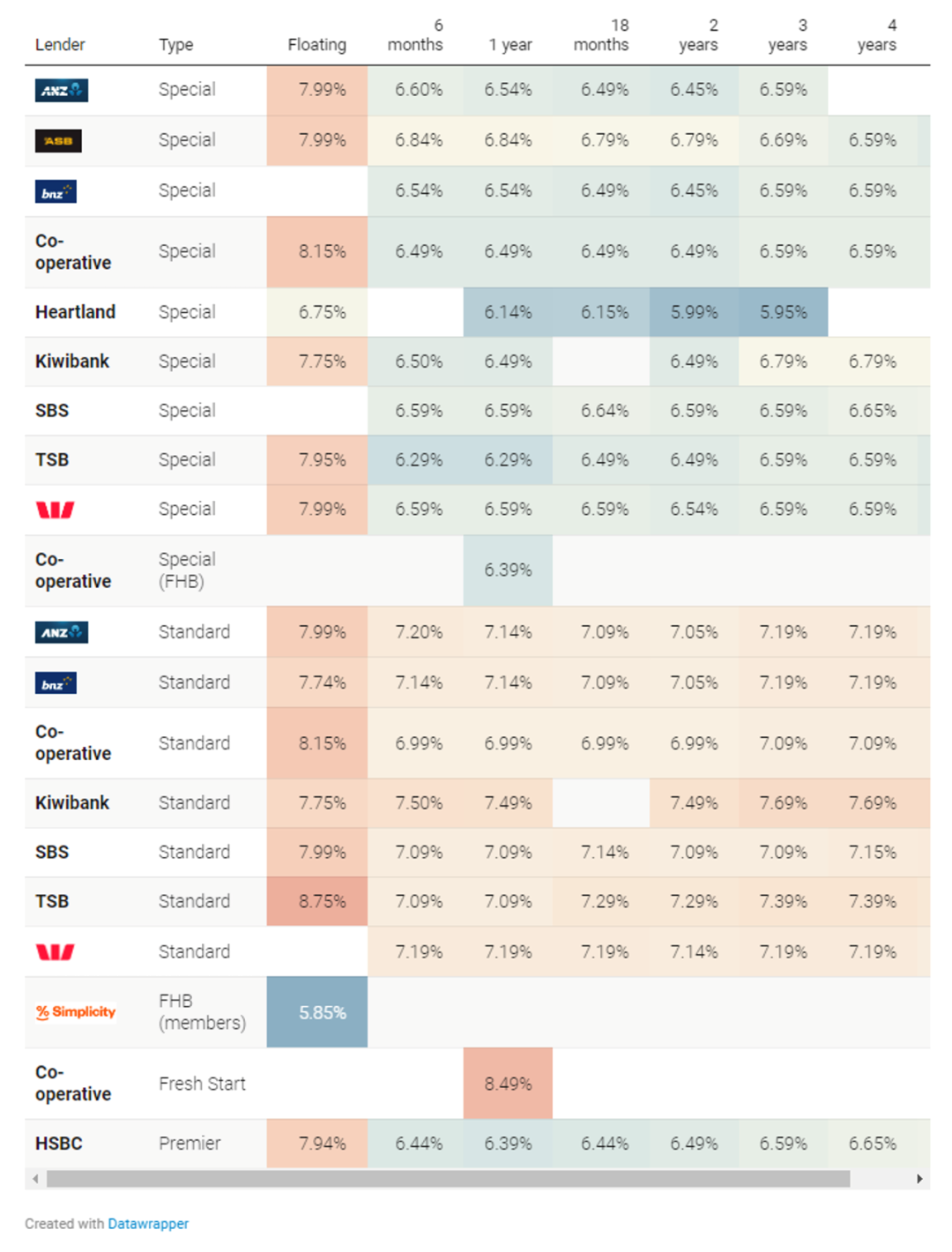
Mortgage rates offered by various lenders. Image source: OneRoof
Mortgage adviser Campbell Hastie says rates fluctuate depending on market competition on the day. However, most homebuyers are getting two-year fixed rates of around 6.5%.
Using the current national average property value of NZ$971,000 as an example, and assuming an interest rate of 6.5% and a 20% deposit, a buyer's fortnightly repayments would be NZ$2,266. In Auckland, fortnightly repayments would be NZ$3,103, compared with NZ$2,333 in Wellington and NZ$1,734 in Christchurch.
Hastie warns that buyers with low deposits—half the standard 20%, or 10%—will face higher repayments. Banks add a low equity margin to their mortgage rates, lifting a rate of 6.5% to 7.25%. In the example above, this would mean fortnightly repayments of NZ$2,751.
So how do repayments in 2023 compare with a year earlier, when the two-year fixed rate was 5.04%? In March 2022, fortnightly repayments nationwide were NZ$2,070, compared with NZ$3,110 in Auckland, NZ$2,638 in Wellington and NZ$1,563 in Christchurch. Clearly, borrowers in some cities now face a heavier burden than they did a year ago.
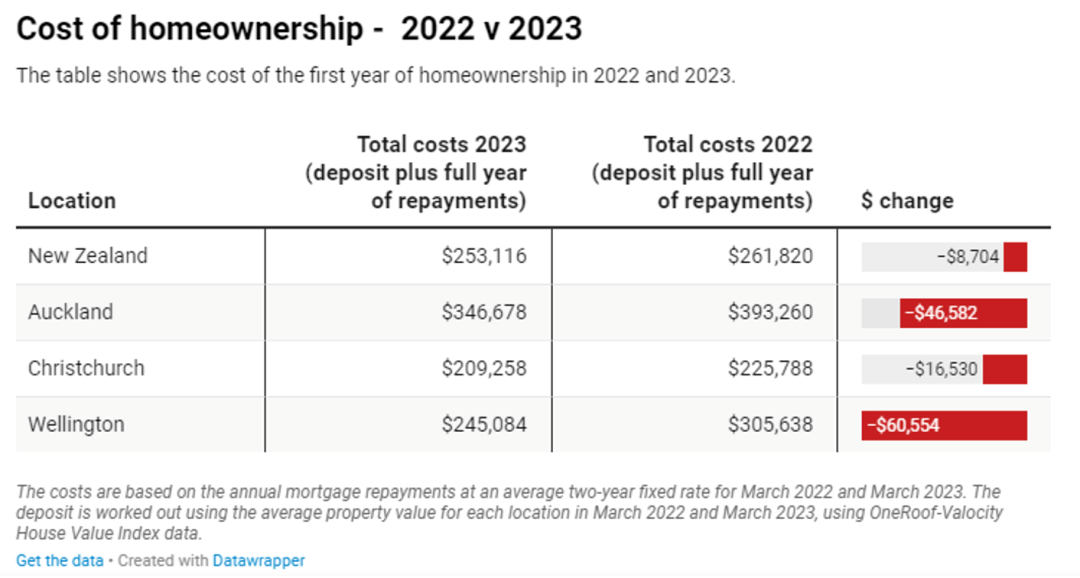
However, when the total cost of buying a home—the deposit and repayments—is taken into account, the increase in mortgage repayments is offset. Compared with first-home buyers who purchased in March 2022, those buying in March 2023 could save NZ$8,704 in their first year of ownership.
In Auckland, buyers in March 2023 would save NZ$46,582 compared with those buying in March 2022, mainly because of the smaller deposit required. In Wellington, buyers in 2023 could save NZ$60,554, while in Christchurch, buyers in 2023 could save NZ$16,530.
In other words, although monthly mortgage repayments have risen, the overall effect of falling house prices means buying now could still save you money.
{ad}
Under the Credit Contracts and Consumer Finance Act (CCCFA), homebuyers' mortgages must be affordable, and all buyers must pass stringent assessments. Unless their income and cash flow change significantly, buyers should therefore be able to comfortably meet their repayments.
Hastie says that when clients seek a mortgage, his advisers go through their bank statements line by line to ensure they can genuinely afford the loan before submitting an application to the bank. Categorising their spending is often an eye-opener for clients. “By doing this, you can identify changes to make so they reach the required level,” he says.
Mortgage repayments are not the only cost homebuyers face. To buy a home, they also need to pay for building inspections, a Land Information Memorandum (LIM) and legal fees. Hastie says buyers need “around NZ$2,500” for legal fees, although some are lucky enough to pay less. “If you're looking at 10 different properties and putting your lawyer through their paces, you may have to pay more. But generally, legal fees are around NZ$2,500,” he says.
Moving also costs money, including removal expenses and setting up utility accounts. Many first-home buyers need to buy furniture, whiteware and curtains. If the house needs renovating, that is another expense, although it can usually wait until finances improve.
Taken together, these figures show that the costs of buying a home include the deposit, mortgage repayments, building inspections, a Land Information Memorandum, legal fees, moving and renovations. Buyers need to understand and weigh up all these expenses. Buying during a property market downturn may save some costs, while rising interest rates may offset part of that advantage.
Before buying, homebuyers should ensure they can afford the mortgage and stay in close contact with their mortgage adviser throughout the lending process. After buying, they also need to consider ongoing costs such as insurance, council rates, maintenance and property management fees. It is therefore essential to assess all the factors and make an informed decision to ensure the purchase goes smoothly and remains affordable.