
Will interest rates peak this year? A recession may already have begun, but hope lies ahead
Interest rates are forecast to peak this year and begin falling, as the outlook for the property market and economy becomes increasingly uncertain

Interest rates are forecast to peak this year and begin falling, as the outlook for the property market and economy becomes increasingly uncertain. ASB senior economist Chris Tennent-Brown says fixed home loan rates could reach a peak of 7% this year.
Meanwhile, property sales activity in New Zealand has slumped, and signs of recession are beginning to emerge. In these circumstances, borrowers need to develop suitable strategies based on their budgets, need for flexibility and goal of reducing interest costs.
{ad}
In the 12 months to February 2023, there were fewer than 61,000 property transactions, the lowest 12-month total since October 1983. The figure is even more striking given that our housing stock is now much larger than it was 40 years ago.
On one side, many buyers may struggle to obtain finance or be forced to abandon their plans because of high interest rates. Even those with sufficient funding are in no hurry to buy, given the ample supply of listings and expectations that house prices have further to fall. On the other side, high employment means sellers face relatively little pressure to sell. All these factors have contributed to low transaction volumes.
It seems New Zealand’s property market went from red-hot to ice-cold shortly after the Reserve Bank of New Zealand first announced interest rate increases. So how much further can commercial bank interest rates rise? When will they begin to fall?
ASB senior economist Chris Tennent-Brown says fixed home loan rates could peak above 7% this year before beginning to fall. How much further they need to rise will depend on several factors, including the Official Cash Rate, bank funding costs and inflation, he says.
‘Based on the ASB economics team’s expectation that the Official Cash Rate (OCR) will peak above 5%, together with our assumptions about bank funding costs and inflation forecasts, we expect most fixed-term mortgage rates to reach around 7% or slightly higher over the coming year. Floating rates could peak at around 9%. However, as is often the case, the outlook is far from certain.’
Although this may be a blow to people who fixed their mortgage rates at 2% or 3% in recent years, he says rates could still settle at or below their long-term average over the past 20 years, rather than reaching pre-global financial crisis levels.
For example, someone borrowing NZ$500,000 over 25 years would pay NZ$1630 a fortnight at an interest rate of 7%, compared with NZ$1035 a fortnight at 2.5%.
How many years should you fix for?
Most longer-term fixed rates are currently cheaper than shorter-term rates, signalling expectations that the economy will slow and inflation will be brought under control. ‘Longer-term fixed rates therefore currently offer greater interest rate certainty at a slightly lower cost than shorter-term rates.
‘For those wanting to establish long-term interest rate certainty now, fixing for four or five years not only offers the cheapest rates currently available, but also rates slightly below the 20-year average. Long-term fixed rates also provide some protection against higher interest rates, which could be useful if rates rise further or remain high for longer than we currently expect.’
However, fixing for three years or longer could prove more expensive if interest rates fall faster than expected. Over a five-year period, fixing for shorter terms could still be cheaper overall, he says.
‘Ultimately, it is a trade-off, weighing mortgage interest costs and longer-term rate certainty against the flexibility of shorter terms. Mortgage rates could fall further for various reasons, ranging from Reserve Bank action to a deteriorating economic outlook. However, we believe there remains a significant risk of mortgage rates rising over the coming year. Indeed, entrenched high inflation could keep the OCR higher for longer than expected. We recommend that all borrowers choose a strategy suited to their individual budgets, including their ability to withstand rate changes, and their need for flexibility, while also pursuing the goal of reducing interest costs.’
A recession may already be here
The weak property market is also being affected by a very real possibility: we may already be in recession. Although the latest New Zealand Activity Index (NZAC) rose 1.6% year on year in February, translating these figures into implications for quarterly GDP makes the picture more concerning. In fact, assuming there is no sudden surge in the NZAC in March, the statistical relationship suggests GDP could fall by around 1% this quarter, which would mean a recession(GDP already fell 0.6% in the fourth quarter of 2022).
There is still some uncertainty around this forecast. But even if we are in a technical recession, it may come as little surprise to many people, who are already feeling its effects in daily life. On the positive side, if a recession is already here, we may move through this phase sooner than expected, brightening the economic and housing outlook for the second half of the year.
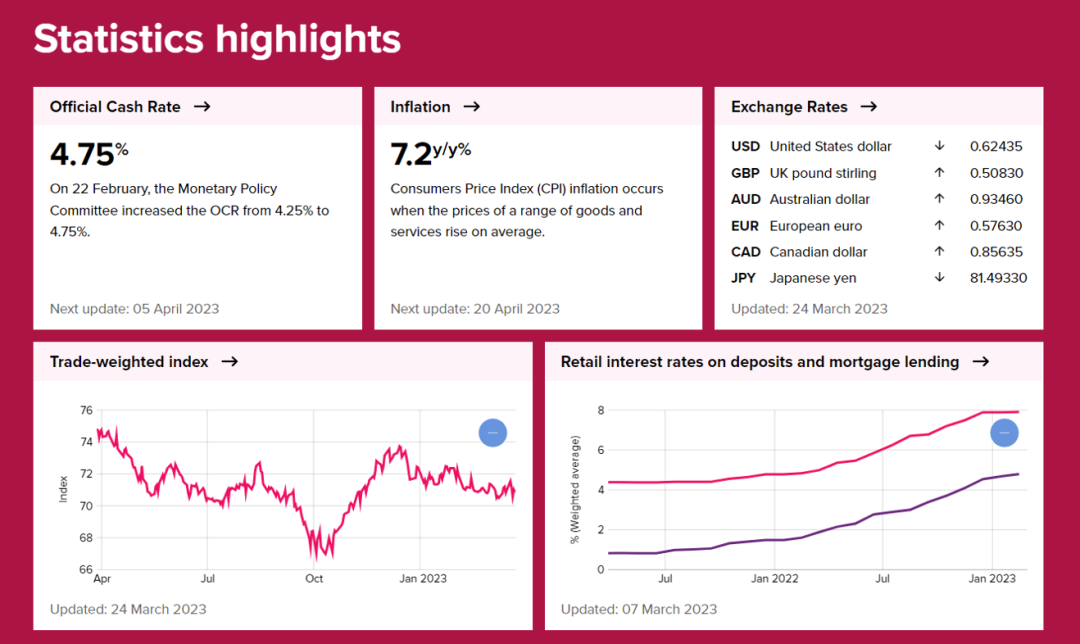
Under the Reserve Bank of New Zealand’s plan, a recession and easing inflation would be followed by a fall in the Official Cash Rate. If everything goes to plan, the property market may not be far from emerging from its trough.
In the current uncertain economic and property market environment, borrowers need to make informed decisions based on their individual needs to prepare for possible changes. At the same time, monitoring future economic and housing market trends is essential to anticipating and responding to potential risks.