
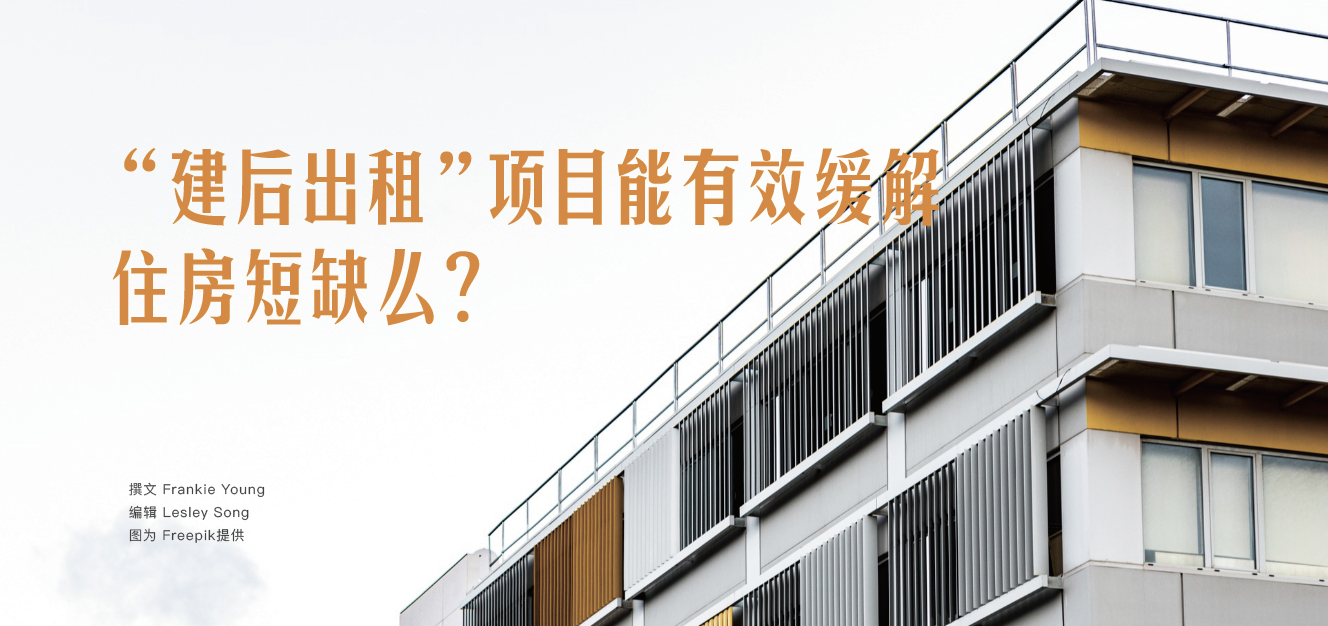
Can build-to-rent developments effectively ease the housing shortage?
In August 2022, Housing Minister Megan Woods announced that certain types of new and existing build-to-rent (Built to Rent , BTR) developments would be permanently exempt from interest limitation rules. “To qualify, developments need to offer tenants leases of at least 10 years. Tenants can request shorter agreements if they wish, and the development will still qualify for the exemption.” This tax concession brought BTR developments back into the spotlight in New Zealand, following the concept’s initial introduction in 2019.
In August 2022, Housing Minister Megan Woods announced that certain types of new and existing build-to-rent (Built to Rent , BTR) developments would be permanently exempt from interest limitation rules. “To qualify, developments need to offer tenants leases of at least 10 years. Tenants can request shorter agreements if they wish, and the development will still qualify for the exemption.” This tax concession brought BTR developments back into the spotlight in New Zealand, following the concept’s initial introduction in 2019.
What are BTR developments?
BTR is an investment product comprising purpose-built medium-to high-density housing designed to provide tenants with stable, long-term tenancies, such as retirement villages and student accommodation. Many people equate BTR with multi-unit rental housing, but not all multi-unit rental housing qualifies as BTR。
In New Zealand, BTR may still be a relatively new concept, but it is a very common asset class overseas, including in the UK and Europe. Unlike privately owned buy-to-let (Buy-to-Let) properties, BTR developments are generally owned and managed by large companies or trust funds rather than individual landlords, with a professional property management company overseeing operations to provide high-quality added services and facilities. BTR providers are more willing to offer long-term leases, and tenants have certain rights to make modest alterations to their homes. To achieve better returns, BTR providers pursue the long-term, sustainable goals of improving housing quality and delivering a positive tenant experience, creating a mutually beneficial relationship between service providers and customers.
Long-term rental investments such as BTR are essential to providing stable, affordable housing options for individuals and families in need. Expanding BTR developments can substantially increase rental housing supply and offer stable, predictable housing costs, enabling tenants to plan their lives and finances accordingly. This stability helps prevent housing insecurity (housing insecurity), which can negatively affect people’s mental health and quality of life, in turn affecting a city’s social and economic development.
What policy support is available for BTR developments?
Many industry professionals believe BTR is a direct and effective solution to easing our housing shortage. For years, the New Zealand Property Council (Property Council) has been discussing with the Government the potential for developing BTR . A few simple, cost-effective policy changes could put BTR on a path to steady growth.
These policy changes include:
1. Establishing a dedicated BTR asset class, similar to student accommodation and retirement villages, to enable overseas investment;
- Allowing BTR developments to claim interest deductions (Interest Deductibility ) and depreciation (Depreciation);
3. Amending the Residential Tenancies Act so that BTR owners do not need to notify tenants when they need to sell.
What should you consider when investing in BTR developments?
Tempted to invest in a BTR development? Assessing whether a project is worth investing in requires a thorough examination of quality, convenience, customer service, location and community, flexibility, and security of tenure:
Quality:
As a long-term rental investment, B TR development owners or management companies must actively provide and maintain high-quality housing options to attract tenants and improve returns. “High quality” includes, but is not limited to, ensuring a safe, secure and well-maintained living environment. Quality housing also helps prevent health problems and reduce repair and maintenance costs.
Convenience:
B TR developments must be located where they can attract tenants. Generally, BTR developments should be in established, accessible areas with essential amenities such as public transport, shops, schools and healthcare facilities. This helps reduce tenants’ transport costs and improve their overall quality of life.
Customer service:
Excellent customer service is essential for BTR. Landlords and property managers should respond to tenants’ concerns and complaints with timely, effective solutions. Good customer service helps build positive relationships between landlords and tenants, encouraging long-term tenancies and reducing tenant turnover.
Community:
BTR developments’ communal facilities should help create a sense of belonging and social support for tenants, with shared recreation areas, activity spaces and meeting rooms, for example. Properties also regularly organise events such as Christmas dinners and quiz nights, helping tenants feel part of an extended family.
Security of tenure:
BT R developments offer tenants secure, predictable tenancies. Their owners’ clear purpose means they can offer long-term leases. Security of tenure helps tenants build stable lives.
Flexibility:
BTR offers tenants flexibility to change their living arrangements as their needs evolve. This includes adding or removing tenants, ending leases early, allowing pets, and moving between units without having to relocate to another area.
A look at quality BTR developments
New Zealand already has a number of completed BTR properties and others under development. Prominent examples include Park Tower in Grafton, the Modal apartments in Mt Albert, and 295 BTR apartments in the Sylvia Park precinct.
Park Tower benefits from nearby amenities and public transport, while providing tenants with safe, stable accommodation and a sense of belonging. The apartments offer on-site property management, concierge and security services, along with up to 22 shared spaces, including a media room, casual workspaces, a games room, lounges and barbecue areas. A range of residents’ events is also held regularly.
Completed in month 10 of 2020 amid the uncertainty of Covid, Modal was developer Ockham Residential’s first BTR development, adding 32 one- and two-bedroom apartments to Auckland’s housing stock. Conveniently located near bus and train routes, it also offers tenants Cityhop car sharing as an alternative transport option, so no car park was included in the design. Modal also has two indoor bicycle storage rooms, making it well suited to people who primarily travel by bike.
Kiwi Property, the owner of Sylvia Park shopping centre, is developing 295 BTR apartments in the Sylvia Park precinct. They are expected to be completed in 2024, when the first tenants will move in. The development features stable yet flexible tenancies, an excellent location and management team, and comprehensive amenities and living facilities within and around the precinct.
Clearly, the living experience in these apartments differs from that offered by surrounding, traditionally privately owned investment apartments. This is precisely what BTR developments aim to achieve.
Although BTR may not be a silver bullet for the housing crisis, it undoubtedly plays an important role in addressing it. Many organisations are prioritising improvements to housing supply, and BTR is part of the solution. Every additional home brings New Zealanders another step closer to rebalancing housing supply and demand. Many industry advocates are therefore calling on the Government to redefine BTR in New Zealand to make investment easier. For example, aligning the tax treatment of BTR developments with that of similar large-scale commercial property investments could encourage more investment and accelerate development, resulting in more homes.