
House sales rebound! Is the market improving? But the recession could be deeper…
The latest figures from the Real Estate Institute of New Zealand show that house sales rebounded in March
House sales rebound across New Zealand
The latest figures from the Real Estate Institute of New Zealand show that house sales rebounded in March, following what was described as one of the worst months in property market history.
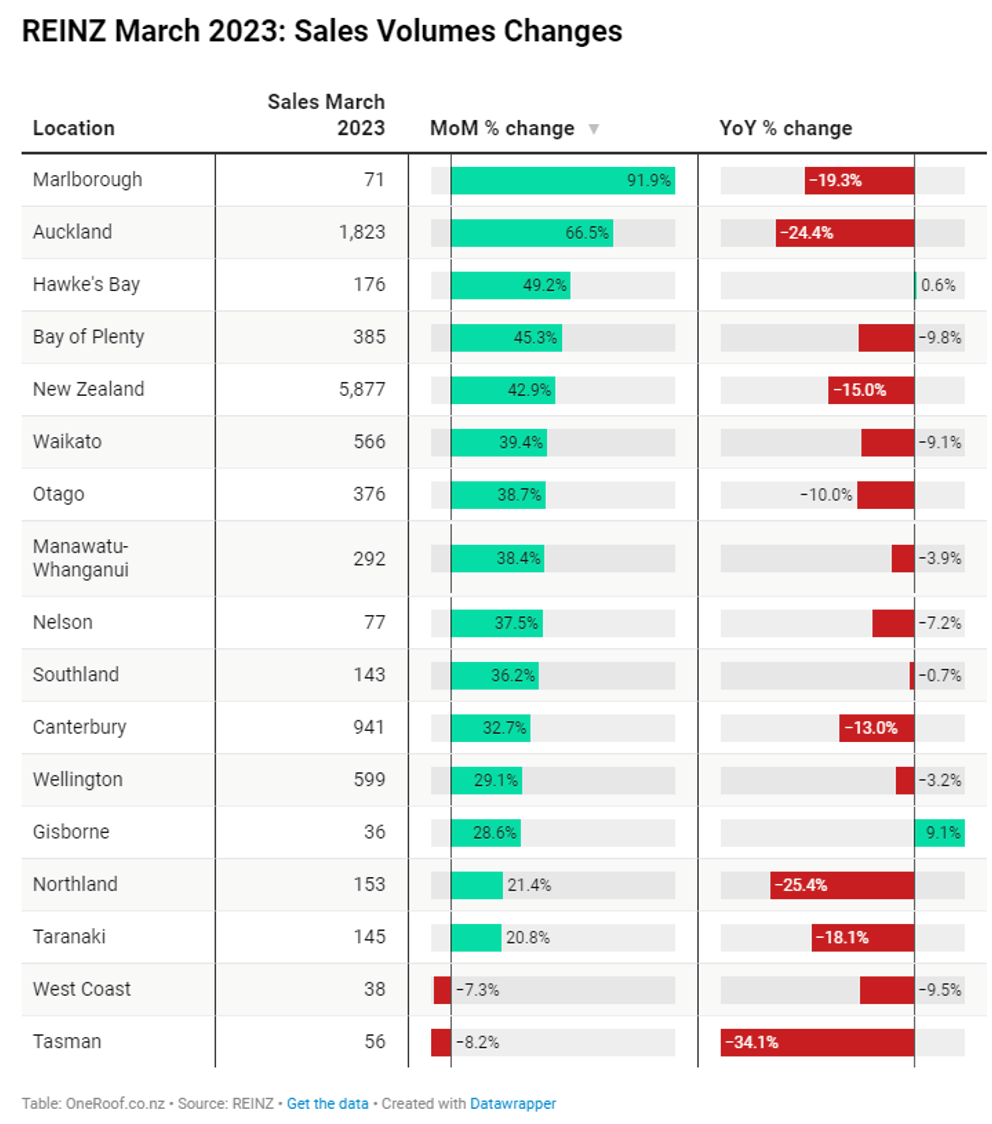
3 Total sales for the month rose 42.9% from the previous month to 5877 homes, suggesting that the market downturn may be easing.
Every region except the West Coast and Tasman recorded a month-on-month increase in sales, while Gisborne and Hawke’s Bay also recorded year-on-year increases.
In Auckland, although sales were still substantially lower than a year earlier, they rose 66.5% from the previous month to 1823 homes.
This increase may reflect the impact of extreme weather on house sales in February, which contributed to a weak summer overall.
REINZ chief executive Jen Baird said:
“Although we saw the property market pick up in March, market activity was relatively weak this summer. We can see that prices have eased and homes are taking longer to sell. Buyers are taking a wait-and-see approach and negotiating, with some even waiting for prices to fall further.”
House prices rise across much of New Zealand
REINZ data also showed that the national median house sale price rose 1.3% (NZ$10,000) from the previous month to NZ$775,000.
In March, median sale prices on the West Coast and in Southland also rose year on year, while Canterbury’s median sale price was just NZ$20,000 below its level at the end of summer in 2022.
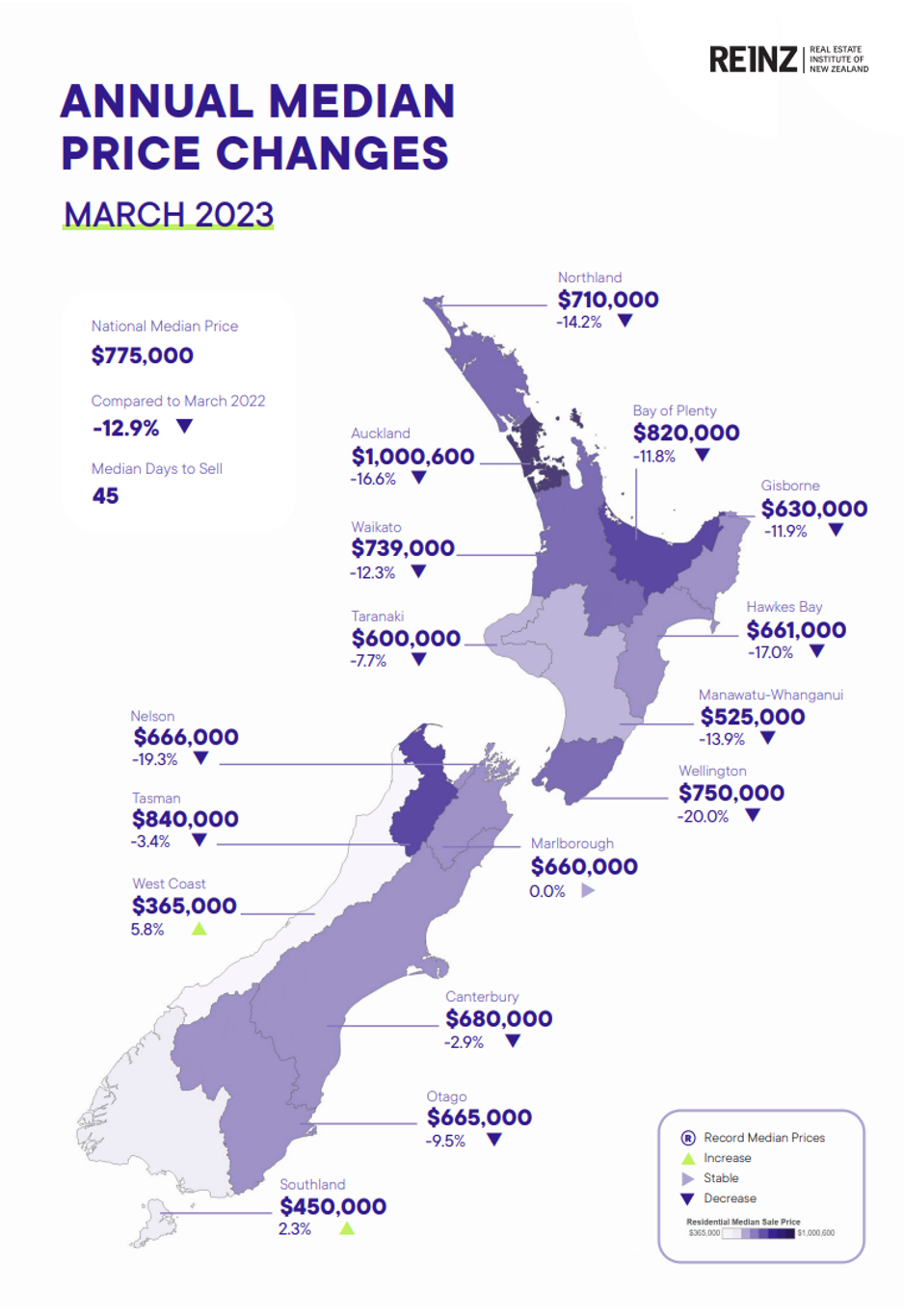
However, house prices in Auckland and Wellington remained under pressure, with these regions recording the largest year-on-year falls, of NZ$199,400 and NZ$187,000 respectively. Auckland’s median house price currently stands at NZ$1,000,600, still above a million dollars but down 22.0% from its peak.
{ad}
In March, median days to sell fell month on month in every region except Gisborne and Marlborough. Nationally, the median fell by 15 days to 45 days.
REINZ chief executive Jen Baird said:
Those “motivated to sell are responding to the market with more realistic timeframes and prices, and people who need to sell are still selling.”
The recession could be deeper
As is widely known, the Reserve Bank of New Zealand’s series of interest rate increases is intended to bring inflation under control. By raising rates, the central bank can reduce consumption and investment and encourage saving, thereby controlling inflation. However, this will also cause a recession as business costs rise, consumer spending falls and the risk of debt defaults increases. The Reserve Bank of New Zealand has openly acknowledged that it is deliberately engineering a recession.
The central bank forecasts that New Zealand’s economy will contract by 1% over the 12 months beginning in April, then stagnate for six months before returning to growth.
But according to ASB economists’ latest economic forecasts, New Zealand’s recession could be deeper than initially expected, with the economy now forecast to contract by 2% by early next year.
ASB chief economist Nick Tuffley said there was a clear possibility that the recession would be deeper than the central bank had forecast.
“Their baseline forecast is for the economy to contract by 1%, but they made that forecast before learning that gross domestic product fell 0.6% in the fourth quarter. That means they are already halfway there. In fact, from what we can see, the economy was slowing faster late last year and in the first half of this year than the central bank expected. Even in their just-released April statement announcing an increase in the Official Cash Rate (OCR), they said they expected positive growth in the first quarter of this year, but we think that figure could still be negative.”
He believes GDP should be slightly above 3% by 2025. “We do not expect GDP to return to its 2022 peak until early 2025.”
For ordinary people, a recession mainly means higher unemployment, lower incomes, shrinking wealth, greater debt pressure and a lower quality of life. Those most affected will therefore include people at risk of losing their jobs, low-income households, borrowers and homeowners.
“Some of these effects will be more challenging for low-income households that lack financial reserves and flexibility, and sometimes even a hedge against inflation.” He said households with mortgages would also face mounting pressure during a global economic downturn.
Tuffley said inflation would remain above 7% in the first half of this year and might not return to the central bank’s target range of 1% to 3% until 2025.
Will the central bank keep raising interest rates? Will New Zealand’s economy really continue to contract? The latest inflation figures will be released this Thursday, and they may give us an early indication of the answers.