
How will this Thursday's Budget affect interest rates? Will 24 May bring the Reserve Bank's final rate rise?
The Reserve Bank of New Zealand will soon announce its latest monetary policy decision on 24 May, while the government will unveil its latest Budget this Thursday (18 May)
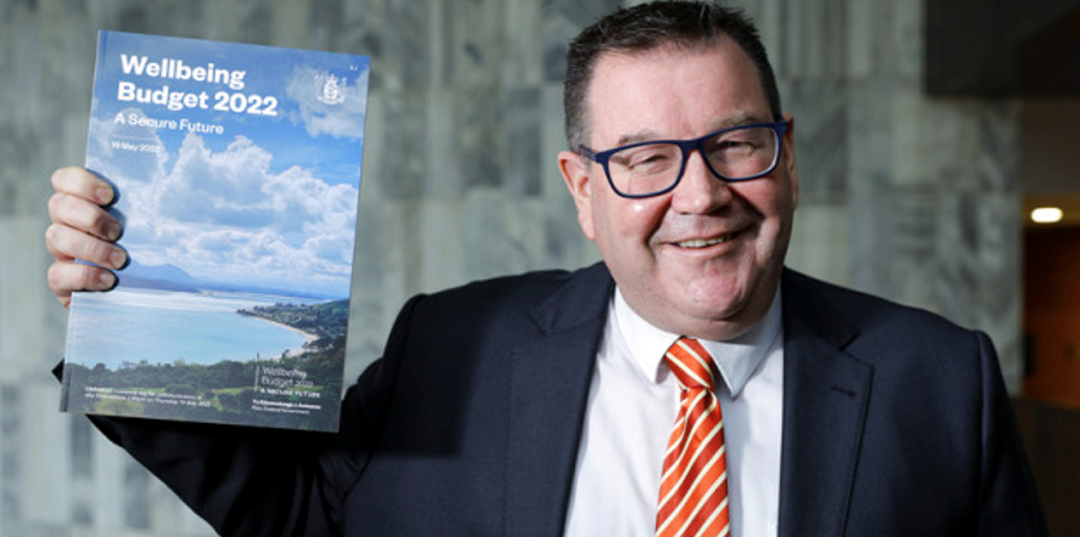
This month, countless economists and members of the public are focusing on the Reserve Bank and the government. The Reserve Bank of New Zealand will soon announce its latest monetary policy decision on 24 May, while the government will unveil its latest Budget this Thursday (18 May).
Some commentators say they have little expectation of the Budget, as the government has already signalled that the Budget announced on the 18 of this month will be a “no-frills” one. Increased spending in some areas, such as flood recovery and rebuilding, will need to be funded from elsewhere.
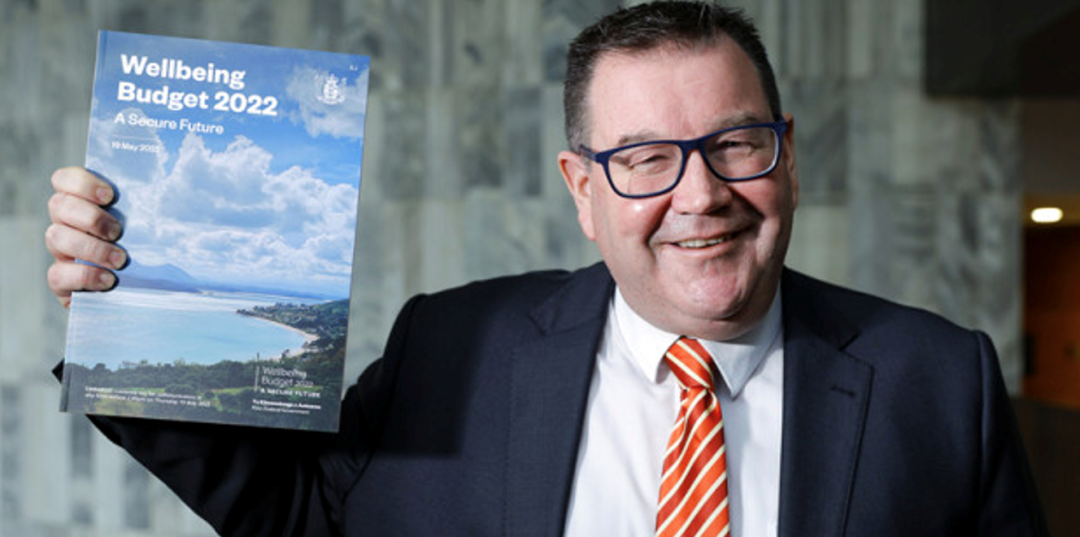
This year's Budget is unlikely to give Finance Minister Grant Robertson much to smile about
The Reserve Bank's surprise 50-basis-point rate rise last month was widely interpreted as a warning to commercial banks that had proactively lowered mortgage rates to attract new customers. Most major commercial banks now predict that the Reserve Bank will raise the Official Cash Rate (OCR) by 25 basis points to 5.5%, and expect this to be the final increase in the current cycle. The Reserve Bank had previously indicated that the OCR would peak at 5.5%. Most economists believe interest rates have now reached their peak.
This may be good news for the many mortgage borrowers refinancing over the coming months, but the market may not necessarily be convinced. The latest Consumer Price Index (CPI) shows that New Zealand's annual inflation rate remains high at 6.7%, while strong employment figures may suggest the economy can withstand the challenge of higher interest rates.
{ad}
New Zealanders' cost of living will be a major focus of this Budget, particularly in an election year. However, Infometrics chief executive and principal economist Brad Olsen believes the Budget is unlikely to offer any new policies favourable to landlords or property sector stakeholders, given that the governing party has introduced policies in recent years such as removing interest deductibility for rental property income and introducing Healthy Homes requirements.
He believes the Budget is more likely to focus on reducing the cost of living. He expects the government may signal support for the construction industry, but major property policy changes may only be announced ahead of the election on 14 October.
Olsen acknowledged that the contents of this Budget are likely to influence the Reserve Bank of New Zealand's monetary policy decisions over the coming months.
In their latest weekly economic report, ASB economists said several key data releases would need attention ahead of the OCR announcement on 24 May:
New Zealand's net migration figures for March and the Reserve Bank of New Zealand's inflation expectations survey. They believe both will indicate that the Reserve Bank's aggressive rate rises are nearing an end. The economists explained that strong net migration would continue to increase labour supply and put substantial downward pressure on wage growth. Inflation is also expected to continue easing. They forecast that the Reserve Bank will raise the OCR by 25 basis points on 24 May and hold it at 5.5% until the second quarter of 2024, before gradually reducing it to 3% by mid-2025.
Kiwibank economists also predict a 25-basis-point increase at the end of this month and believe it will be the final rise in this cycle. In their weekly report, they said “the end of rate rises is approaching” and expressed concern about the outlook for the labour market.
In its Financial Stability Report released in May, the Reserve Bank of New Zealand noted that although only a small proportion of borrowers were currently struggling with higher interest rates, debt-servicing costs would continue to rise as more borrowers refixed their mortgages at higher rates. This would increase financial pressure on households, which would face a harsh test from rising unemployment. Looking ahead, it expected the labour market to begin easing, with unemployment starting to rise in the middle of this year and reaching a peak of 5%–5.5% in 2024.

Westpac chief economist Kelly Eckhold said New Zealand was approaching “a long-awaited turning point”, as the results of the Reserve Bank of New Zealand's efforts to curb demand and inflationary pressures would gradually become apparent. In Westpac's weekly economic report, he wrote that easing inflationary pressures would create more room for interest rate cuts in 2024 and 2025. He said that while there was currently little difference between mortgage rates for shorter and longer fixed terms, longer terms offered greater certainty over repayments, even though they considered rates for fixed terms longer than three years to remain too high.