
Revealed: where in New Zealand are house prices falling the most? Are you ready to seize this buying opportunity?
As the central bank's successive interest rate rises take effect, sellers are cutting property prices under mounting market pressure
As the central bank's successive interest rate rises take effect, sellers are cutting property prices under mounting market pressure. The latest research from OneRoof shows that of the more than 62,000 residential properties listed on OneRoof since October 2022, 15% have had their prices reduced by at least NZ$10,000. This means that, over the past 7 months, an average of one in every 10 properties listed for sale has needed a price reduction to have a chance of selling. Over this period, the average asking price fell 4.82% (or NZ$43,000). Sellers in some parts of New Zealand offered larger discounts: on the West Coast and in Manawatu-Whanganui, for example, average asking prices fell by more than 7%.
The average asking price for properties listed in Auckland fell NZ$51,144 (4.59%) over the past 7 months. Average asking prices in Wellington and Canterbury fell NZ$41,994 (5.28%) and NZ$33,294 (4.28%) respectively. The research found that 3396 properties whose prices had already been reduced remained on the market, accounting for almost 10% of all listings on OneRoof. Price reductions were most common in Waikato, where almost 30% of all properties listed over the past 7 months had had their asking prices cut. Taranaki's prices were the most resilient, with just 2.7% of listings reduced during this period.
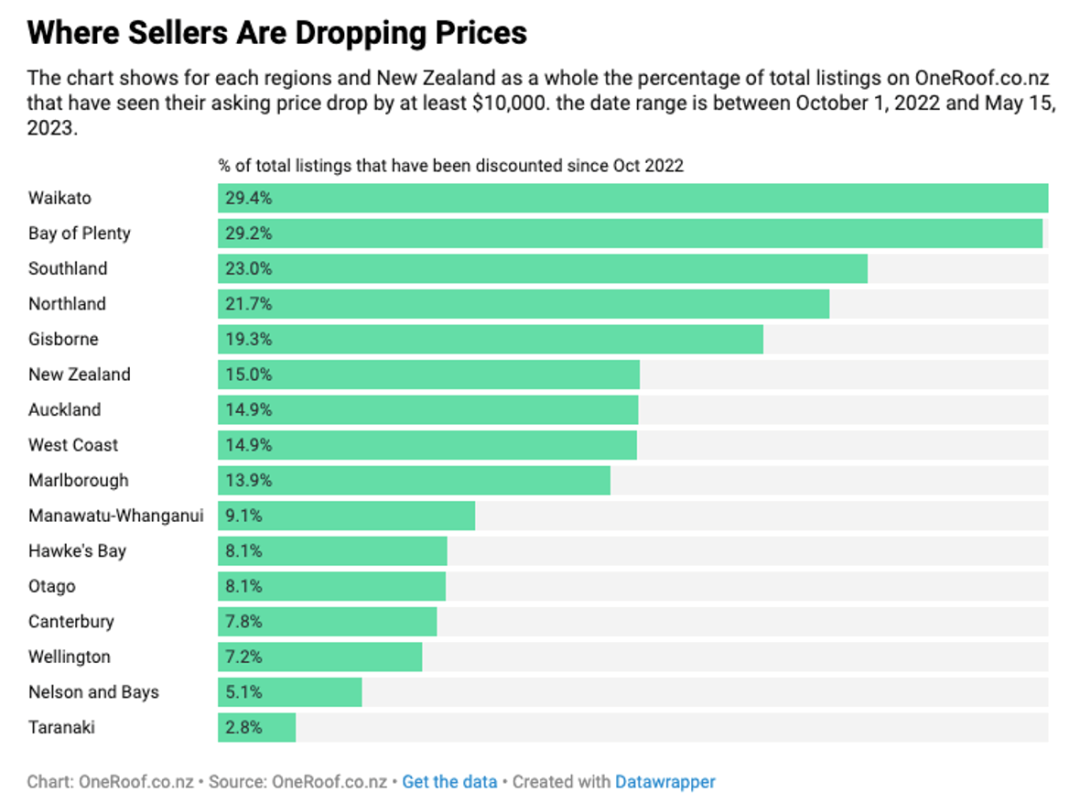
Proportion of listings with reduced asking prices across New Zealand's regions, from 1 October last year to 15 May (Source: OneRoof)
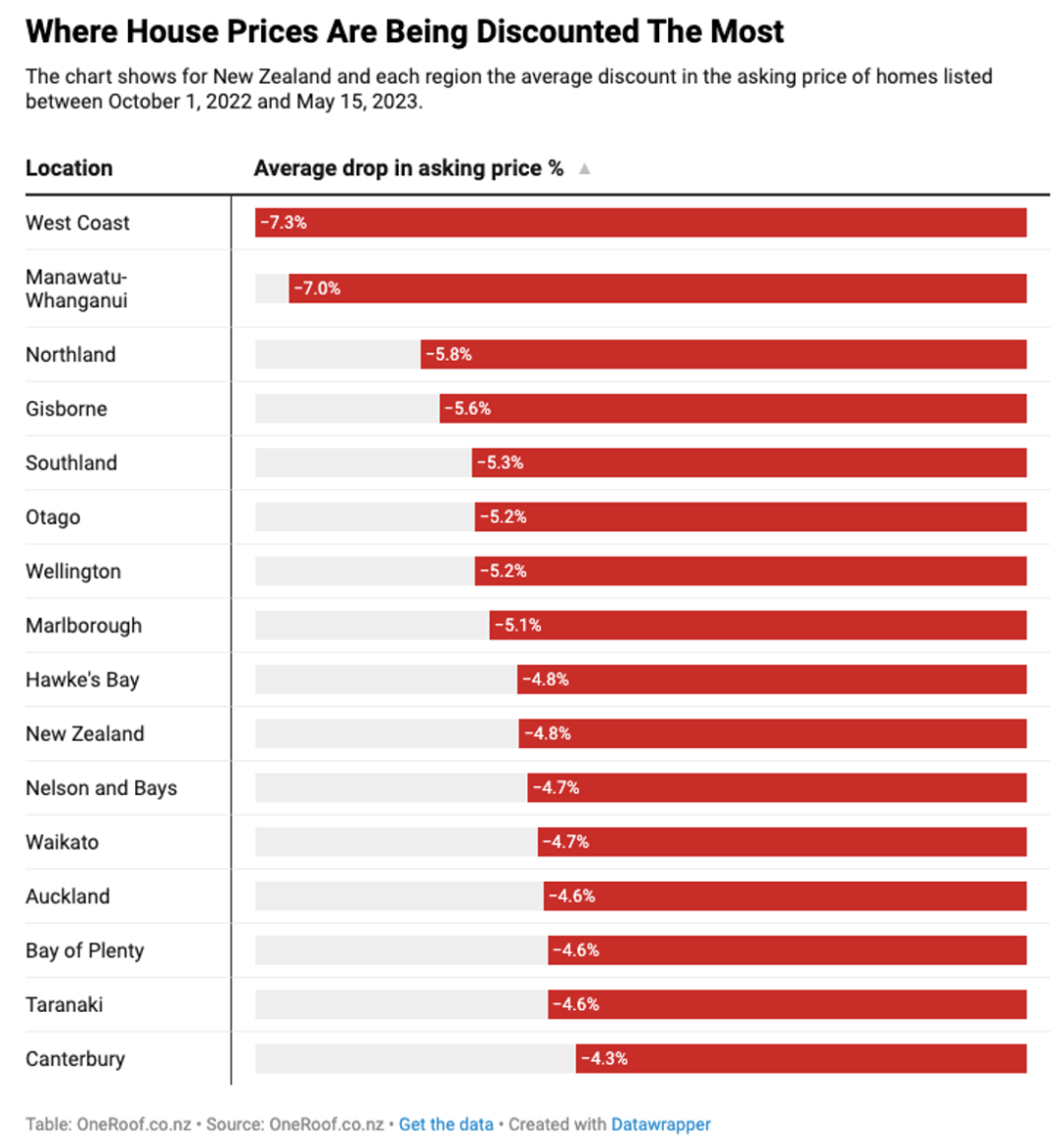
Areas with the largest reductions in asking prices for listed properties across New Zealand, from 1 October last year to 15 May (Source: OneRoof)
The research shows that, in most parts of New Zealand, price reductions for listed properties have peaked in recent months, indicating growing pessimism among sellers about the market's outlook. Between 1 April and 15 May, one in every 5 properties listed nationwide had its price reduced, compared with just 13% in the fourth quarter of 2022.
Among New Zealand's main urban centres, Queenstown Lakes recorded the largest price reductions, with sellers cutting their average asking price by NZ$77,000. In Auckland, the country's largest city, the average asking price fell NZ$56,205. The research found that 837 properties had asking price reductions of more than NZ$100,000. One property in Ohauiti in the Bay of Plenty had its price cut by NZ$800,000 to NZ$3,650,000. Asking price discounts were also common in central Auckland. Since October 2002, almost 200 properties in this apartment-heavy area had their asking prices reduced, with a decline of 6.99%. Even so, half of the discounted properties remained unsold.
Tauranga real estate agent Steve Moyes said an appropriate price reduction could stimulate buyer interest. Enquiries about a property he was marketing at 86 Myres St, Otumoetai, surged after the seller lowered the asking price to NZ$1,495,000. The property was initially offered for sale by auction, with the seller expecting a price close to its capital valuation. That price failed to attract enough bidders, and enquiries only increased noticeably after the seller agreed to a reduction in mid-May.
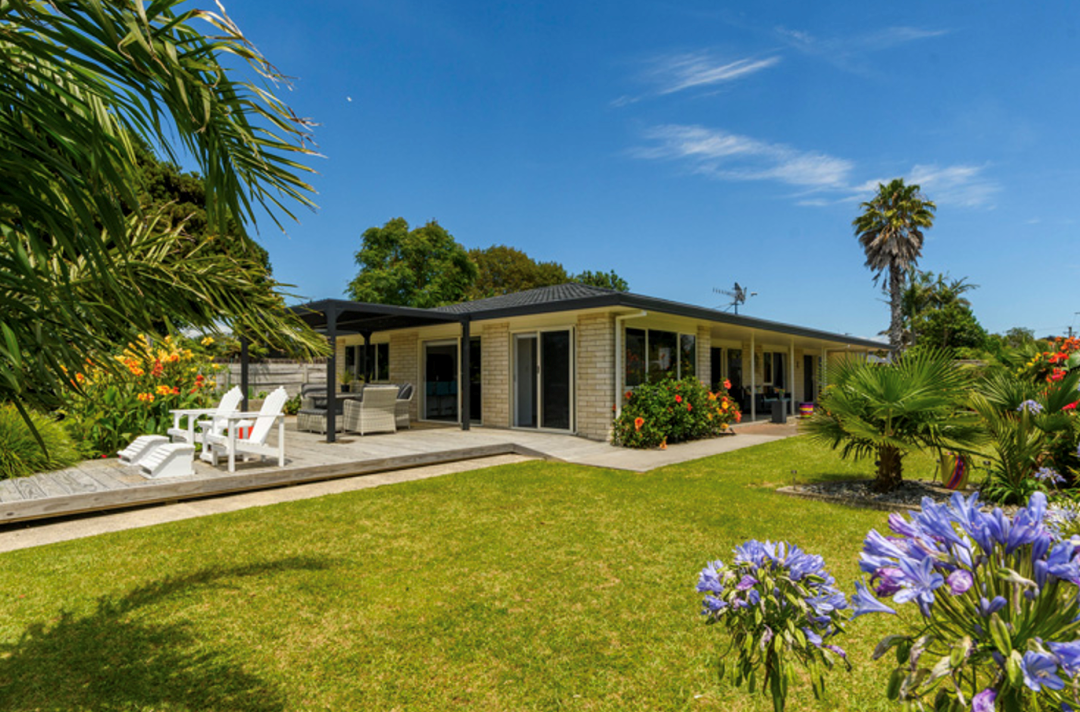
Enquiries surged after the asking price for a Tauranga property was cut by NZ$350,000
Another property in Pauanui, marketed by Harcourt real estate agent Kate Fielding, had a similar experience. It had attracted no interest since being listed in October last year. The seller was now prepared to reduce the price, which had fallen to NZ$1,599,000, with the advertisement stating: “Price slashed by NZ$100,000.”
Fielding also warned that buyers “waiting for the market bottom” could miss their opportunity. It is often only once prices start climbing again that the timing of the bottom can be identified accurately, by which point it is too late.
{ad}
Tom Rawson, a partner at Ray White Manukau, also expressed concern that buyers could miss a good buying opportunity: Once a property's asking price is reduced, it attracts a new group of potential buyers to compete with you. For example, if the previous asking price was NZ$705,000, buyers with a search limit of NZ$700,000 would not see it in their results. If the seller agrees to a NZ$5000 reduction, bringing the asking price to NZ$700,000, it will attract competition from more potential buyers.