
Is the property downturn nearing its end? The data offers answers! Here are this week’s key developments to watch
CoreLogic’s latest house price index for May shows a monthly price change of -0.7%, similar to April but a slower decline than in the preceding two months

The pace of house price declines in New Zealand has slowed markedly over recent months. Does this suggest the property downturn is nearing its end?
01
Is the property downturn nearing its end?
CoreLogic’s latest house price index for May shows a monthly price change of -0.7%, similar to April but a slower decline than in the preceding two months. Notably, the annual rate of change has stabilised at -10.2%. Economists say various market signals suggest the property downturn is nearing its end. However, the market remains relatively subdued because housing affordability is still poor, while policies and regulations continue to prevent investors from returning, limiting the recovery in market activity.
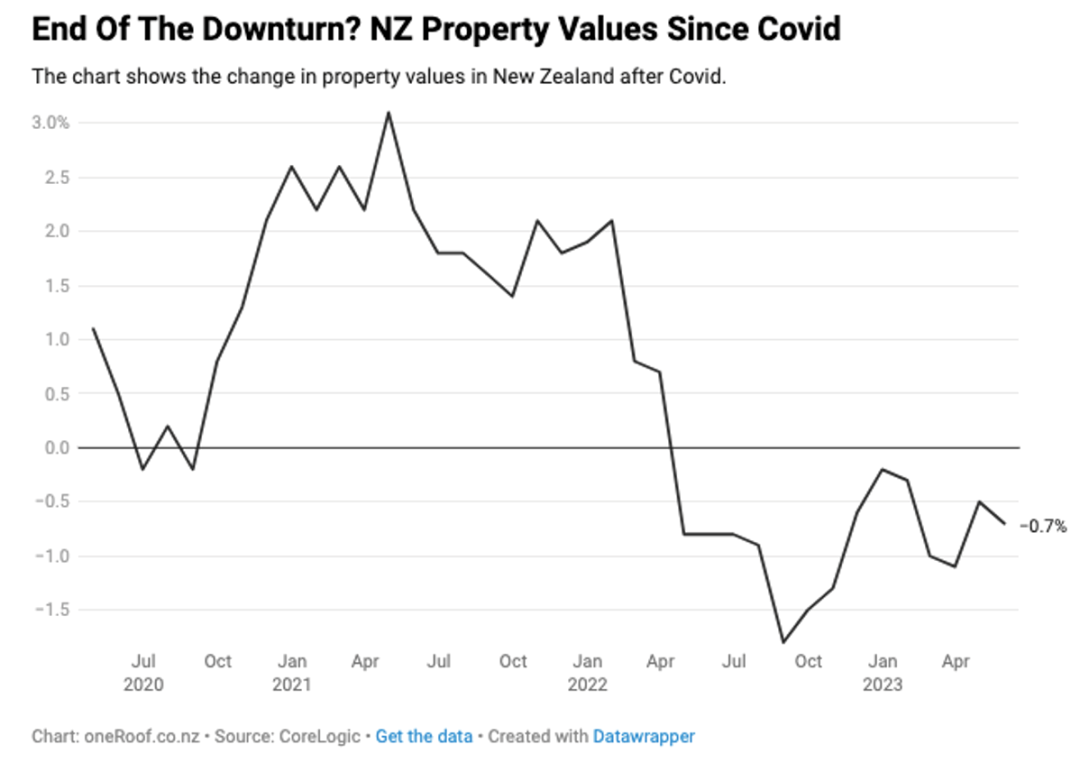
2020 to 2023: changes in New Zealand property values
OneRoof property editor Owen Vaughan said new listings nationwide in May fell by 12% from the previous month and by 21% year on year. Wellington recorded the steepest decline in new listings, down 41% year on year. Auckland’s property market, by contrast, had not cooled, with total listings down just 4% year on year. He believes falling prices and sales volumes have left many sellers taking a wait-and-see approach throughout autumn, and that prospective buyers will only be drawn back when prices stop falling and start rising.
02
The labour market remains strong
According to the latest Stats NZ report, employment rose again in April, up 0.6% from March and 3.8% from a year earlier. The labour market’s continued strength means more people are keeping their jobs. For the property market, this could ease the substantial financial burden borrowers face when repaying their mortgages. Many economists also see it as one of the strongest signs that the economic downturn is nearing its end.
03
Building consent applications continue to decline
According to Stats NZ, building consent applications fell again in April, with annual approvals dropping from a peak of nearly 51,000 to below 46,000. Smaller homes, such as apartments and townhouses, still account for most building consent applications, representing 58.4% of the total. In Auckland, the largest city, the proportion is even higher at 78%. CoreLogic chief economist Kelvin Davidson said declining building consent applications warranted attention, particularly as New Zealand’s net migration was again rising sharply. Could a severe housing shortage emerge again in the future?
04
Business confidence improves as inflation expectations ease
Business confidence recovered noticeably in May, including businesses’ expectations of increased activity of their own. ANZ’s Business Outlook survey reported that inflation expectations had eased to their lowest level since February 2022. This is very good news for the Reserve Bank of New Zealand and countless mortgage holders. Could the Official Cash Rate really have peaked, as the Reserve Bank has suggested?
05
Mortgage rates may have peaked,
but are unlikely to fall much
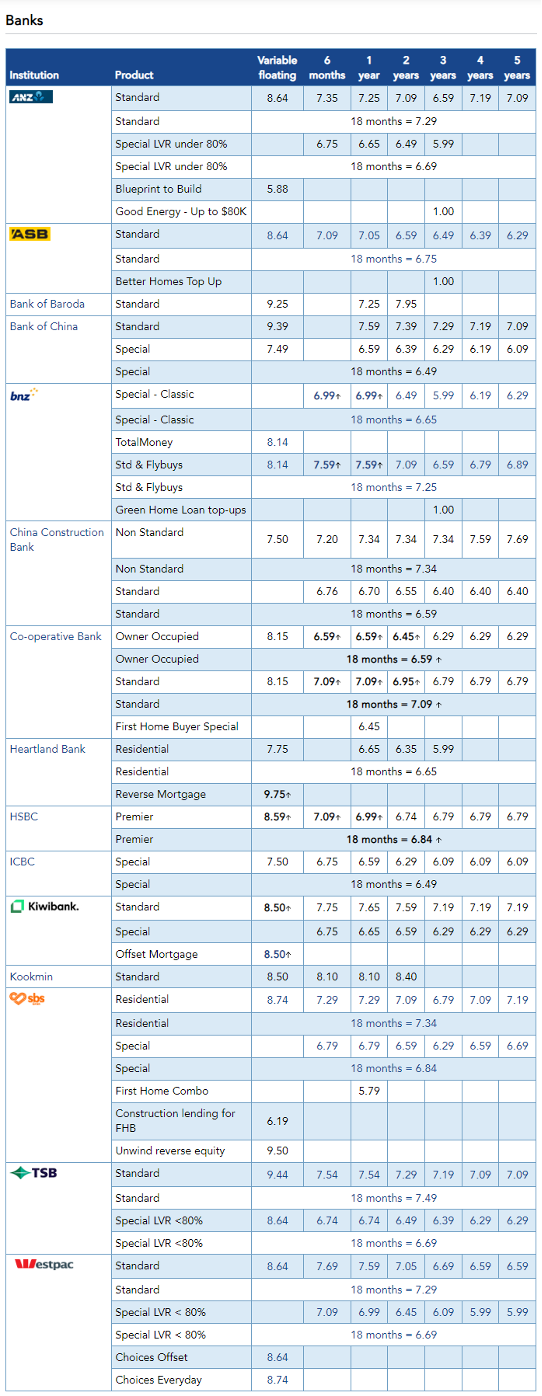
Banks’ one-year fixed mortgage rates stabilised at around 6.7% in May. With the Official Cash Rate likely to remain at its so-called peak of 5.5% for some time, it now seems almost certain that mortgage rates have peaked. Recent Reserve Bank of New Zealand data shows most borrowers are still fixing for 1–2 years, as many do not expect mortgage rates to fall sharply in the near term. With interest rates now at their peak, many borrowers are choosing shorter fixed terms to avoid being locked in if rates trend downwards over the next 3 years.
06
The rental market still needs to watch the migration surge
{ad}
Stats NZ will release net migration figures for April this Tuesday, followed by New Zealand rental price data for May on Wednesday. Both warrant attention. Notably, rent growth remains relatively slow compared with earlier periods, even as net migration rises sharply. Perhaps the market needs more time to respond.