
Auckland buyers’ willingness to buy shifts significantly as housing stock starts to fall
When the Reserve Bank of New Zealand raised interest rates by 0.25% in mid-May, it clearly told the market that this could be the last increase and that it would cut rates after the middle of 2024.
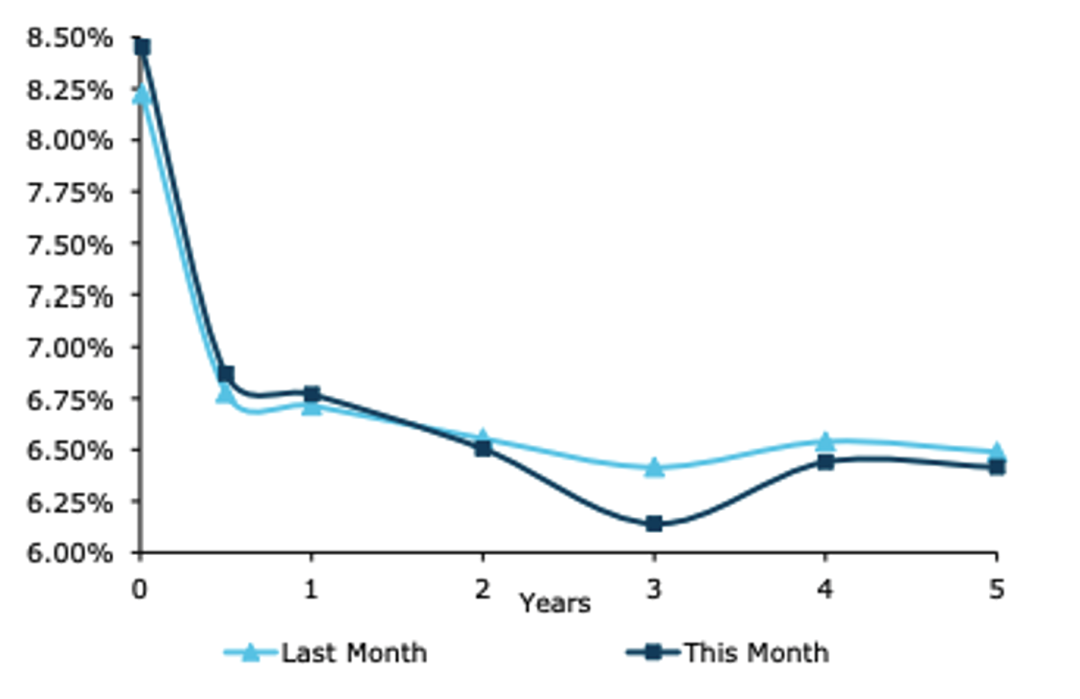
Short-term interest rates rise as long-term rates fall
When the Reserve Bank of New Zealand raised interest rates by 0.25% in mid-May, it clearly told the market that this could be the last increase and that it would cut rates after the middle of 2024.
Although commercial banks subsequently made small increases to floating rates and short-term rates for terms of up to 1 year, the more significant long-term rates have already fallen noticeably. In particular, wholesale interest rates have risen and then fallen sharply since early May, with fixed rates for terms of 2–3 years dropping rapidly.
Alongside signalling an end to interest rate increases, the Reserve Bank of New Zealand has also eased LVR restrictions governing how much buyers can borrow relative to a property’s value, allowing more people to buy with smaller deposits. In the wider economic environment, New Zealand’s residential property market is now gradually entering more favourable conditions.
Property market liquidity returns as stock for sale starts to fall
Current market reports suggest that the market has passed through the most difficult stage of frozen liquidity. It is gradually recovering, better-quality listed homes are steadily selling, transaction volumes are improving, and the stock of properties for sale has started trending downwards.
As the chart shows, housing stock for sale rose in 2021 and peaked at the end of 2022. During this period, properties had to be priced below market value to sell. Transactions were scarce, assets lacked liquidity, and house prices fell throughout 2021 and 2022.
However, after the start of 2023, factors including the rapid arrival of new migrants and stabilising mortgage rates prompted owner-occupier buyers, whose pent-up demand had accumulated over nearly 2 years, to gradually start buying. Property market liquidity began to recover.
Meanwhile, new listings are declining, bringing a noticeable reduction in the number of homes for sale. This is more pronounced in Auckland than in other cities, with housing supply and demand gradually returning towards conditions seen in 2016–2019.
This is often the most favourable period for buyers. Market prices have yet to change and are still hovering around the bottom. Some sellers remain under financial pressure, are willing to sell and are open to negotiating on price. Looking at the longer-term trend, however, a market bottom is gradually taking shape.
{ad}
Willingness to buy recovers rapidly, most notably in Auckland
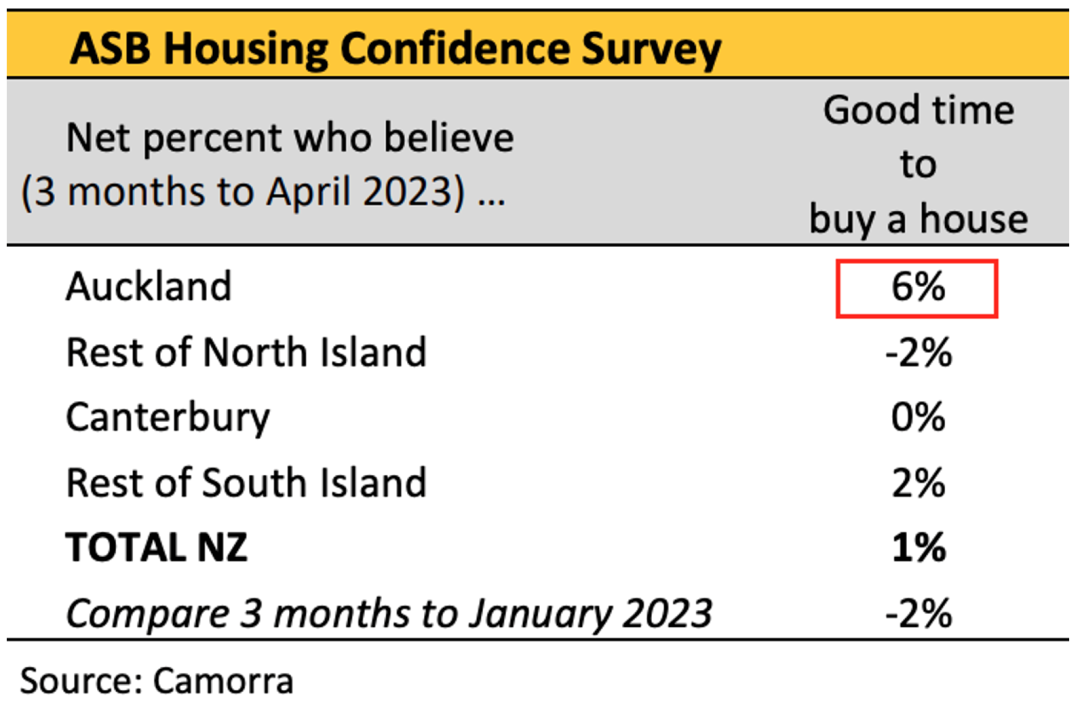
According to ASB’s market survey, data up to April this year shows that the number of New Zealanders who believe now is a good time to buy a home increased slightly, by 1%, compared with 3 months earlier. Auckland’s more pronounced increase is worth noting: the number of Aucklanders who consider now a very good time to buy rose substantially, by 6%.
The housing market’s gradual bottoming out is directly linked to the large inflow of migrants. Auckland has always been the preferred destination for new migrants, so willingness to buy there will also increase fastest, and its overall market recovery will lead the country.
Auckland recorded 723 home sales in May, returning transaction volumes to pre-pandemic levels by historical comparison. In particular, 31 homes sold for more than $2,000,000, indicating that high-end buyers are returning to the market undeterred by high interest rates.
Rapidly rising rents encourage sellers to hold on
Meanwhile, the stock of listed properties is shrinking. Alongside the rapid decline in new homes for sale, fewer existing homes are being listed, as the influx of people continues to drive the rental market higher.
This means that, provided there is no widespread unemployment, sellers have little particular reason to sell. Continuing rent increases will make them more inclined to hold on to their properties.
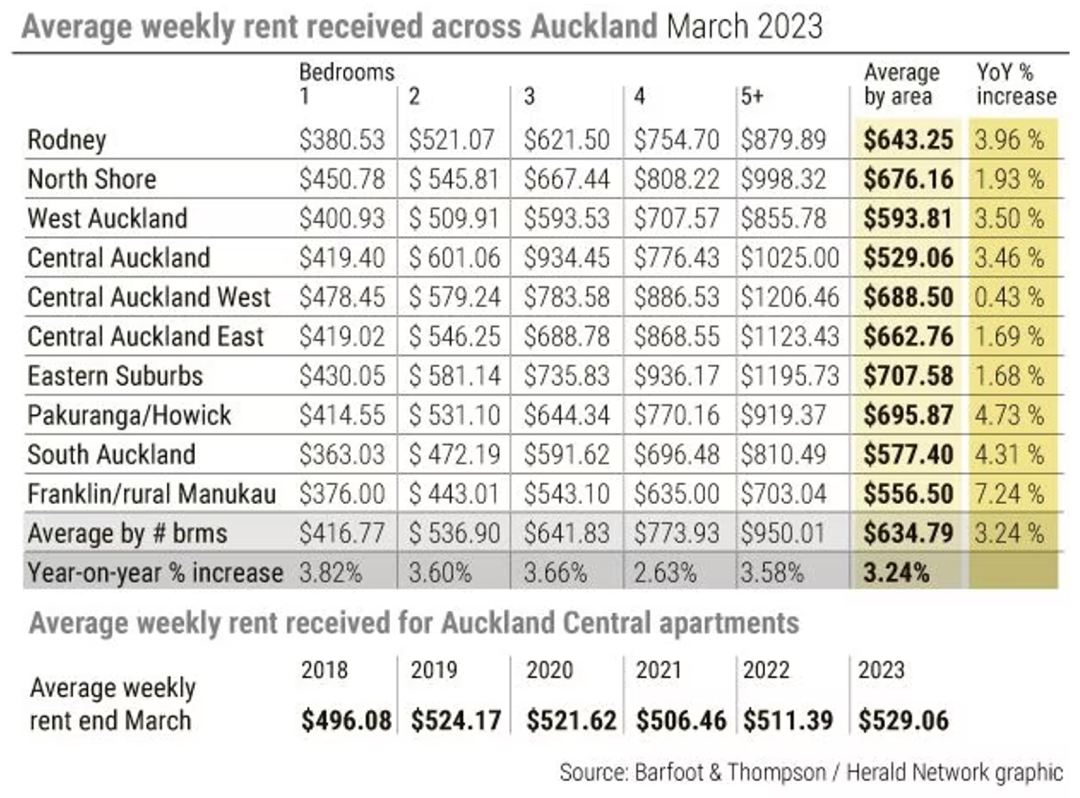
The chart below shows Auckland’s rent increases over the past 1 year:
With the general election in October, political parties have already begun warming up for the campaign and announcing their election strategies. From this point, sellers generally prefer to wait and see whether there will be a change of governing parties and whether policies will shift in their favour. The considerable uncertainty will make new listings even scarcer.
Reports from the frontline: good homes are being snapped up
Together, these factors are causing homes offering better value to sell quickly. We spoke to 2 well-known agents in central Auckland from Barfoot & Thompson, Auckland’s largest real estate agency, about recent market conditions.
One is Lawrence Yuan, who covers Mt Eden in central Auckland, and the other is Wayne Guo, who covers Onehunga in central Auckland.
Lawrence Yuan
Residential/Rural Sales
Mt Eden Branch
Wayne Guo
Residential Sales
Onehunga Branch
Question 1: We hear homes have been selling quickly recently, sometimes even exceeding sellers’ expectations. Could you describe the situation in your area?
Lawrence (Mt Eden) :Mt Eden recorded 28 sales in April, a significant increase, with the median price holding at around $1,350,000. These included 12 sales below $1,000,000, 11 in the $1,000,000–2,000,000 range, 4 in the $2,000,000–3,000,000 range, and 1 above $3,000,000.
Wayne (Onehunga): Homes are selling quickly. Listings have declined since May, while people are returning following the reopening of the border. Many buyers began feeling a strong sense of urgency two weeks ago, and sales in central and west Auckland have improved noticeably. Several brand-new, four-bedroom standalone homes recently listed near Royal Oak in central Auckland attracted more than 60 groups of buyers within weeks. All three were soon under contract, with buyers also submitting backup offers. Some investment properties with subdivision potential have also recently received offers at attractive prices, and many investors believe the market has bottomed out.
Question 2: Are many more homes coming onto the market? How are new listings priced? Have sellers’ expectations changed?
Lawrence (Mt Eden) :New homes are still being listed, and sellers’ expectations are relatively well aligned with the market. Prices are fairly stable, with expectations edging up slightly.
Wayne (Onehunga): Central Auckland’s desirable location meant relatively few homes were listed during the market downturn. Most owners in good areas were under no pressure to sell and chose to hold on if prices were too low. Most developers in central Auckland also chose to sell only a small portion of their properties and rent out the rest, with no obvious pressure to cut prices. We expect a gap in the supply of brand-new homes over the next 6–12 months.
Sellers currently listing their homes remain motivated, and prices are very reasonable. Buyers should make a considered decision to seize the opportunity.
Question 3: Migration numbers have risen significantly recently. Have you noticed the effects in your area?
Lawrence (Mt Eden) :We have noticed a clear increase in attendance at recent open homes, although buyers and sellers are still some distance apart on property values.
Wayne (Onehunga): The impact of arriving migrants is very noticeable. Most migrants choosing central Auckland are attracted by its convenient transport links and concentration of prestigious schools, making it convenient for their children’s education. Over the past 2 years, leading private schools actually had too few students, making applications relatively straightforward and admission easier. Recently, many schools have begun placing applicants on waiting lists. People are returning to the area in large numbers, and the housing outlook is relatively positive in areas with prestigious schools, such as Epsom, Remuera and surrounding neighbourhoods.