
Consultation on Auckland’s draft Future Development Strategy extended until the end of July! See what else deserves your attention this week
Auckland Council’s committee responsible for planning, the environment and parks recently decided that, from 6 June 2023, the council’s recently proposed Auckland Future Development Strategy
Public consultation on Auckland’s Future Development Strategy extended
Auckland Council’s committee responsible for planning, the environment and parks recently decided to hold a 4-week public consultation, starting on 6 June 2023, on the council’s recently proposed draft Auckland Future Development Strategy (FDS). It hopes to use this opportunity to gather feedback from across the community.
{ad}
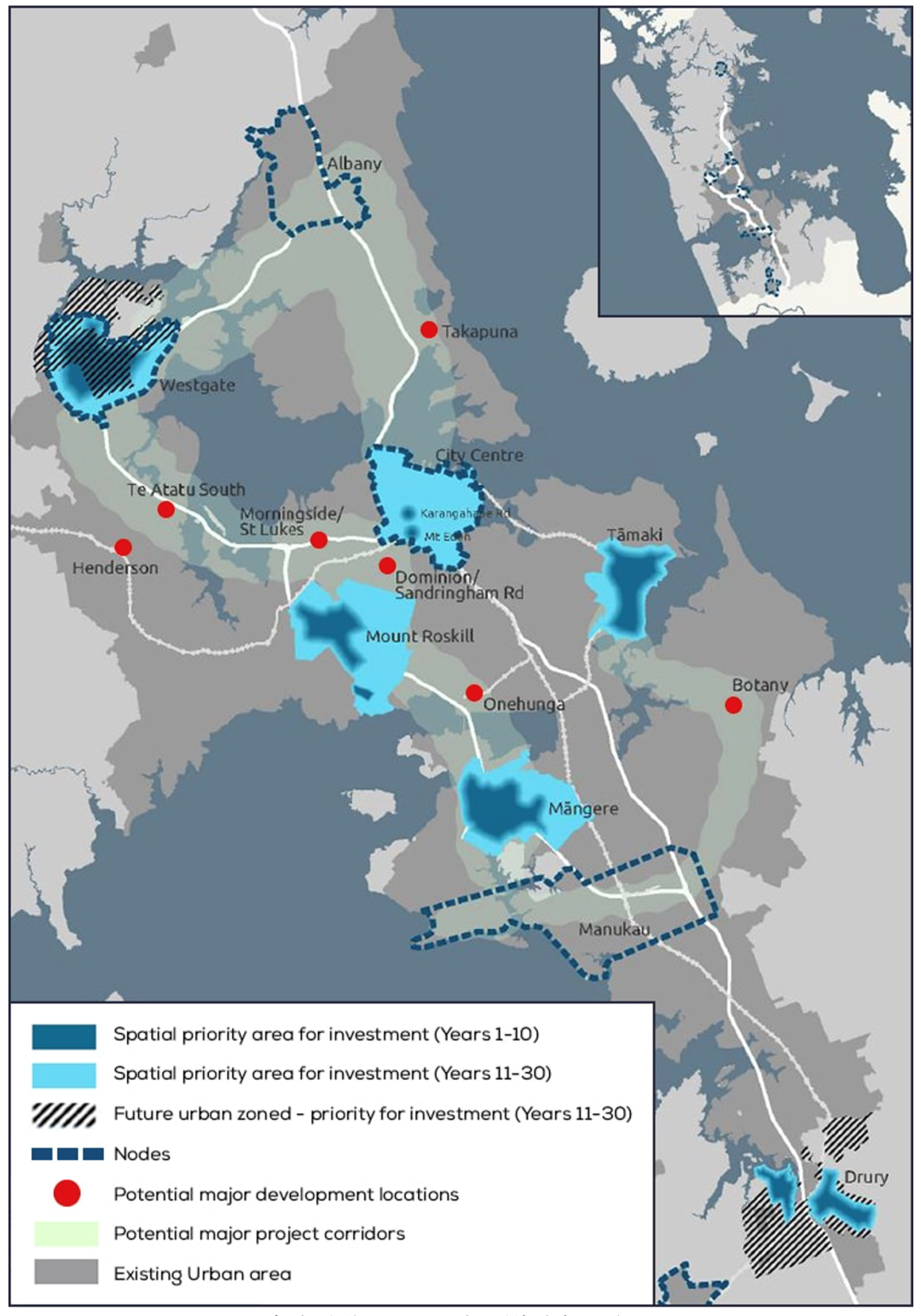
Map showing development planning priorities across Auckland
The draft is intended to replace parts of the existing Auckland Plan 2050, the 2018 Development Strategy and the 2017 Future Urban Land Supply Strategy. It also responds to the central government’s National Policy Statement on Urban Development 2020 (NPS-UD), which is being implemented. If adopted, the draft would mean the following for Aucklanders:
- Strict restrictions on all further greenfield development until at least 2050;
- Mandatory intensification within existing urban areas without the necessary supporting infrastructure;
- No support for existing development policies;
- At least half of the ratepayers living in rural areas across greater Auckland would receive no benefit.
Once news broke that public submissions were being sought on the draft, many Auckland property developers and construction industry professionals began spreading the word. The draft has far-reaching implications and could wipe out the property investments we have worked hard to build over many years, while profoundly affecting the property industry for at least the next 30 years. Yet the public had less than two weeks left to consider it and provide feedback. Auckland’s construction industry broadly believes that such an important draft should be given more than a 4-week consultation period.
Under pressure from public opinion, Auckland Council recently extended the consultation period until the end of July.
02
Fewer properties available to rent
As is widely known, the number of properties for sale has begun to decline gradually as sales slowly increase and outpace new listings. Interestingly, a similar pattern has emerged in the rental market. Nationwide, the number of rental properties listed each week is around 15% below normal levels, with the situation particularly pronounced in Auckland and Otago. As net migration increases, the eventual result will be rental properties being snapped up. Overall, tenants looking for their next home currently have few options, and rent growth is also likely to accelerate over the coming months.
03
Will the New Zealand Activity Index continue to indicate a downturn?
This Tuesday, Stats NZ will release the latest New Zealand Activity Index (NZAC) for May. The index is widely regarded as a relatively accurate reflection of New Zealand’s economic contraction in the first quarter of 2023. Worryingly, the figures at the end of April, showing annual growth of 0.7%, were weaker than the average growth rate of 1.2% recorded over months 1 to March. We have seen continued strength in the labour market recently, but a prolonged recession will increase the risk of unemployment.
04
5: will the month’s unemployment rate continue to fall?
This Wednesday, Stats NZ will release its latest employment figures. Barring any surprises, employment will continue to grow, marking the 12th increase in the past 13 months. What is certain, however, is that this growth phase will end at some point.
05
Will looser LVR rules lead to, in May,
more new mortgage applications?
The Reserve Bank of New Zealand will release its latest mortgage lending figures this Tuesday. The market expects mortgage applications to continue increasing as LVR restrictions ease. Although the policy was announced as taking effect from 1 June, the adjustment was actually made in late April, meaning some banks may have acted early in May. With the property market also beginning to show signs of recovery in May, an increase in mortgage lending would be a natural outcome.