
The pain of high interest rates for New Zealand mortgage borrowers: ‘We will be forced to sell our only property…’
This week, four major New Zealand banks—ANZ, ASB, Westpac and Kiwibank—all raised their home loan interest rates. Yesterday, a YIJU article entitled ‘A painful reality,

This week, four major New Zealand banks—ANZ, ASB, Westpac and Kiwibank—all raised their home loan interest rates. Yesterday, a YIJU article entitled ‘A painful reality, revealed in figures: how big a challenge will homeowners face when refixing their mortgages in the second half of the year?’ struck a chord with many readers. One commenter, using the name ‘July’, wrote: ‘The government needs to step in and stop banks raising interest rates! How are people in New Zealand supposed to keep going? Water bills! Power bills! Council rates! Petrol prices just keep going up and up!’
{ad}
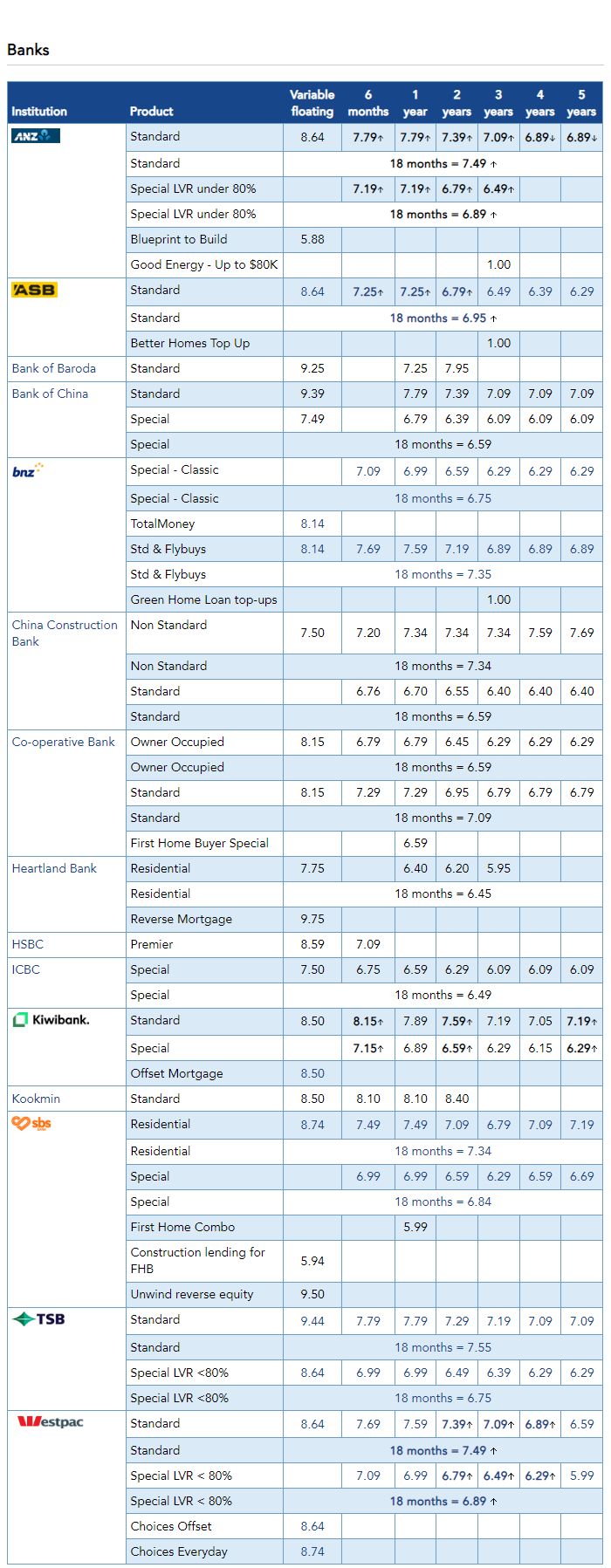
Borrowers across New Zealand are under enormous pressure. Many homeowners have also shared their painful stories with English-language media: faced with the immense pressure of rising interest rates, borrowers seem unable to escape, whether they live overseas or in New Zealand, and whether their incomes are high or low.

An extra twenty thousand New Zealand dollars a year could force homeowners to sell
One homeowner said he and his partner bought their home in West Auckland in April 2021, securing a NZ$700,000 mortgage over 20 years at a fixed rate of 2.65%. At the time, their monthly mortgage interest payment was NZ$3761. Now, two years later, as they prepare to refix, they were shocked to discover that the best fixed rate available to them was 7.25%, meaning their mortgage costs would rise by NZ$1772 a month, or NZ$21264 a year, taking their monthly repayments straight up to NZ$5533. To cover the additional interest costs, they would need to find almost NZ$30,000 in extra income. They acknowledged that their current employment was their household’s only source of income. As they were already in their 50s, the bank had told them there was no possibility of extending their mortgage term. The homeowner said sadly that they would probably have to sell their current home because they simply could not afford the high mortgage interest costs. He asked why, when the bank had readily approved their mortgage in the first place, the irresponsible bank should not now have to ‘pick up the bill’ when they could no longer cope with such immense pressure.
“Why can’t we fix interest rates for longer?’
Another Auckland homeowner bought a home through the government’s KiwiBuild welfare housing scheme in 2019 for NZ$650,000, and refixed two years ago at 2.79%. That fixed rate is understood to expire in September. He expects the monthly repayments on their remaining NZ$460,000 mortgage to rise sharply when he next needs to refix. He asked, why is it not possible to fix a mortgage for longer in New Zealand? In the United States, borrowers can fix their mortgage rate for the life of the loan, but they cannot do so in New Zealand. This clearly benefits mortgage lenders, with all commercial banks’ current record profits built on the suffering of New Zealand borrowers.
Unable to afford the mortgage, but selling would also mean a loss
One homeowner said she and her family had moved to Australia to earn more. In 2021, the family spent their life savings buying their New Zealand property, taking out a NZ$850,000 loan at 3.89%. Now they have had to refix at 6.69% and have decided to rent out the house to help repay the mortgage. Unfortunately, the modest rental income is insufficient to cover the mortgage repayments, and although they have also considered selling, the continuing property market downturn has reduced their property’s value by at least NZ$200,000. Another homeowner bought an Auckland property in 2012. He had fixed his interest rate at 2.59%, and the rent largely covered his monthly mortgage repayments. But he will soon feel the pain of a sharp interest rate increase: this week, he refixed his mortgage for 6 months at a special rate of 6.84%. This increases his fortnightly mortgage repayments by NZ$811, forcing him to cancel all his consumer subscription services and insurance. He complained that his property’s value had already fallen so much that he could not sell it and walk away without a loss. He questioned how, even with a high income from work of around NZ$140,000, he still had to suffer the pain of rising interest rates, calling it unbelievable. On top of that, he had to pay NZ$40,000 in personal income tax yet received no government benefits. He has decided to sign up as an Uber driver on days when he does not need to look after his children, to earn extra income.
Delaying retirement and struggling to make ends meet
A homeowner with NZ$680,000 remaining on his mortgage and 26 years left on its term similarly said that when his household’s interest rate rose from 2.5% to 7%, they would have to pay an extra NZ$400 a week, potentially making life a struggle. He said he and his partner earned a combined income of around NZ$150,000 before tax, but also had 4 children to support. With all living costs rising, their weekly outgoings exceeded their income. They had considered switching to interest-only repayments to ease the pressure, but given their ages, extending their mortgage term by a few more years would mean being forced to work beyond the age of 65.
Splitting the mortgage into three parts
A Christchurch homeowner said her household’s mortgage was split into three portions with separately fixed interest rates, so only around 1/3 of the loan would need to move from 2.95% to the current high rates. With childcare costs and rising living expenses such as petrol and food on top of this, she has no choice but to endure the pain for now and find ways to cut spending. According to the latest banking monitoring report from Horizon Research, among 1091 people recently surveyed, 3% of borrowers said soaring interest rates might force them to consider selling their properties next year. This equates to 43,000 mortgage holders. The research also found that 23% of mortgage holders, or 303,000 people, were very worried they would be unable to afford repayments if they had to refinance at current floating rates or higher fixed rates. If you are facing similar difficulties, please contact YIJU New Zealand to share your story.