
OCR rises pause, but borrowers’ anxiety grows? Crucial data is due this Wednesday
Last week, the Reserve Bank of New Zealand announced it would hold the official cash rate (OCR) at 5.5%, marking the first pause in OCR increases in nearly two years

Last week, the Reserve Bank of New Zealand announced it would hold the official cash rate (OCR) at 5.5%, marking the first pause in OCR increases in nearly two years. The Reserve Bank also said interest rates would remain at a “controlled level” for some time to ensure inflation returns to the 1–3% target range.
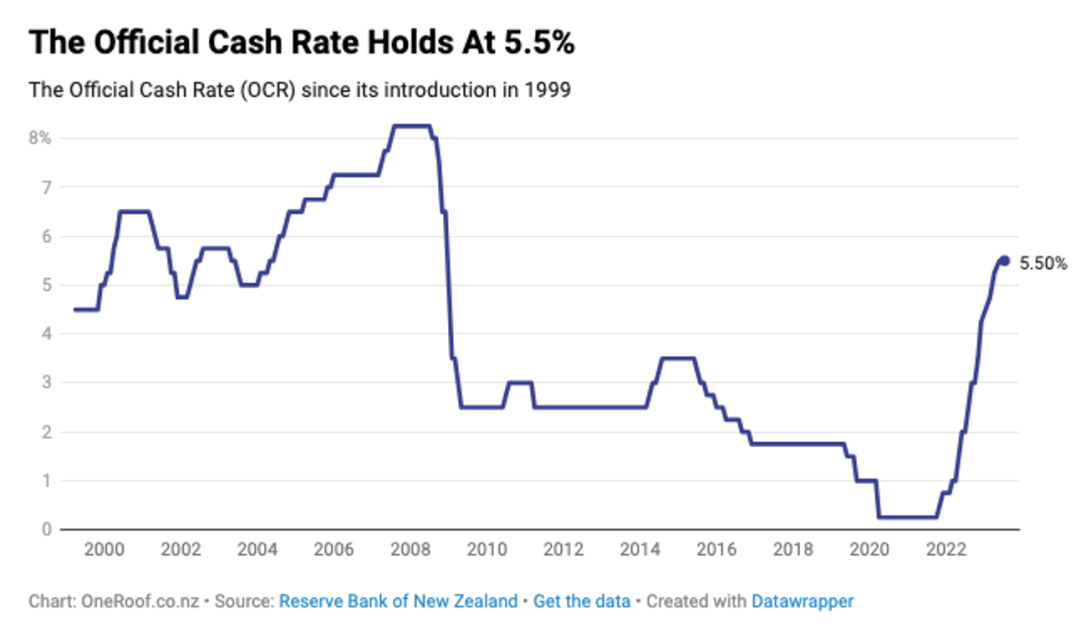
2000 to 2023: New Zealand OCR trends
The latest monetary policy statement followed simultaneous mortgage rate increases by New Zealand’s major commercial banks. Just as most homebuyers thought mortgage rates had peaked, rates rose unexpectedly. Some economists also predict rates could remain higher for longer, rather than beginning to fall in February next year as previously forecast.
ASB’s standard fixed mortgage rates for 6 months and 1 year rose to 7.25%, its 18-month fixed rate rose to 6.95%, and its 2-year fixed rate rose to 6.79%. Fixed mortgage rate increases at other banks included Westpac’s two-year standard fixed rate rising to 7.39%, Kiwibank’s two-year fixed rate rising to 6.59%, and ANZ’s six-month and one-year fixed rates rising to 7.79%.
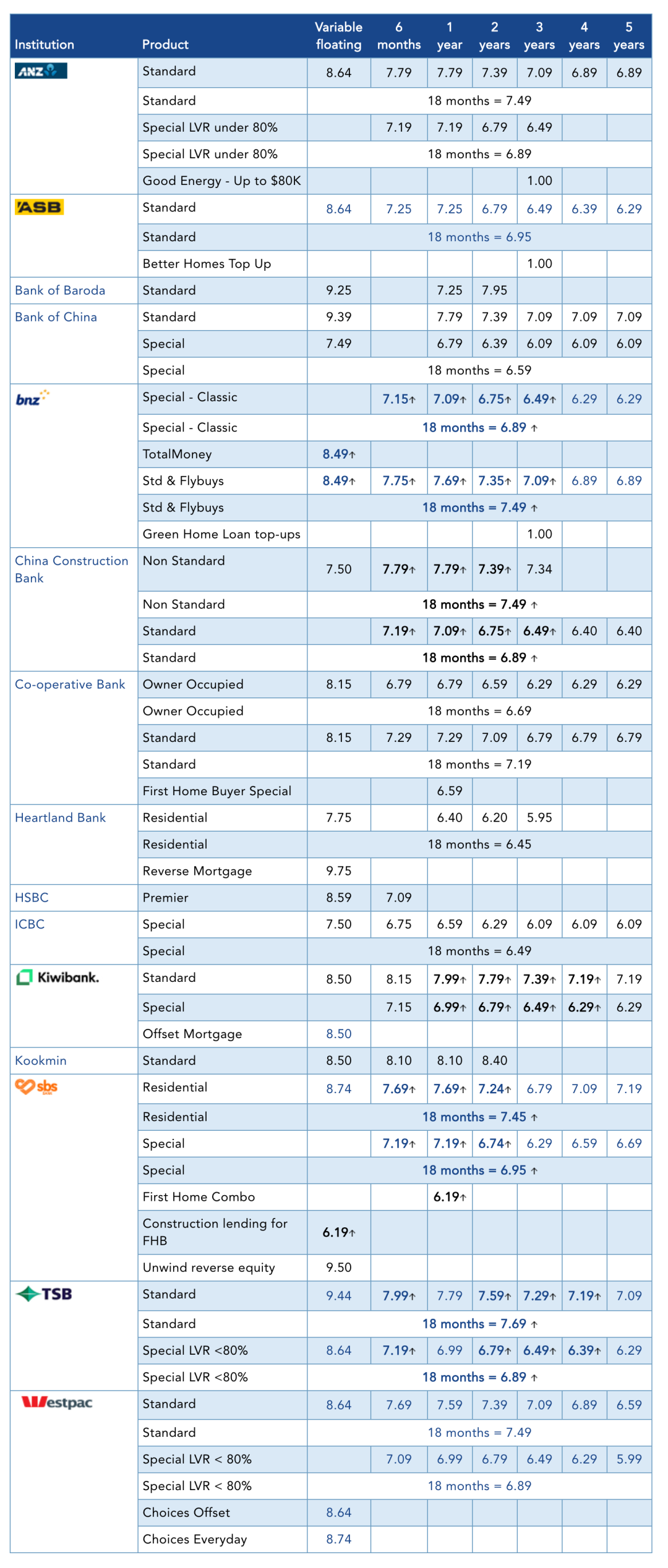
Mortgage rates at New Zealand’s mainstream banks as at 17 July (source: interest.co.nz)
Easy Street mortgage adviser Gareth Veale said the widespread rate increases had worried some of his clients. As the vast majority of borrowers fix their rates for one to two years, moving onto higher rates will prompt them to cut living expenses, helping curb high inflation. Veale believes the sharp reduction in disposable income has forced many borrowers facing higher rates to change their spending habits and tighten their belts.
1
Where is the OCR heading?
The Reserve Bank’s Monetary Policy Committee said that, as more borrowers move from lower fixed rates to higher rates in the second half of this year, the average mortgage rate on outstanding loans has risen from 3% in early 2022 to 5% now. Based on commercial banks’ current pricing, the average mortgage rate is expected to reach around 6% in early 2024.
Kiwibank chief economist Jarrod Kerr said economists’ consensus on the timing of interest rate cuts had changed dramatically in recent weeks. Two-year swap rates had risen sharply from below 5% to 5.75%, indicating a substantial increase in commercial banks’ costs of obtaining offshore funds to lend to New Zealand borrowers. Kerr said the surge in swap rates signalled another imminent OCR increase, although he did not believe this would necessarily happen. Only a few weeks earlier, markets expected an OCR cut in February next year, but rising interest rates around the world had erased those expectations. Economists and markets now generally believe the Reserve Bank will not lower the cash rate before October 2024.
ANZ economists said the Reserve Bank would have to consider the possibility of raising the OCR above 5.5% this year, predicting it would need to increase the OCR later in the year. They see a risk of the OCR moving somewhat higher, although the Reserve Bank could also cut rates before year-end. The economists concluded that the Reserve Bank remains in a wait-and-see mode, observing the market.
{ad}
2
New Zealand Labour rules out a wealth tax and capital gains tax
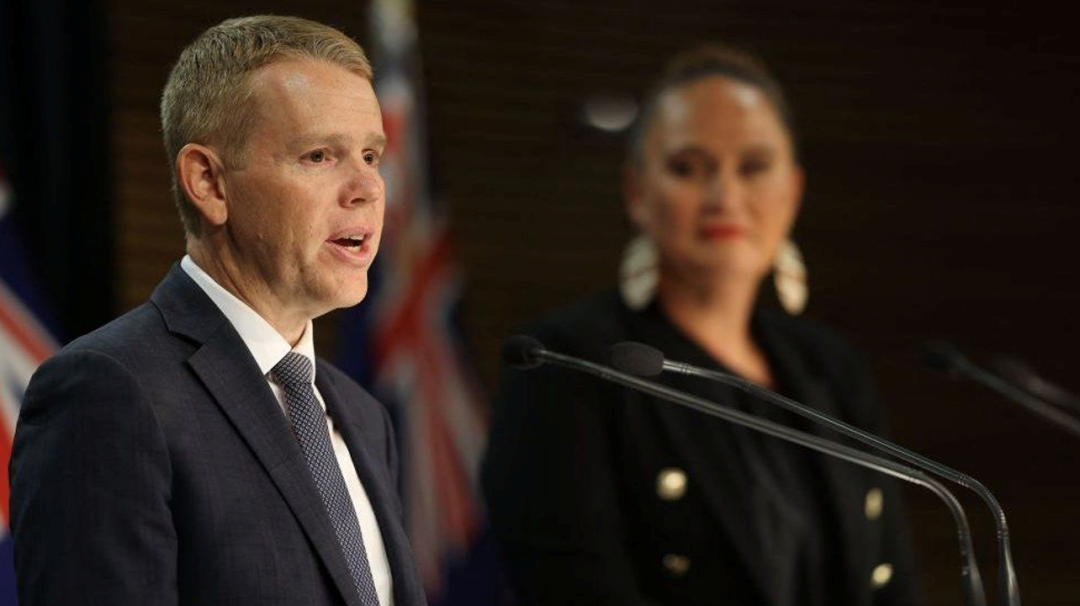
New Zealand Prime Minister and Labour leader Chris Hipkins
Labour leader Chris Hipkins made clear last week that the government he leads would not introduce a wealth tax or capital gains tax (CGT). He also revealed that the government had considered these taxes as part of Budget 2023, but he had ruled them out. In a statement released last week, he said that with many households struggling, it was “simply not the time for a major overhaul of our tax system”. He confirmed that a government under his leadership would not introduce a wealth tax or capital gains tax after the election. His government would focus on cost-of-living issues, which was incompatible with trying to introduce a wealth tax, explaining why it had been ruled out. His stance on CGT continues the government’s position since 2018.
3
Latest inflation figures due this Wednesday
This Wednesday, Stats NZ will release inflation figures for the second quarter of 2023. The consumer price index (CPI) data will be crucial to the OCR’s future direction. Inflation fell from 7.2% to 6.7% in the first quarter and is likely to decline further in the second quarter to around 6%. Will the pace of the CPI decline satisfy the Reserve Bank, or will it prompt further OCR increases? We will wait and see.
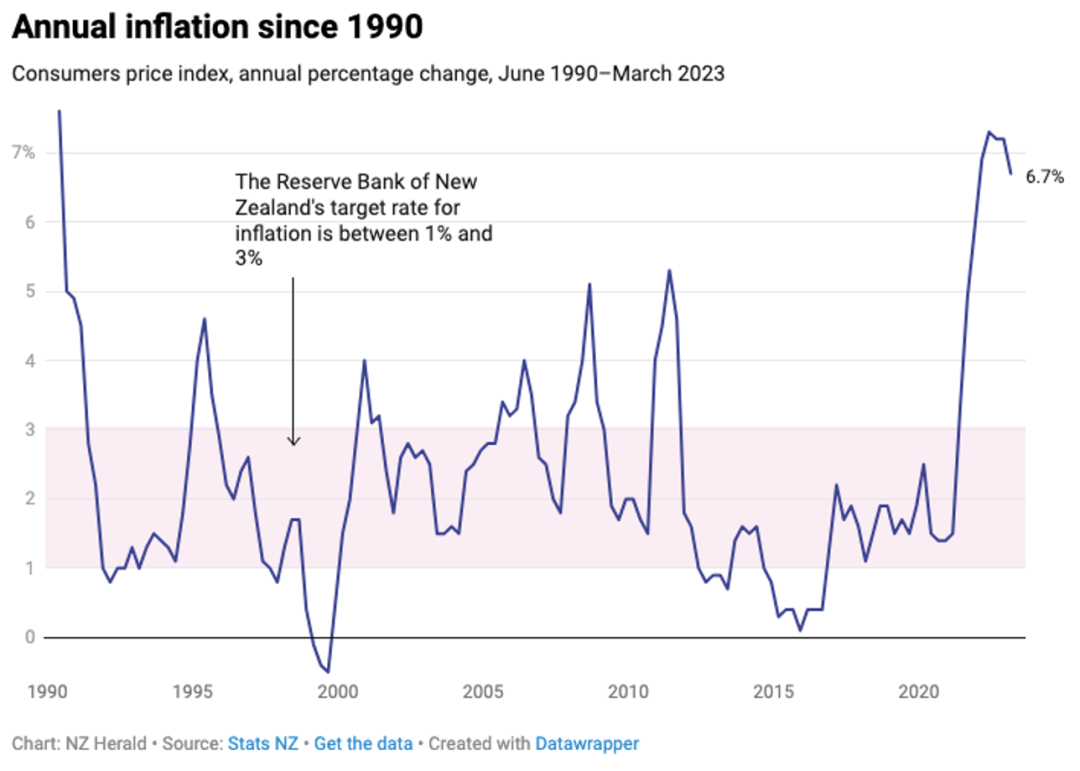
1990 to March 2023: changes in New Zealand’s consumer price index
4
First-home buyers’ appetite remains strong
CoreLogic’s buyer classification data for June shows first-home buyers’ market share has reached a record 26%. This reflects a range of favourable policies, such as allowing first-home buyers to use KiwiSaver for their deposits and the recent easing of LVR restrictions, which has enabled more mortgage applications to be approved. CoreLogic chief economist Kelvin Davidson said: “If the inflation figures due on Wednesday are higher than expected, people will quickly become concerned that the OCR could rise further, beyond its current peak of 5.5%.”