
Inflation has fallen: should homeowners celebrate or worry about another rate rise? A review and outlook for recent property news
Consumer price index (CPI) data for the second quarter of 2023, released by Stats NZ last week, showed annual inflation had fallen to 6%, down slightly from last year's peak of 7.3%

1
Inflation steadily declines
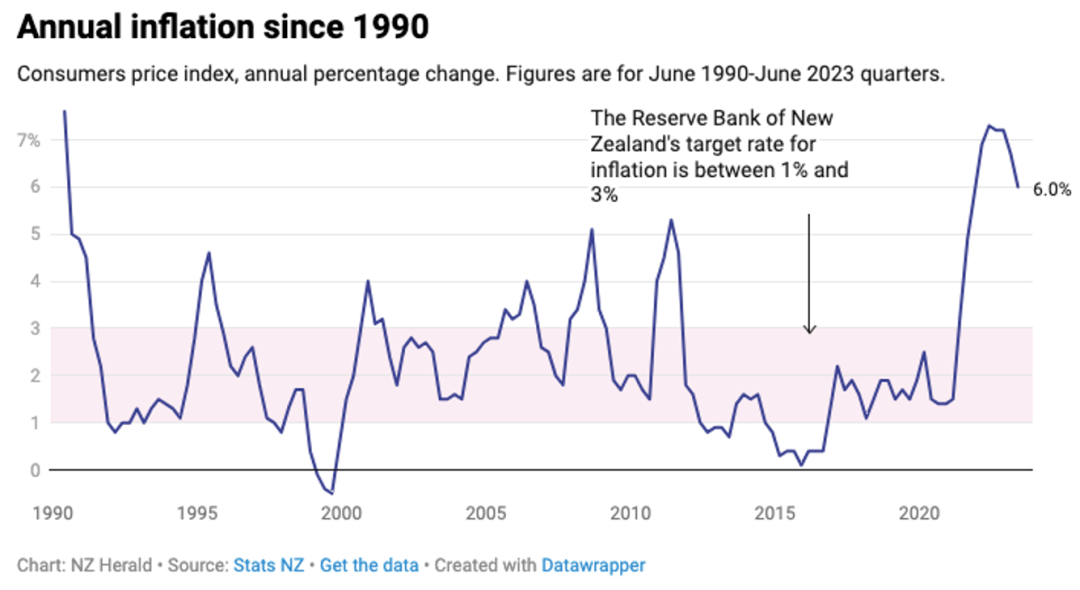
1990 New Zealand's annual CPI changes to the present (source: Stats NZ)
Consumer price index (CPI) data for the second quarter of 2023, released by Stats NZ last week, showed annual inflation had fallen to 6%, down slightly from last year's peak of 7.3%.

Opes Partners economist Ed McKnight
Opes Partners economist Ed McKnight said the 6% figure sat exactly between the Reserve Bank of New Zealand's forecast of 6.1% and the consensus among banks of 5.9%. This figure matters because the Reserve Bank of New Zealand uses the latest inflation figures to set the next official cash rate (OCR), which in turn affects mortgage rates for all borrowers. He noted that raising the OCR was seen as one of the Reserve Bank of New Zealand's most effective tools for reducing inflation.
The figures suggest inflation is continuing to fall. McKnight expects CPI inflation to be lower still by the end of September this year, potentially taking the annual figure below 5%. This would mean several key economic indicators, including CPI, were moving in a positive direction for a return to house price growth. He said: “This is also strong evidence that property investors and first-home buyers are beginning to gain confidence.” Although the latest quarterly decline in inflation will not have a major impact on the property market, it will give mortgage borrowers confidence that interest rates will eventually fall and may draw some buyers back into the market.
{ad}
CoreLogic chief economist Kelvin Davidson said he did not think the latest inflation figures would sway the Reserve Bank at its next OCR review on 16 August. Like most bank economists, he believes the OCR has peaked at its current level of 5.5%. He believes the property market has reached a turning point, but this does not necessarily mean interest rates will fall soon or that house prices will quickly stop falling and start rising. He said mortgage rates were unlikely to fall over the coming year. The Reserve Bank of New Zealand's inflation target is 1–3%, and CPI inflation still has a long way to go before returning to that range. He stressed that mortgage rates would remain elevated for longer.
2
Westpac raises mortgage rates
Westpac has just updated its mortgage rates. For homeowners, the special 18-month rate has risen by 6 basis points to 6.95, the special one-year rate by 20 basis points to 7.19%, and the special six-month rate by 10 basis points to 7.19%.
Infometrics chief executive Brad Olsen said Westpac might be adjusting its pricing to align with the rest of the market, reflecting higher bank funding costs resulting from stable swap rates.
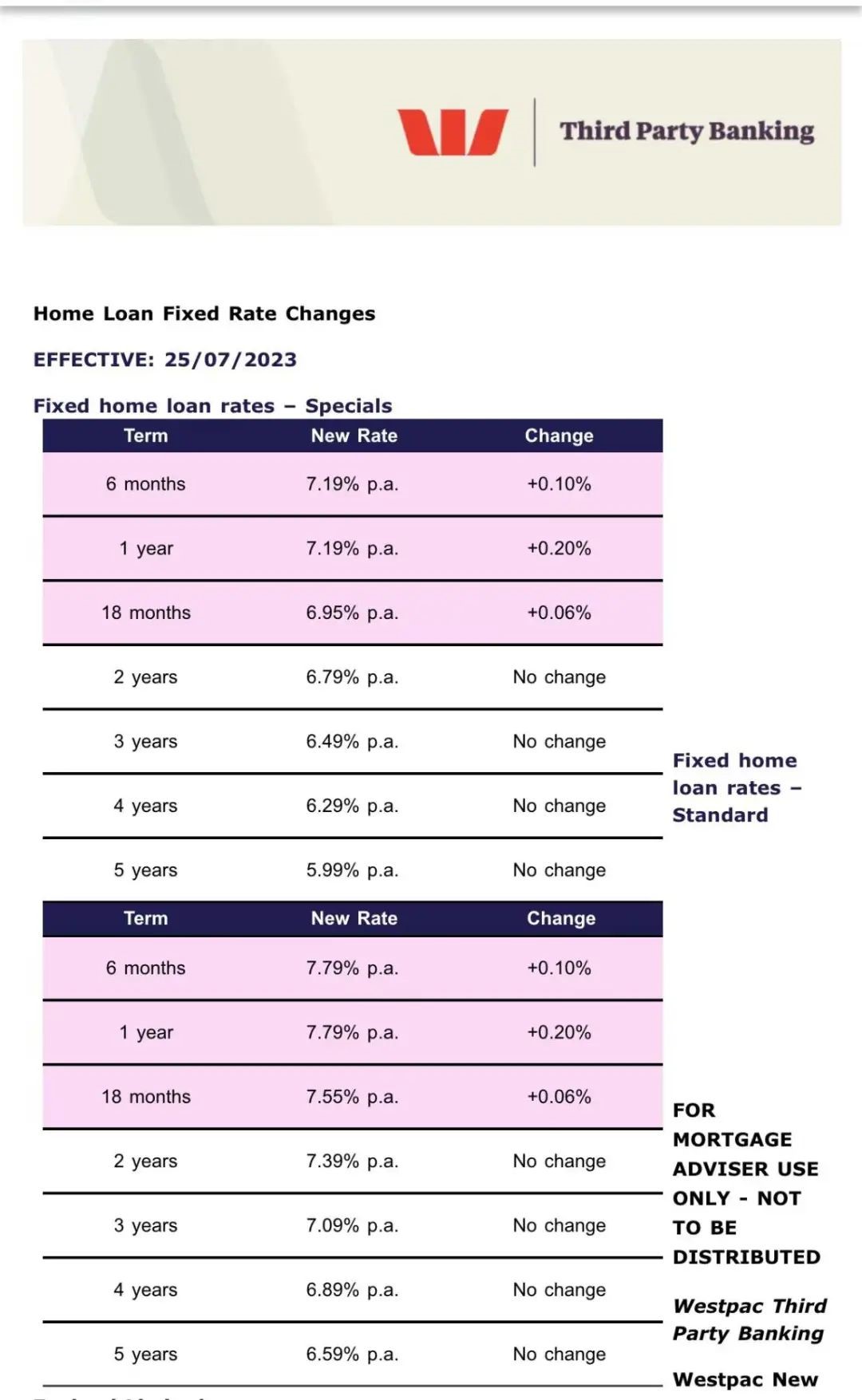
However, Brad Olsen also believes current interest rates may already be at or near their expected peak.
“If the Reserve Bank is not signalling further rate rises, I still think we are at or near the top. If banks need to make further adjustments, they should communicate them better.”
3
Buyers face dwindling choice
Kelvin Davidson also believes the pool of properties available on the market is shrinking. Weekly new listings remain at their lowest seasonal level in years, while a recovery in sales activity, with property sales up 17% year on year in June, is further reducing available stock. This reduction is increasing competition among buyers and could begin to push house prices up.
In the rental market, both new rental listings and the total number of properties available to tenants are also showing a clear downward trend, with signs that rents are beginning to rise rapidly.
4
New Zealand's June economic activity index due soon
Could it signal that the recession is over?
New Zealand's latest economic activity index, for June, is due out this Thursday. Data for month 4 and for May suggest the mild recession in the fourth quarter of 2022 and the first quarter of 2023 is unlikely to have continued into this year's second quarter. This may also be a positive signal that the property market downturn is ending.
5
How is the labour market performing?
Stats NZ will also release employment data for June this Friday. Kelvin Davidson believes employment is likely to rise again after a quiet period, although there is also a risk of a decline, particularly as businesses remain relatively cautious about hiring new staff.