
Will the Reserve Bank of New Zealand raise the OCR this week? Labour announces plans to remove this GST! Key developments to watch in the property market
Amid a festive atmosphere, the 2023 New Zealand International Building Expo and Summit (NZIBES) opened in style at Auckland’s Due Drop Event Centre, running from 11 to 12 August

1
2023 New Zealand International Building
Expo and Summit opens in style
From 11 to 12 August, amid a festive atmosphere, the 2023 New Zealand International Building Expo and Summit (NZIBES) opened in style at Auckland’s Due Drop Event Centre, with more than a hundred people from the property and construction industries and other walks of life across New Zealand witnessing the opening ceremony.

Over the past 8 years, NZIBES has carried the aspirations of many Chinese New Zealand property and construction professionals to build their dreams in New Zealand. It has provided a valuable platform for overseas and local building materials suppliers, developers, builders, designers and related industry professionals to communicate and exchange ideas. Over the years, it has championed the Chinese property and construction community, making major contributions through stronger engagement with government departments and professional organisations, training technical specialists and awarding scholarships to support the development of future construction talent.
{ad}
One of the biggest highlights of the expo each year, the annual gala dinner and Excellence Awards ceremony was held in style at the Cordis hotel on Friday evening. Nearly 1000 prominent New Zealand political and business figures and construction industry leaders gathered to witness the selection and presentation of the excellence and merit honours at the “2023 NZCBIA Excellence Award”.
2
Will the Reserve Bank of New Zealand keep
the OCR unchanged this week?
Yes, this Wednesday is once again the day the Reserve Bank of New Zealand releases its latest Monetary Policy Statement. Although observers have long expected the Reserve Bank to be unlikely to change the OCR from its current level of 5.5%, greater attention is focused on its forecast OCR path over the next 3–6 months, along with its outlook for economic growth, employment, inflation, house prices and other economic indicators.
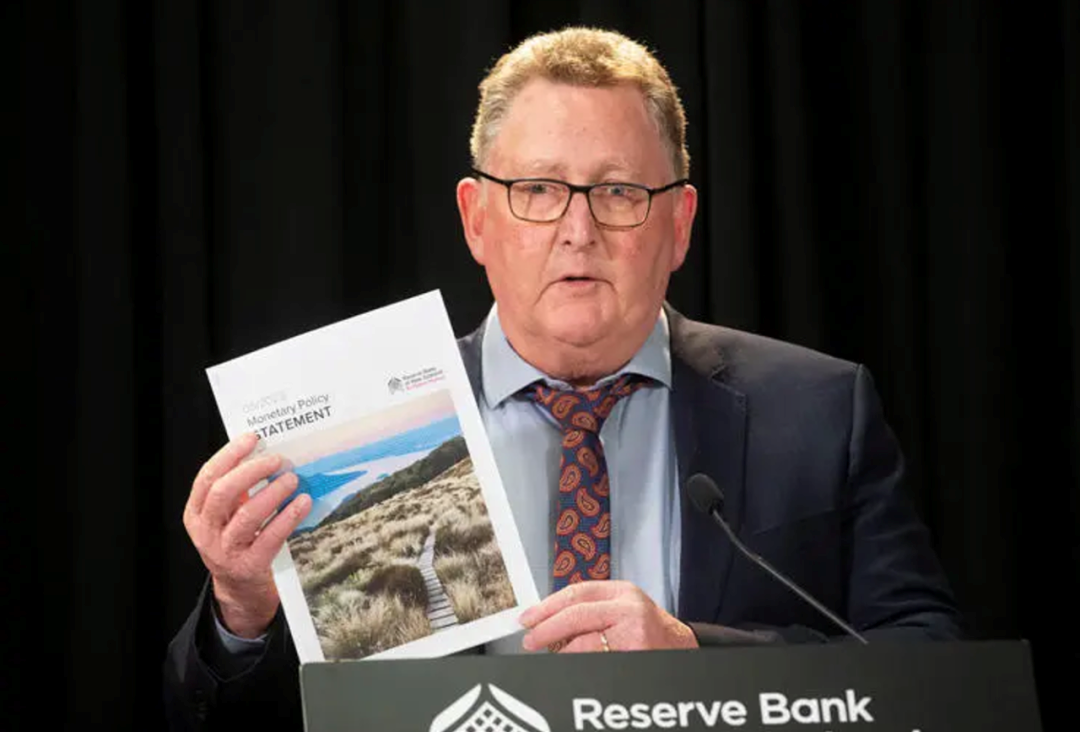
Reserve Bank of New Zealand Governor Adrian Orr will announce the latest Official Cash Rate this Wednesday
Expectations for the upcoming Monetary Policy Statement are that the OCR will not need to rise again, as the lagged effects of earlier sharp increases are still working to curb inflation. However, a number of economists already expect another OCR increase in November. What we need to watch is whether this Monetary Policy Statement projects a later start to OCR cuts. That will reveal the extent of the Reserve Bank of New Zealand’s concerns about high inflation and the likelihood of another OCR increase.
3
Labour announces it will remove GST from fruit and vegetables if elected
Labour leader and Prime Minister Chris Hipkins recently announced that, if elected, Labour would remove GST from fresh fruit and vegetables. Hipkins said New Zealand was beginning to emerge from a difficult economic cycle, but people still faced challenges, with food a major household expense.
The latest Stats NZ figures show food prices rose 1.6% month on month in June, the largest monthly increase this year, with fruit and vegetable prices rising 8.1% overall. For people struggling with the cost-of-living crisis, experts estimate the policy could leave them with an extra NZ$30 to NZ$40 to spend each week.
Responding to Labour’s move, National Party leader Christopher Luxon said supermarkets would be the real winners from removing GST on fruit and vegetables, with little difference for households.
4
Relative to their incomes,
is homebuyers’ borrowing capacity still constrained?
This Tuesday, the Reserve Bank of New Zealand will release the latest second-quarter mortgage data by debt-to-income ratio, a very important indicator for the property finance market. Lending at high debt-to-income ratios has already slowed recently under the rules, and the latest data may highlight this issue.
CoreLogic chief economist Kelvin Davidson said that if DTI restrictions were formally introduced next year, the aim would be to link long-term property returns more closely to income and limit the number of properties anyone could own at any point in time. Even when mortgage rates fall again, this would prevent a repeat of the frenzied buying seen in New Zealand’s housing market after the COVID pandemic.
5
Will rising net migration
boost demand in the local property market?
This week, Stats NZ will also release the latest net migration figures for June. Although the data over the past few months has shown signs of easing slightly, alongside more departures and fewer arrivals of non-New Zealand citizens, the figure remains very high and will continue to stimulate overall property demand.
6
Rents are steadily rising again
Stats NZ data released last week shows notable rental growth, with the annual rate rising from 3.5% in June to 4.1% in July. This is above the long-term average of around 3% and marks the fastest monthly pace of annual growth since June last year, when it was 5.1%. Will the extent of rent increases ultimately be constrained? We will wait and see.
7
New borrowers just want the cheapest interest rates
The Reserve Bank of New Zealand’s latest monthly new-lending data shows most borrowers still choose fixed-rate mortgages, with a 80% market share, rather than floating rates, which have a 20% share. Choices of fixed terms have also changed considerably. In March, for example, 35% of loans were fixed for 1 year, 24% for 2 years, and just 4% for 3 years. By June, those figures had changed to 28%, 18% and 16% respectively. In other words, lower fixed interest rates are more popular with new borrowers.