
Could New Zealand’s major banks raise interest rates again? This week’s key property industry questions
National recently pledged to shorten the bright-line test from 10 years to 2 years from July 2024, and gradually restore landlords’ interest deductibility, initially retaining it at 50%

How much will election promises affect future house prices?
National recently pledged to shorten the bright-line test from 10 years to 2 years from July 2024. It would gradually restore landlords’ interest deductibility, initially retaining it at 50%, increasing it to 75% in April 2025, and restoring full deductibility of 100% in April 2026. It would also allow foreign buyers to purchase properties priced above NZ$2,000,000, subject to a 15% purchase tax.
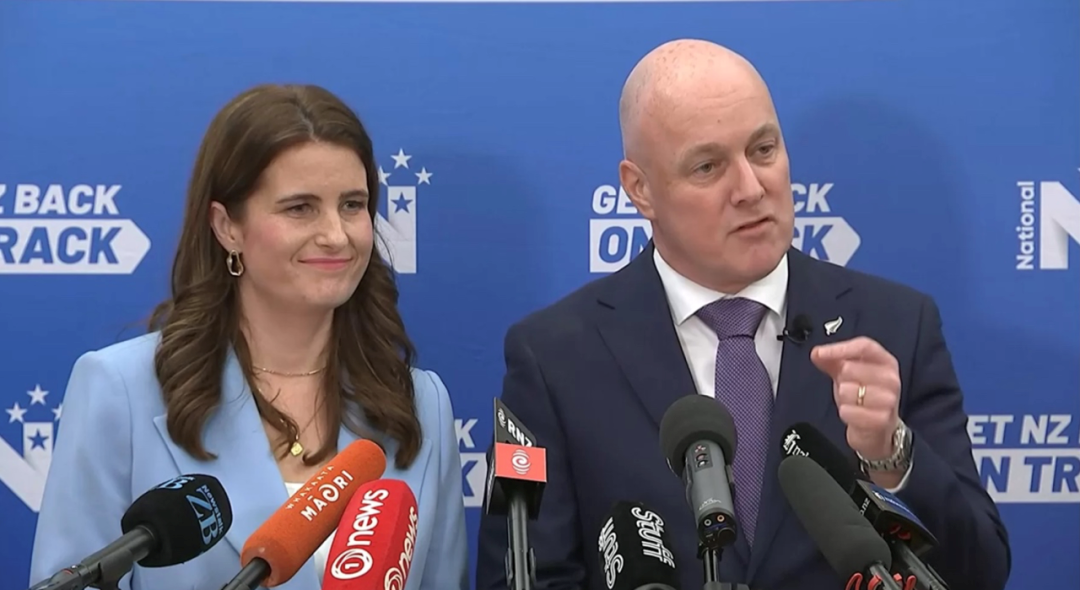
Last week, New Zealand’s National Party announced a NZ$14,600,000,000 tax relief plan
The general view is that these changes could give house prices an additional upward push, but their overall effect would be relatively modest. Although lifting the foreign buyer ban would attract more attention from buyers worldwide, it is currently difficult to predict how many would make New Zealand their first choice. Even before the ban took effect in 2018, foreign buyer numbers were very limited. Meanwhile, New Zealand currently has around 50,000 properties worth more than NZ$2,000,000, accounting for approximately 3% of all properties, so the impact would be negligible. Notably, properties worth more than NZ$2,000,000 account for 10% of properties in the Queenstown area, where lifting the ban could have a substantial effect on house prices.
Shortening the bright-line period would undoubtedly bring some investors back, but could also prompt some owners to sell. Existing investors would certainly welcome lower taxes, but how many investors this would entice back into the market remains unknown. Mortgage rates are currently high and rental yields remain low, making a high investment return unattainable on any property purchase at this stage.
2
Recent house price trends
The latest CoreLogic House Price Index report shows that although New Zealand’s national average house value fell slightly in August, by 0.2%, Auckland’s North Shore and Manukau, Wellington’s Upper Hut and central city, and Christchurch all recorded increases of varying sizes, as they had in July. Prices continued to fall in other areas, including Gisborne, Whanganui and Nelson. Poor housing affordability and persistently high mortgage rates are currently the biggest obstacles to house prices stabilising and recovering.
CoreLogic chief property economist Kelvin Davidson said that, looking at the national picture, he believed the housing downturn was largely over, even though prices were still falling in most areas. However, he also noted that the recovery could be extremely slow and prolonged, particularly if the Reserve Bank of New Zealand introduces debt-to-income limits at some point in 2024.
3
Is the employment rate still rising?
Just last week, Stats NZ reported that the number of filled jobs rose a further 0.3% in July, marking the 15th increase in 16 months. Total filled jobs were up 3.4% on the same period last year. Net migration to New Zealand has risen sharply this year, including many migrants with substantial wealth. This will help keep unemployment low while also supporting potential demand in the property market.
{ad}
4
Is the recession completely over?
New Zealand’s business activity index for July rose 0.4% compared with the same period last year, suggesting GDP could grow to some extent in the current third quarter. Of course, it is too early to declare the recession completely over; we still need to consider Stats NZ’s economic figures for August and September. Other current economic indicators are also concerning, including weakness in some major overseas economies and expectations of falling dairy prices. There are positive signs too: the Official Cash Rate has peaked, and mortgage rates are also close to their peak, although small adjustments remain possible.
5
Could banks raise interest rates again?
This week, the Reserve Bank of New Zealand will release mortgage lending figures for July, broken down by the circumstances in which loans were issued, such as new lending and existing debt being repriced. The latest figures show that more people are choosing fixed terms of around three years because these appear to offer better value than shorter fixed terms. This borrower preference may continue into July. Given the recent renewed rise in longer-term fixed rates, the August figures will attract considerable attention.
So, if you are about to refix your mortgage, what will you choose? Let us know in the comments below.