
Major housing policy changes after the election? Far-reaching implications for New Zealand's property market!
In June this year, The New York Times reported on New Zealand's struggling property market, where prices had plunged 18% over the previous 2 years, under the headline “Where house prices have plunged and billions in wealth have vanished”

Reserve Bank confirms house prices have bottomed out and begun recovering
In June this year, The New York Times reported on New Zealand's struggling property market, where prices had plunged 18% over the previous 2 years, under the headline “Where house prices have plunged and billions in wealth have vanished”. The article described steep house price falls following interest rate rises, and the difficulties homeowners faced as values declined and liquidity dried up. It also noted that New Zealand had some of the world's least affordable housing, with a persistent inability to build enough new homes to keep pace with population changes.
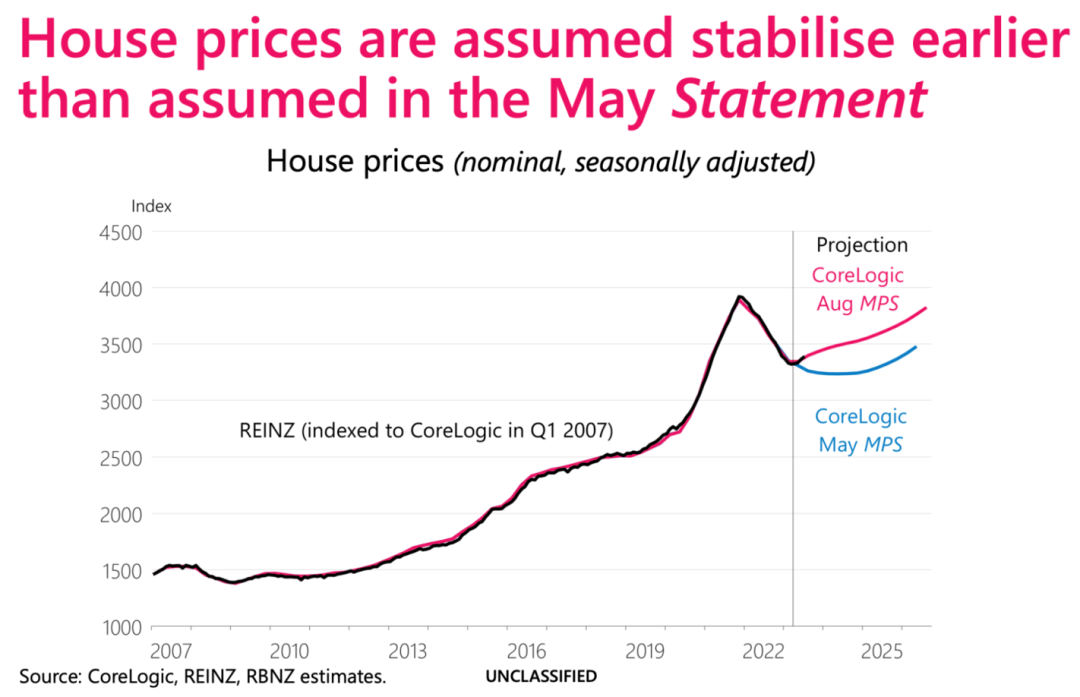
Ironically, however, New Zealand house prices were already bottoming out and beginning to recover when the report was published.
By August this year, the Reserve Bank of New Zealand's latest Monetary Policy Statement confirmed that house prices had bottomed out and begun recovering, with the total decline in this downturn smaller than previously expected.
The Reserve Bank of New Zealand also said house prices would bottom out and rebound faster than expected. The question now is no longer whether they have reached the bottom, but how quickly they will rise.
A roundup of the parties' housing policies
The answer will be closely linked to the outcome of New Zealand's October election: the speed of price growth will depend on the extent of policy changes. Most parties, with a few exceptions, have now released their housing policies. Local broadcaster RNZ summarised them as follows:
Labour: Not yet announced.
National: Give councils discretion over whether to implement the MDRS, which allow up to 3 homes of fewer than 3 storeys on a site without approval; prioritise housing growth in transport funding; establish a new NZ$1,000,000,000 fund to incentivise councils to approve residential sections; allow people under 30 to use KiwiSaver funds for rental bonds; amend the Overseas Investment Act and Income Tax Act to encourage build-to-rent development; and restore landlords' right to end tenancies without giving a reason.
ACT: Share half of GST revenue with councils supplying new residential sections; introduce a register of equivalent building materials; and replace existing building regulations with compulsory 30-year building insurance.
Green Party: Cap annual rent increases at 3% and link new tenancies to previous rents; introduce a Rental Warrant of Fitness health and safety inspection system; expand public housing provision and Māori-led housing projects; expand shared ownership, progressive home ownership and government low-interest loan schemes; provide government guarantees for community housing and government mortgage refinancing for struggling new homeowners; offer development incentives for high-rise, energy-efficient and accessible buildings, tax increases in land value near public transport hubs, and protect urban trees and green belts; and build 35,000 new, warm, affordable homes over the next 5 years.
Māori Party: Build 2000 homes on ancestral Māori land within two years; ensure half of new state homes are allocated to Māori; restrict immigration until the housing shortage is fully resolved; end sales of freehold land to foreigners; and apply the Overseas Investment Act to residential property purchases.
New Zealand First: Not yet announced.
The Opportunities Party: Replace the bright-line test with a land value tax and restore interest deductibility for rental properties; require a 100% deposit when buying existing homes for investment; return GST from new residential construction to councils for infrastructure development; establish a NZ$3,000,000,000 community housing fund; and require councils to demonstrate that they have enough land within their boundaries to accommodate national NPS-UD and MDRS planning requirements.
Although Labour has yet to announce its housing policy, we can infer that, if it remains in government, it will most likely continue existing policies. House prices would probably follow the trajectory shown in the Reserve Bank of New Zealand's chart. Banks have followed much the same approach, expecting prices to return to their 2021 peak in 2027.
But if National's property policies differ significantly from current policy, its election could bring major policy changes that alter the market. Today, we use National as an example to analyse one possible post-election outcome.
{ad}
National withdraws support for medium-density housing rules
National announced it would withdraw support for the Medium Density Residential Standards (MDRS), jointly introduced by the two major parties a year earlier. The legislation primarily relaxed previously strict residential resource consent requirements, making it easier to build multiple homes of 3 storeys or higher across much of many cities.
National announced that, if elected, it would no longer require councils to implement the MDRS legislation, whose main objective is higher-density development. Instead, councils would have to provide alternative land-use plans to meet future housing demand. As a supporting measure, National would seek to provide state-backed financing for land development.
Opposition to medium-density housing rules currently comes mainly from existing property owners, particularly those in desirable school zones and well-resourced areas. Many of these neighbourhoods are close to city centres, with attractive surroundings and a pleasant atmosphere. Owners certainly do not want several rows of 3-storey townhouses or two apartment buildings of 4–5 storeys suddenly appearing in their backyards. This would substantially lower the financial barrier to moving into the area, bring a more mixed population and increase traffic pressure. Homeowners near school zone boundaries are especially reluctant to see cheaper entry into the zone cause a surge in the number of students entitled to enrol, exceeding school capacity and prompting school zones to shrink.
Although such a policy would benefit some homeowners, it may not help New Zealand's overall housing shortage. While National would require councils to provide alternative land, much of it would probably be in outlying areas and would very likely be undeveloped greenfield land rather than developed brownfield sites.
Given New Zealand's infrastructure delivery efficiency and funding sources, creating alternative supply in the short term would probably be difficult. The practical result of disputes over responsibility would be difficulty replacing supply at scale. This would cause inner-city price growth to pull further ahead of the outer suburbs.
National to restore mortgage interest deductibility for investment in existing homes,
and reconsider the bright-line period
National says it will scrap the current Labour Government's policy preventing mortgage interest deductions for investment properties that are not new builds. Some calculations suggest the current policy reduces net rental returns on existing homes bought with a mortgage by around 15% or more.
This would be a significant positive for existing homes, while the effect on new builds would be neutral to slightly negative. In areas such as Auckland, close to 200,000 homes are rented out, accounting for more than 40% of housing. The vast majority are existing homes, so the impact would also be substantial.
Assuming an annual net rental yield of 3.5–4% of the property price, investment in an existing home could generate positive cash flow at a mortgage interest rate of 6% if investment mortgage interest were tax-deductible. Positive cash flow provides the impetus to keep acquiring assets through borrowing.
There has also been discussion within National about reducing the bright-line period from 10 years back to 2 years, and even about allowing overseas property purchases. In New Zealand's circumstances, property capital gains remain a stable source of tax-free returns, regardless of the bright-line period, offering a considerable advantage over other passive income. Such comments nevertheless highlight National's determination to support house prices. That confidence is precisely what investors need to return quickly.
If investors return to the market, first-home buyers who are currently active will predictably find themselves squeezed. Those who do not yet own property may continue watching prices rise in their preferred areas, leaving their dreams ever further out of reach.
Tighter supply and demand to drive future price surges
The shortfall in new housing capacity is clear—even The New York Times article mentioned at the start understands this. In 2 years, New Zealand will once again face a severe mismatch between supply and demand.
The chart below shows Stats NZ's new dwelling consent data. After 2 years of falling house prices and sharply rising funding costs, developers are avoiding starting construction wherever possible. New dwelling consent numbers have returned to 2020 levels.
Meanwhile, New Zealand's population continues to grow as large numbers of migrants arrive. Net migration will add at least 80,000 people this year, while total population growth will exceed 100,000, keeping housing demand high.
The chart below shows annual population growth data from Stats NZ. Bear in mind that the trigger for house prices rising as much as 40% in 2020–2021 was merely the small section outlined in red.
National's policies essentially reflect the wishes of voters in the areas it represents. House prices will continue to vary widely across New Zealand's regions. With interest rates still high and funding expensive, choosing the wrong investment direction could be very costly.
Factors beyond election policies will also shape housing market sentiment. Renewed oil price increases, alongside greater transport costs and travel times, are making development in outer suburbs increasingly difficult. This will further widen location-based differences in land rents between central and outlying areas. Owners in central urban areas are already becoming increasingly reluctant to sell.
For owner-occupiers, regional price gaps have yet to widen, so this could be the last opportunity to move to a better area. For investors, prime locations are expensive, and not every location is worth moving into. Only agencies with deep local knowledge can judge whether the premium for a prime location is reasonable. YIJU interviewed several experienced Barfoot & Thompson agents to hear their views.
Mike Liu
Residential/Rural Sales Albany Branch
Carrol Liu
Residential/Rural Sales Highland Park Branch
Aden Xu
Residential/Rural Sales Takapuna Branch
YIJU: Do you think New Zealand house prices will rise substantially after the election?
Mike Liu:We generally believe that if National is elected this year and introduces some favourable policies, property prices will certainly rise. However, the main factor will still be mortgage interest rates. High interest rates do affect how much many groups of buyers can borrow.
Aden Xu:Not in the short term. People will continue watching for a while to see what further positive news and policies National offers the housing market—assuming, of course, that National succeeds in taking office this election. Modest growth from next year remains very possible.
YIJU: Which Auckland locations offer investors greater potential for capital growth?
Mike Liu:For investors, I have always maintained that large sections in the main urban area—the older suburbs—offer the greatest potential for capital growth.
Carrol Liu:Over the long term, homes in sought-after school zones and properties on large, subdividable freehold sections offer the greatest capital growth potential. Central Auckland, the North Shore and East Auckland are the most representative areas. They have highly ranked state schools and well-known private schools, alongside relatively pleasant living environments.
Aden Xu:Large freehold sections in established school zones remain popular.
YIJU: When is a good time for prospective owner-occupiers who are still waiting to enter the market?
Mike Liu:For owner-occupiers, prices are certainly relatively close to the bottom now. Most people currently find it difficult to obtain a mortgage, while investors are barely buying, making this a good time for buyers to act. If new policies are introduced, bank interest rates fall, and large numbers of investors and well-funded buyers enter the market, ordinary owner-occupiers will certainly become less competitive. That pattern never changes.
Carrol Liu:I believe the current period is the best time for first-home buyers purchasing a home to live in. Prices are still much lower than during the upswing, so prospective owner-occupiers should act as soon as possible before the election. This is especially relevant given the many significant positive announcements parties have made ahead of this year's October election. If a new party takes office, house prices will certainly rise to some extent. Judging by current transactions, most buyers entering the market need a home to live in, while there are relatively few investors because everyone is waiting to see the policies. It is difficult to guarantee that investors will not enter after the election. Our reminder is to buy sooner rather than later.
Aden Xu:Buyers are clearly becoming more active now. After more than a year of subdued activity, those who need to buy are buying, and those with pre-approval are no longer waiting. When they see a good property, they compete at auction. Clearance rates are soaring, especially for homes in sought-after school zones. Good listings remain relatively scarce, so I suggest acting quickly when you find one.
Disclaimer: Articles in this column reflect the personal views of industry practitioners or authors, do not represent YIJU's views and do not constitute investment advice.