
Prices are rising! Latest property market survey released: is the downturn completely over in these three New Zealand cities?
The latest OneRoof-Valocity house price index report shows Auckland, Christchurch and Wellington have recorded their first quarterly house price increases in more than a year
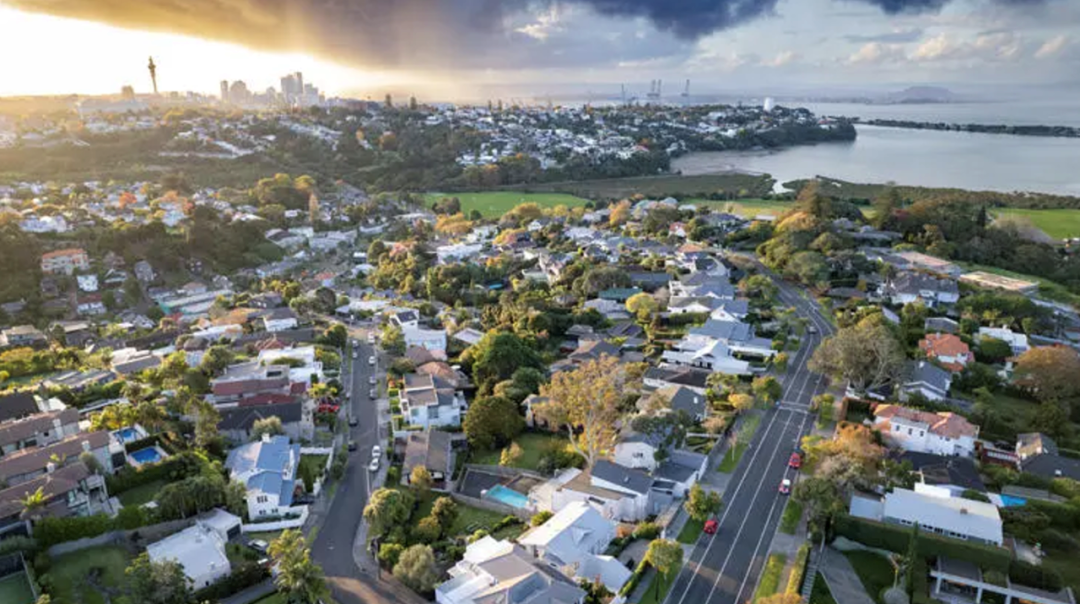
The latest OneRoof-Valocity house price index report shows Auckland, Christchurch and Wellington have recorded their first quarterly house price increases in more than a year.
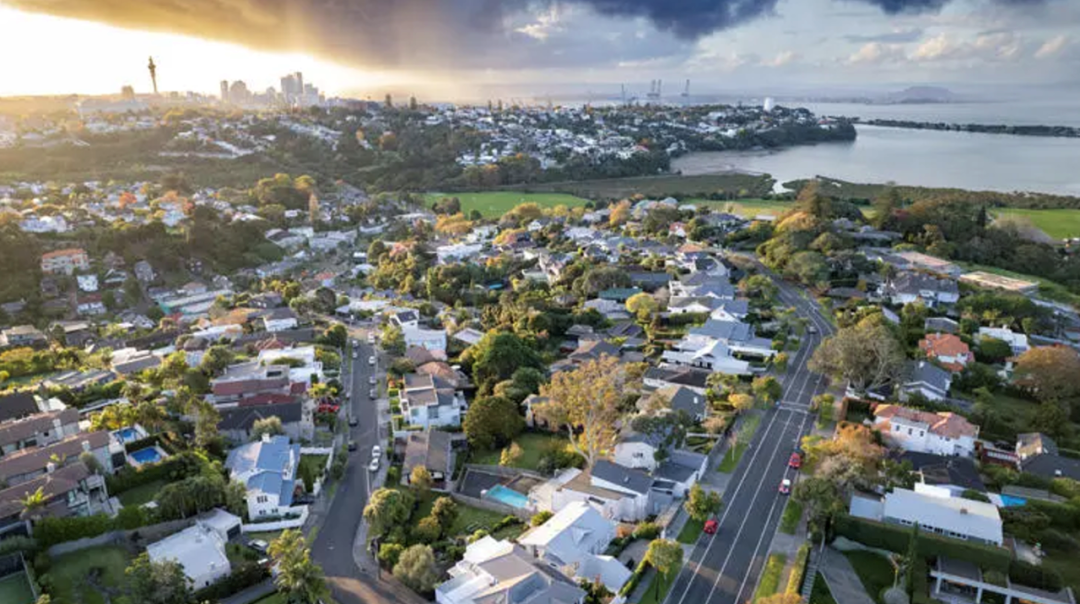
In the three months to 21 August, the average house price in Auckland’s Remuera rose by 1.7%
House price changes across the country’s main regions over the past three months
The data indicates that the overall downward trend in New Zealand house prices has ended. Although national prices fell 0.1% over the past three months, the average price has increased every week since July.
In the three months to 21 August, Auckland’s average house price rose 0.3% to NZ$1,294,000, ending a property downturn in which prices fell by more than 18% overall. Although the increase is modest, Auckland’s property market is in a relatively optimistic position as it heads into its busy season.
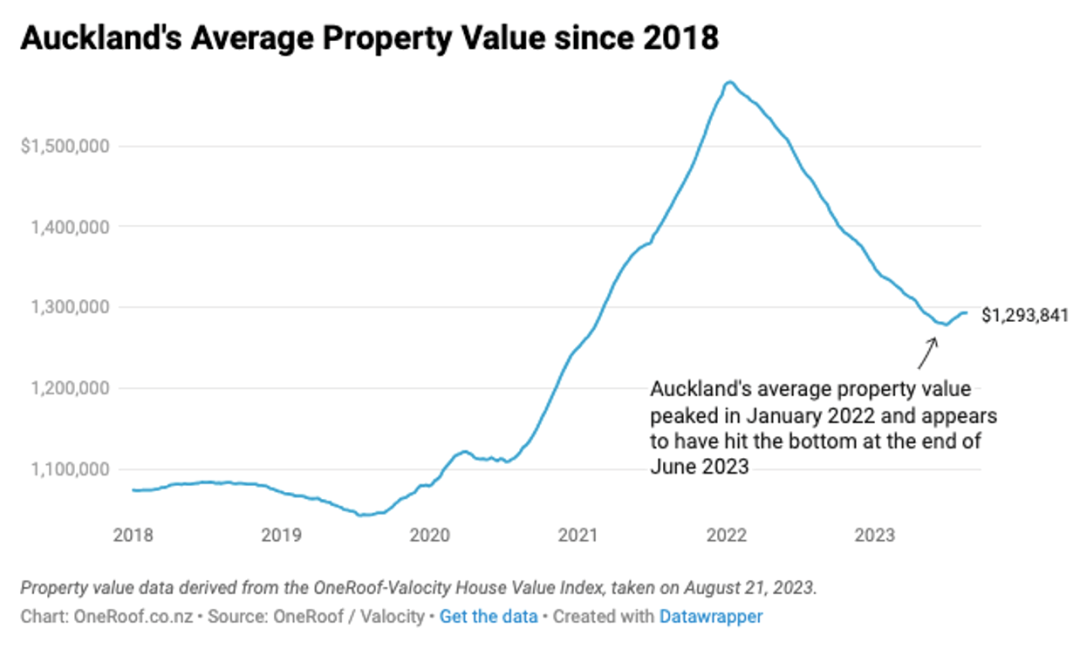
2018 to present: changes in Auckland’s average house price
Christchurch’s average house price jumped 2% over the past three months to NZ$758,000, while house price growth across Canterbury reached 0.9%.
The capital, Wellington, recorded a smaller increase, with its average house price edging up just 0.1% this quarter to NZ$981,000.
{ad}
Some other regions also recorded increases alongside these three cities. Over the past three months, house prices rose in Southland (0.6%), Hawke’s Bay (0.5%) and Gisborne (0.2%). However, Cyclone Gabrielle’s impact has left Gisborne and Hawke’s Bay with fewer property listings and greater market volatility. The data also shows that the property downturn has finally reached the West Coast, where the average house price fell 0.9% this quarter. This was its first decline since the outbreak of COVID.
A closer look at what this quarter’s house price increases mean
OneRoof property editor Owen Vaughan said that since early June, he had noticed more prospective buyers at open homes in Auckland, Christchurch and Wellington, while auctions had returned to their former bustle. Such a lively property market would have been unimaginable in April and May. Vaughan added that one factor driving house prices higher is a shortage of properties for sale, with new listings over the past three months down 13% year on year and the total stock of properties for sale down 1.4% on the same period. Meanwhile, numerous real estate agencies have repeatedly reported steady growth in appraisal requests for properties being prepared for listing. Yet the market still appears somewhat hesitant, as many prospective sellers are waiting until after the election to enter the market.
The quarterly increase in Greater Auckland’s house prices has brought the region’s average price back to its March 2021 level. Strong performances on Auckland’s North Shore and in South Auckland, where average prices both rose 0.8% this quarter, and in Auckland City (0.5%) drove the region’s overall increase.
Valocity’s global chief executive of real estate, Helen O’Sullivan, said the latest data showed house prices had largely stabilised and were even rising in some areas. Property transaction volumes, a key measure of market confidence, were growing steadily.
O’Sullivan said she remained cautious about the view that house prices had bottomed out and begun to recover, partly because transaction volumes had been very low and there was certainly some pent-up demand. However, banks’ wholesale funding costs remained high and retail interest rates were gradually rising, so a degree of caution persisted in the market. She expected the market to move gradually towards higher transaction volumes. Reassuringly, this growth represented a return to a “normal” market rather than an irrational surge in transactions.
Valocity senior research analyst Wayne Shum said the increase in property transactions was concentrated in the NZ$600,000 to NZ$800,000 price bracket, particularly in Auckland. The average price of the best-selling properties was within first-home buyers’ reach, although prices were also rising in more expensive suburbs such as Remuera and Merivale. This suggested some buyers were taking the opportunity to buy in their preferred neighbourhoods at the bottom of the market. He also believed it was too early to conclude that house prices had bottomed out and begun to recover. The market still faced strong headwinds: high mortgage rates were limiting buyers’ repayment capacity, while the major parties’ proposed property policies for the election remained inadequate.