
Which party can build more homes and resolve tensions between landlords and tenants? Who should you vote for this election? A look at how New Zealand's political parties propose to tackle difficult housing issues
Overview: the parties' housing policies
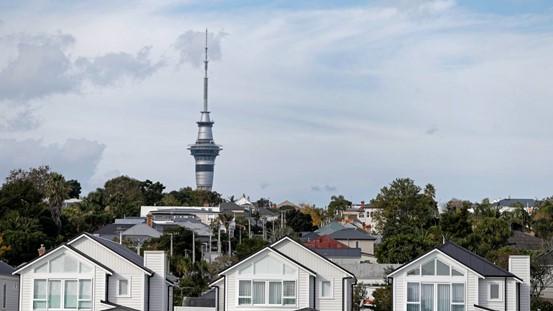
New Zealand's 2023 election enters its final stretch this week, and housing, an issue central to people's livelihoods, has again become a key electoral battleground. The parties differ sharply, particularly over how to build more homes to curb rising prices and how to balance the interests of landlords, first-home buyers and tenants.
YIJU New Zealand previously published an overview of the parties' tax and housing policies, and in this article we will examine the housing platforms of several major parties contesting this year's election and the solutions they propose.
Click the link below or scan the QR code to read our earlier article for details of each party's policies.
https://www.yiju.co.nz/news/2023--voting-future-policy

|
Labour and the Greens As in previous election campaigns, Labour and the Greens consistently seek to portray themselves as parties offering fair opportunities to the 'proletariat'. Their promise is to help New Zealanders build the cities of the future by constructing new apartments near public transport hubs and providing more social housing and stronger protections for tenants. |
|
National and ACT National and ACT both say the best solution is a highly liberalised property market, suggesting that avoiding excessive policy intervention may be the best approach. They want property investors to be free to invest and build more homes. |
|
Te Pāti Māori and other smaller parties Meanwhile, other smaller parties, such as Te Pāti Māori and TOP, have also proposed housing policies. Their focus is on promoting home ownership, particularly among Māori. |
Next, we examine housing affordability, the supply of new homes, and the interests of investors, first-home buyers and tenants.
How can housing affordability be improved?
Housing affordability has been a central concern for everyone in previous elections. In this election, however, most parties have made no promises to control house prices or prevent them from soaring. This may be because past experience has repeatedly demonstrated how misleading such policies can be.
Many property experts believe interest rates are the most important factor determining whether house prices rise. For example, interest rates fell for most of the past 15 years, while house prices surged, both under National from 2008 to 2017 and under Labour from 2018 to 2021. When interest rates kept rising over the past two years, house prices crashed. However, the major banks' lending rates are heavily influenced by the Reserve Bank's OCR, and the Reserve Bank should, in theory, remain politically neutral.

So where can the parties' policies influence the housing market? One example is Labour's removal of tax relief for property investors during the current government's term, while making them spend more to improve the living standards of rental homes. These changes reduced property investors' returns, affecting demand for homes. Other buyers also faced restrictions under new rules, such as greater difficulty obtaining a mortgage. This likewise weakened demand, leaving most New Zealand tenants and first-home buyers struggling to afford their first owner-occupied home even as house prices fell.
At the same time, there is no denying that Labour's term has also seen a construction boom, with approvals for new homes reaching a record high, although high construction costs and falling house prices may cause the new-build market to contract over the coming years. A year ago, Labour also pushed through a nationwide housing construction plan aimed at increasing the supply of market housing by encouraging more apartment buildings near public transport hubs. Labour also passed two new laws to replace the long-criticised Resource Management Act. Critics argue that Labour's housing plan seeks to impose apartment living and public transport use on everyone.
The Greens' policy appears more radical: they would allow developers to build at higher densities than under Labour, provided the new apartments meet higher energy efficiency and sustainability standards.
Earlier, National stood alongside Labour in supporting the government's plan to mandate housing intensification across all major cities. National has now reversed that position. It still wants more apartment buildings, but believes housing supply should grow faster by pushing councils to release more land on urban fringes. This policy would require most councils to immediately zone enough land for development to meet housing demand for the next 30 years. This means National supports both higher-density housing and the wishes of homeowners in wealthier neighbourhoods who do not want taller developments near their homes.

The rights of homeowners and tenants
During its time in government, Labour introduced stronger protections for tenants and launched a programme through Kāinga Ora to build more social housing. Labour argues that people are renting for increasingly long periods and deserve healthier, safer homes and greater rights, while housing stability brings better health and education outcomes for families.
The Greens want to take this further through new protections, such as a rental warrant of fitness, and a target of building 35000 affordable homes within five years.
Meanwhile, Te Pāti Māori wants to build 2000 homes on ancestral Māori land and allocate half of social housing to Māori.
New Zealand First says it aims to develop a new policy to support older people who are still renting.
{ad}National and ACT also say they aim to build more social housing. National would seek to involve a wide range of community groups in building homes, rather than relying solely on Kāinga Ora. However, both National and ACT want to repeal many of the tenant protections Labour introduced. They argue that landlords provide housing, and making their investments profitable can keep the rental market competitive and thereby lower rents. They promise to minimise or eliminate tax on capital gains for property sellers, while offering property investors tax relief by allowing them to deduct interest expenses. They would also allow landlords to require tenants to leave with 90 days' notice without giving a reason. Another reform would allow overseas buyers to purchase homes worth NZ$200 or more, subject to an additional purchase tax of 15%. Critics, however, argue that the calculations behind the overseas buyer tax appear misleading and have not been endorsed by any mainstream economist. They believe lifting the overseas buyer ban and restoring tax deductions for landlords' interest expenses could push house prices up again.
Next, we review the parties' different housing platforms:
|
Labour
|
|
National
|
|
The Greens
|
|
ACT
|
|
Te Pāti Māori
|
|
New Zealand First
|
Sources: NZ Herald, Newsroom and the political parties' official websites