Nearly thirty years of data: how much do New Zealand election results really affect the property market?
Many people believe election results have an immediate impact on the local property market. Is that really the case? [・_・?]

Andrew Nicol, a partner at property investment company Opes Partners, recently examined property market data from the past 9 elections in depth. He concluded that property transaction volumes tend to decline before an election, while demand to buy property is 12% higher after polling day than beforehand. The chart below compares sales in the 12 months before and 12 months after elections. It shows that transaction volumes typically fall in the 10 months before an election, then rise substantially in the 3 months afterwards as more buyers return to the market.
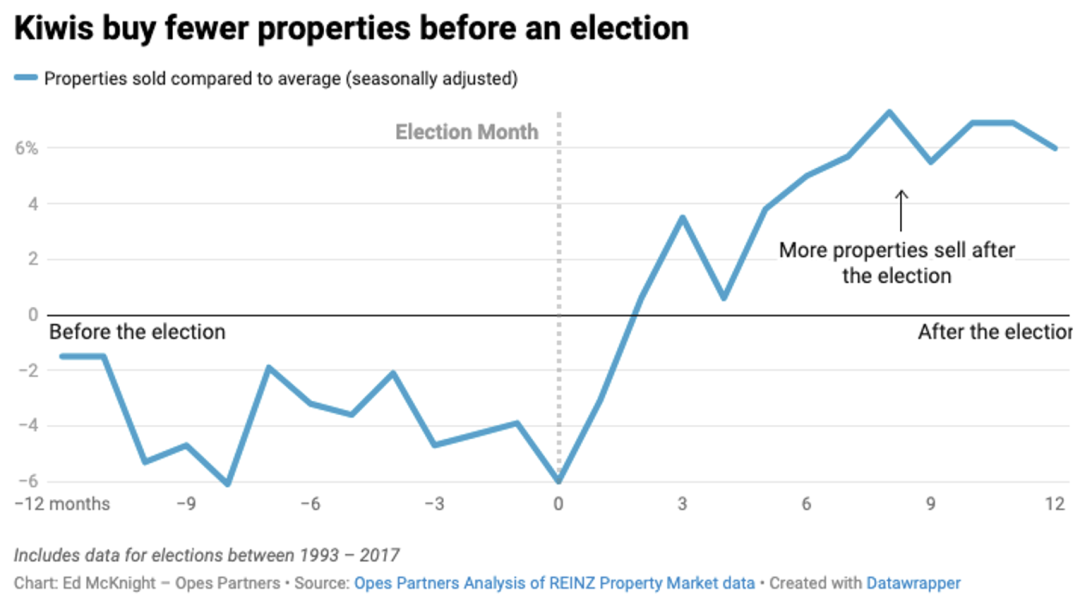 Changes in New Zealand property sales volumes before and after elections, 1993–2017 (source: Opes Partner Analysis; also the source for the charts below)
Nicol excluded the before-and-after figures for the 2020 election from this analysis. New Zealand had just emerged from the shadow of the COVID pandemic at the time, and the property market experienced an unprecedented boom, potentially obscuring underlying trends. In his view, among the past 9 elections, this year’s circumstances most closely resemble those of 2008, when the Southeast Asian financial crisis pushed New Zealand into recession and property prices fell rapidly…
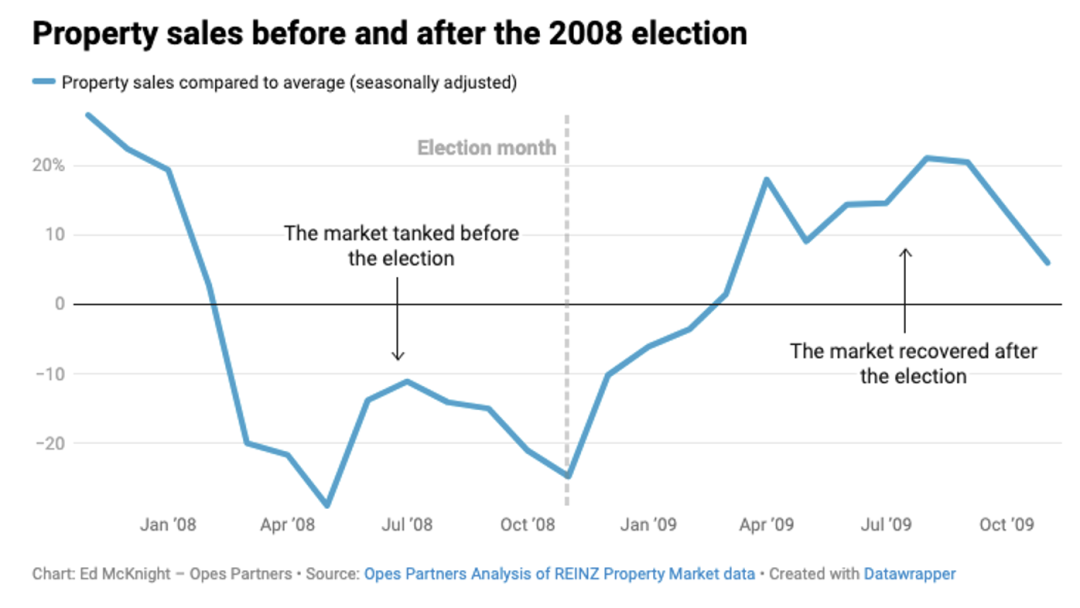 Changes in New Zealand property sales volumes before and after the 2008 election
With 12 months to go before the 2008 election, people were still buying substantial numbers of properties. But as polling day approached, transaction volumes fell sharply. In a dramatic turnaround, home sales recovered after the election, although this movement partly reflected the market’s traditional seasonal recovery.

So, following the National Party’s victory in this election, will property sales also change significantly?
After comparing post-election property data over nearly 30 years, Nicol concluded that property sales volumes rose only slightly after Labour victories, but increased substantially whenever National won.
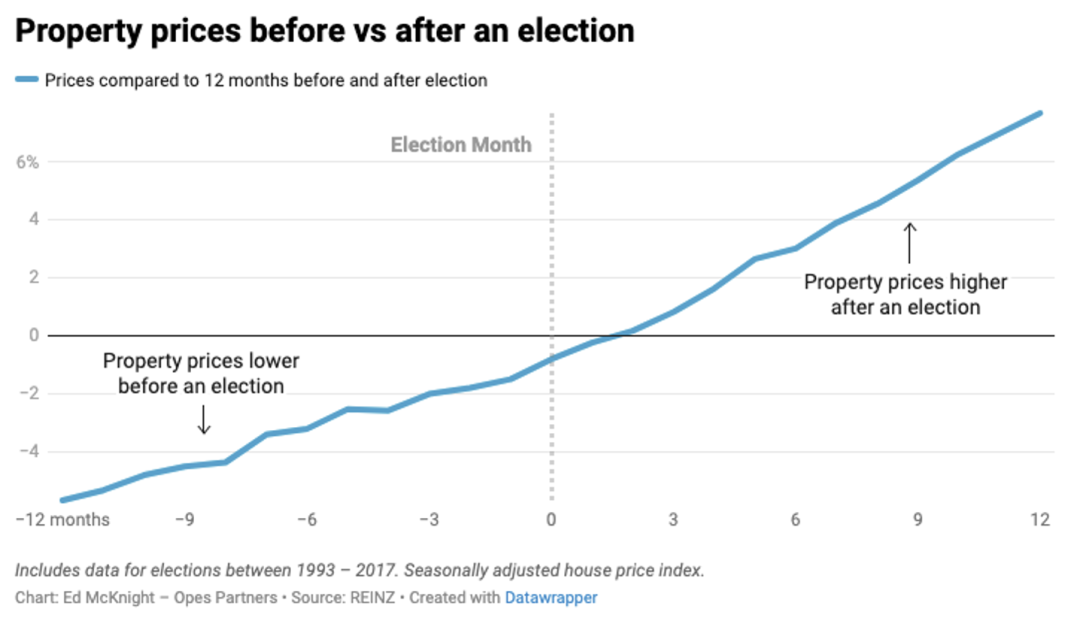 Kiwis were more inclined to buy new homes after National victories between 1993 and 2020
Looking at house price data for the 12 months either side of each election in the chart above, prices generally fell by 6% before elections and rose by 6% afterwards. Interestingly, average house prices did not fall in the period immediately before an election.
Understandably, most people choose to wait for the election result before deciding whether to buy a home. As the outcome becomes clearer, people gain confidence in the new government and look forward to its forthcoming policies, bringing a corresponding rebound in the property market.
Nicol concluded that one thing was certain: buying a home becomes harder after the election, because once National’s return to power is confirmed, more investors will enter the market, meaning greater competition for buyers。