
New home supply set to fall for 18 consecutive months as an Auckland housing supply crisis brews
Why are so many people still buying homes during the election? Generally, buying major assets such as property carries some risk while the outcome of New Zealand’s election, held every 3 years, remains uncertain.
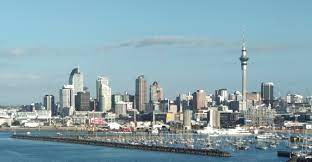
| Why are so many people still buying homes during the election? |
Generally, buying major assets such as property carries some risk while the outcome of New Zealand’s election, held every 3 years, remains uncertain. The parties propose vastly different housing policies, so different election outcomes can lead to substantial shifts in policy expectations. Property auctions are therefore usually relatively subdued during election week. Yet the week just past defied historical experience entirely, recording the busiest auction activity of the year.
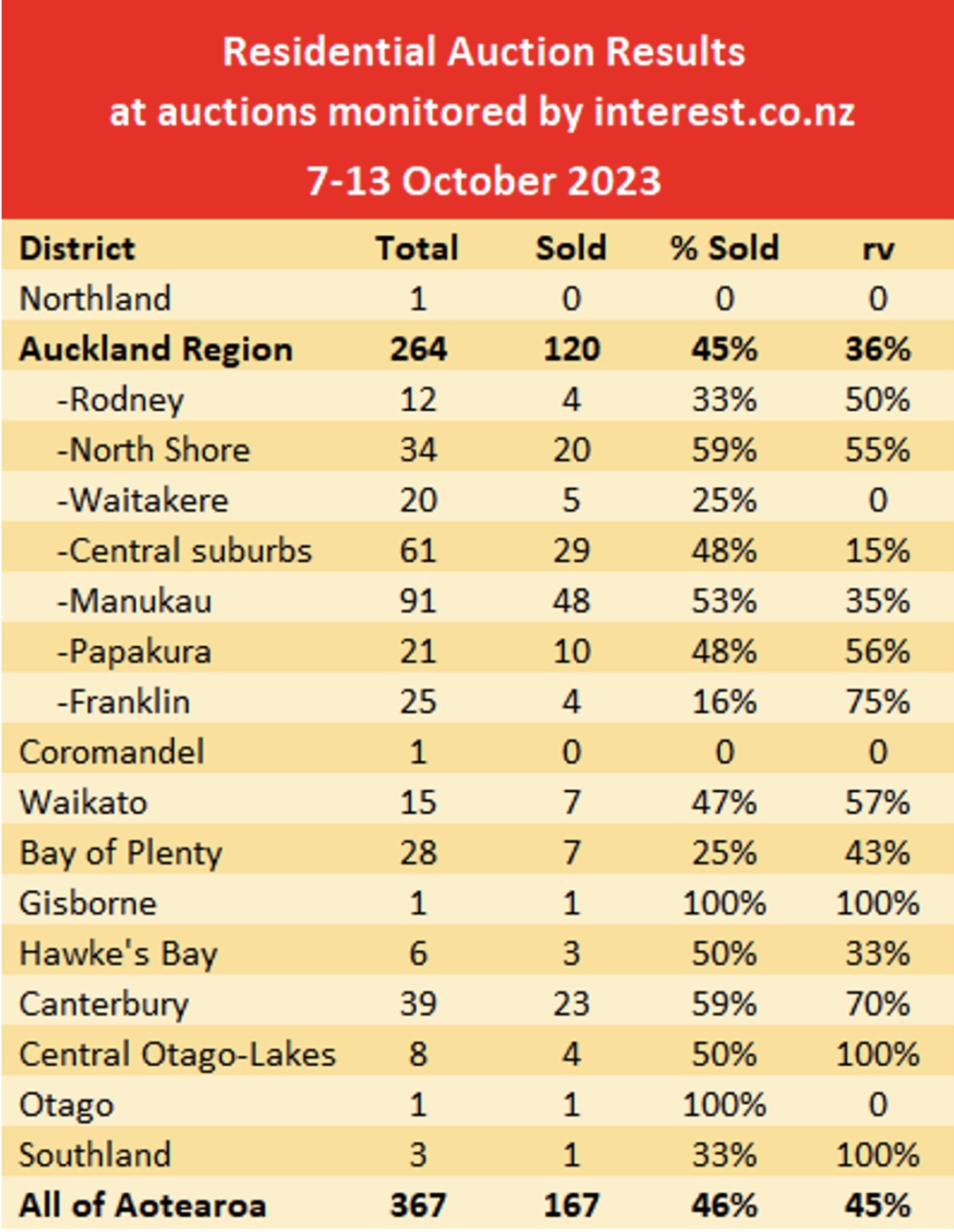
During the week from 7 to 13 in month 10, 367 residential properties were offered at auction across New Zealand, the first time in 2023 that auction numbers had exceeded 300. The previous busiest week was during the summer peak, in the final week of month 3, when 294 properties were offered. The auction success rate also remained high at 46%, taking the number actually sold to a new high for the year.
This unusual result signals strong purchasing power and market confidence, and also reflects buyers placing early bets on a victory for a new centre-right coalition government.
Auckland led the auction results by a substantial margin, with 120 of the 264 properties offered selling, accounting for 80% of the national total. Most were homes meeting essential housing needs in lower- to middle-priced areas. Together with other figures, these results are beginning to hint at a possible housing supply crisis in Auckland.
| Auckland home completions set to plunge next year |
According to Auckland Council data, the number of code compliance certificates (CCCs) approved for completed homes peaked at 1742 in June this year, before falling to 1497 by August, a decline of roughly 20%.
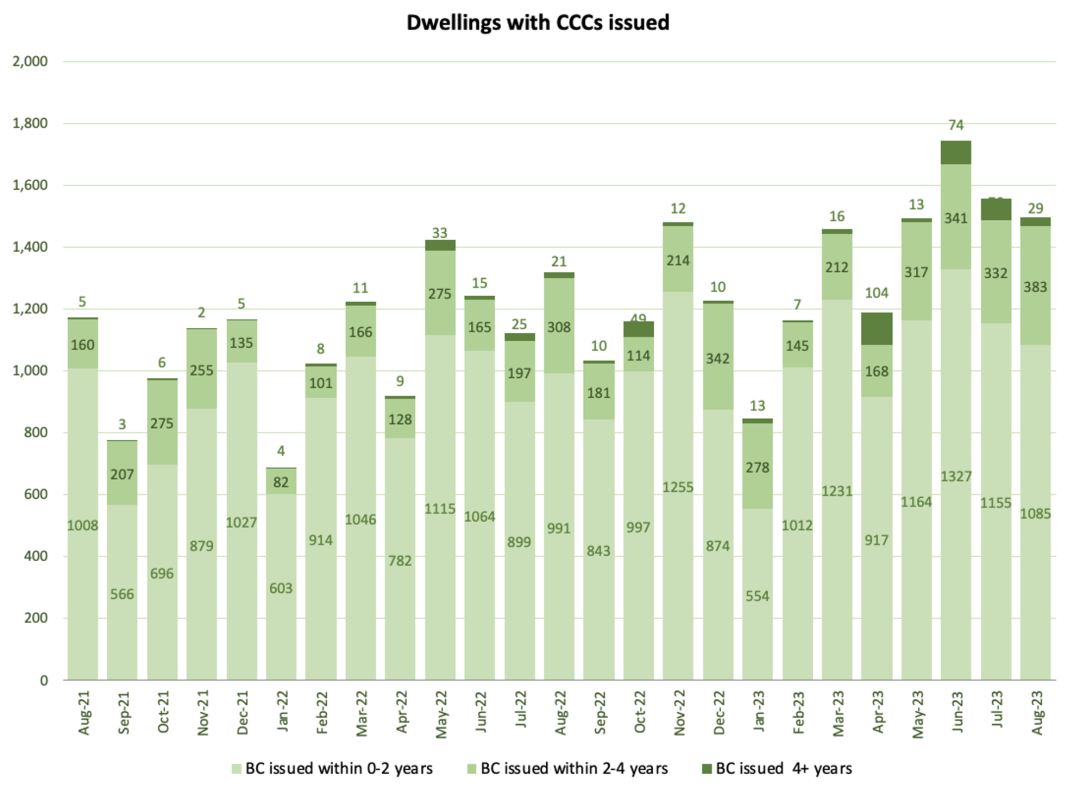
At first glance, the decline does not look substantial. The concern, however, is that this may be only the start of a trend. CCC numbers are generally determined by the number of building consent applications for new homes made 1.5–2 years earlier. The sequence is to apply for building consent, build the home, then apply for a CCC once it is complete. Construction generally takes 1–2 years, so CCC numbers lag building consents by around 1.5 years.
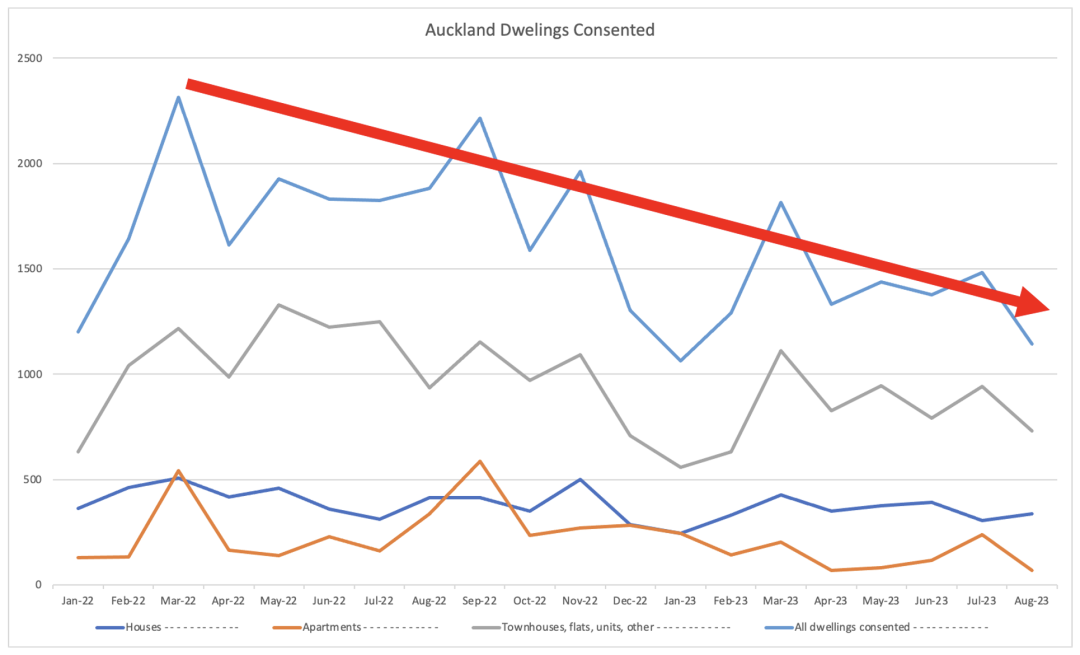
The chart above shows building consent applications peaking at 2313 in March 2022, then declining steadily. By August, almost 18 months later, they had fallen to 1142, a drop of as much as 50%!
This means new home completions, measured by CCCs, are very likely to decline steadily from June this year, taking almost 18 months to bottom out and recover. Statistically, completions in 2024 are expected to be around 1/two of those in 2023.
With 15876 new homes receiving CCCs over the rolling 12-month period, fewer than roughly 8000 new homes may enter the market next year!
As things stand, many developers are still waiting on the sidelines and have yet to commit to major projects. This means the contraction in supply will continue beyond the next 18 months.
| Rents soar as a housing supply crisis looms |
Turning to demand, migrants are still arriving rapidly. In the 12 months to August this year, net migration reached nearly 96,000 people, equivalent to more than 30,000 households. Based on past experience, more than 70% of these migrants will stay in Auckland, far exceeding the city’s supply of 15,000 new homes.
Looking at migration trends, there have been no measures to halt immigration on a large scale. This means that if only 8000 additional homes are available next year, the balance between supply and demand could become extremely tight.
The first sign in the market has been a sharp rise in rents.
The latest rental price index report released by Stats NZ last Thursday showed that rents for new residential tenancies signed in September rose a further 7.2% over the year to the end of September, the second-highest annual increase on record. Auckland rents set a new record, with annual growth reaching a striking 9.4%.
The Trade Me Rental Report, which offers a more representative picture of major cities, reported the following results in October:

With the borders open and domestic students, international students, tourists and city-centre workers returning to Auckland, the supply and demand situation bears some resemblance to 2020.
| Interest rates remain high, but a rate-cutting cycle lies ahead |
{ad}Looking back at 2020, rate cuts by the Reserve Bank of New Zealand, combined with insufficient market supply and migrant arrivals, ignited the property market, driving a frenzied rise of nearly 45% in house prices across 2020 and 2021.
Current mortgage rates are a long way from those of 2020. The Reserve Bank of New Zealand’s benchmark official cash rate (OCR) is around 4–4.5% higher than in 2020. Under the Reserve Bank’s plans, rates may remain high for another 9–12 months, with a rate-cutting cycle beginning in 2024.
As housing supply problems gradually emerge, persistently high interest rates may restrain house price growth, but they still cannot prevent upward pressure from a supply and demand imbalance. For now, property professionals, ordinary homebuyers and investors remain caught in the fear generated by more than 1 year of high interest rates.
Once that fear subsides, signs of rate cuts emerge and demand trends shift, the situation could change abruptly. Although it will not repeat the frenzy of 2020 to 2021, the combined effects of supply and demand, interest rates and new property policies could still give the market remarkable momentum once it gets moving.
| Auckland’s multi-unit housing supply falls sharply while sales surge |
The growing tension between supply and demand will be most pronounced in Auckland, where these pressures will be greatest in the years ahead.
The earlier chart of Auckland building consents shows consents for townhouses, units and terraced homes falling from a peak of 1329 in May 2022 to the current 730. Only apartments recorded a steeper decline, with numbers dropping from more than 500 to fewer than 100. This points to a shortage of newly built multi-unit homes over the next 18 months.
On market absorption, Auckland’s largest real estate agency, Barfoot & Thompson, provided the following sales figures for lower-priced homes in September, the month just ended:
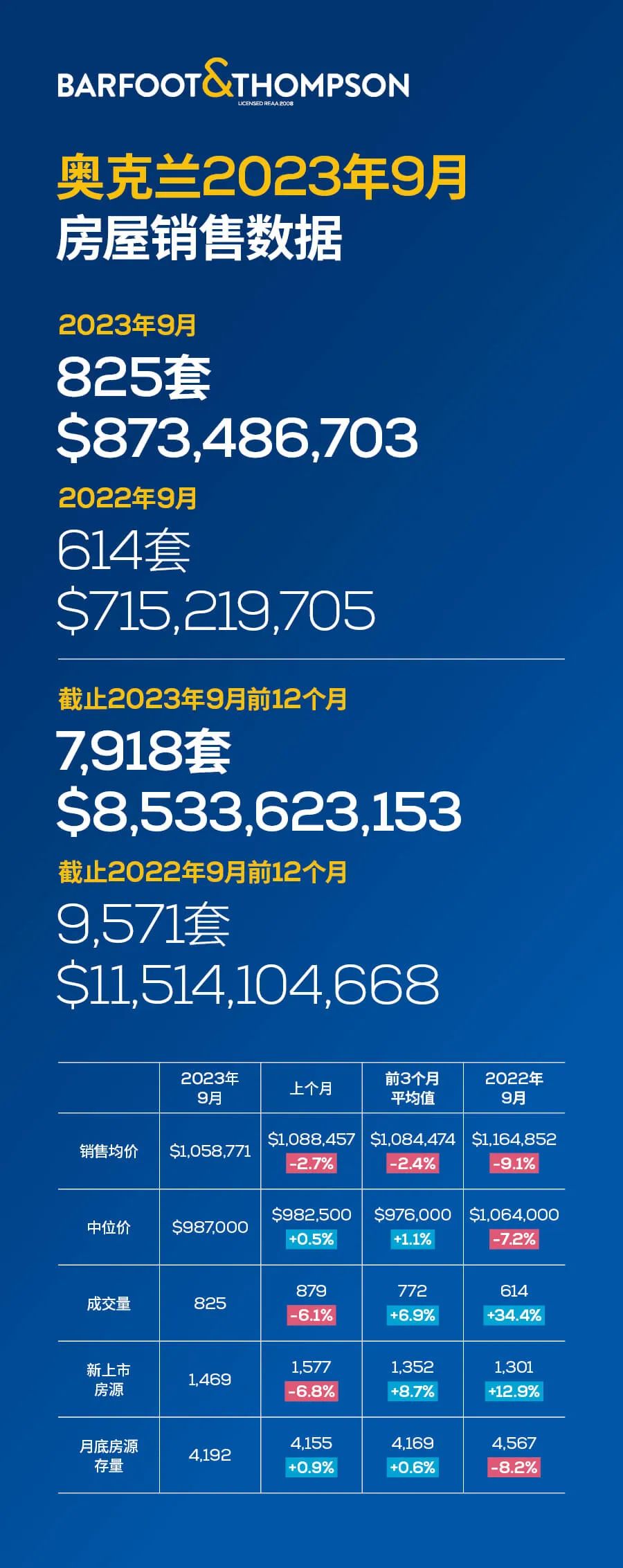
Barfoot & Thompson managing director Peter Thompson said:
|
“Properties valued below NZ$750,000 played a significant role in September sales, accounting for 26.3% of all sales. This highlights the growing prominence of apartment and townhouse sales in the Auckland market.”
|
Comparing September 2023 with September 2022, sales volumes rose by around 34% and total sales value increased by roughly 22%. This underlines the strong demand for homes with lower purchase prices in the current market.
| Run-down homes on large sections regain favour |
Alongside owner-occupiers selling their homes, some investment buyers are also starting to appear. In particular, developers with no land holdings, or only limited reserves, have begun returning to the market for run-down homes on large sections.
For example, the property pictured below in Glenfields on Auckland’s North Shore occupies a 688-square-metre site suitable for development. It sold at the end of August through Auckland’s largest agency, Barfoot & Thompson, at a brought-forward auction. Bringing an auction forward means a pre-auction offer has already exceeded the seller’s expected price.
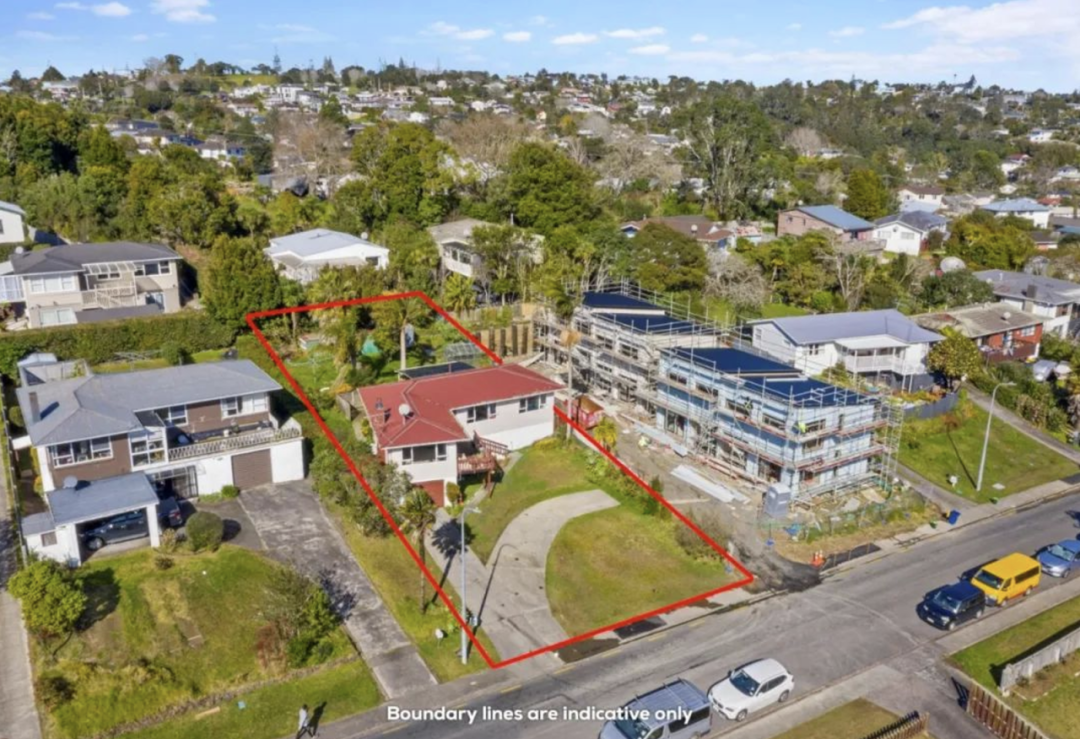
According to information supplied by Barfoot & Thompson, 4 groups took part in the brought-forward auction, all professional property buyers. Bidding opened at $1,250,000, and after more than 50 bids, the property sold for $1,400,000.
For a development property like this, the time from purchase to completion of construction and development is close to 2 years. This means that even if development sites continue to sell strongly, Auckland’s property market will face mounting housing supply shortages from the second half of this year through the next 2 years, or even longer.
Barfoot & Thompson is the real estate agency that knows Auckland best
Barfoot & Thompson accounts for 1/3 of Auckland’s home sales,
far ahead of every other real estate agency.
|
Our services |
|