
Three parties have largely reached agreement! Latest data: Aucklanders face paying thousands of dollars more each year! This week's key property market developments
They are in the “final stages” of agreeing on a policy programme.


According to media reports, New Zealand's prime minister-elect and National leader Christopher Luxon announced today that National had made significant progress in coalition negotiations with New Zealand First and ACT. Luxon said he had reached policy agreements with both coalition partners, but Cabinet membership and the allocation of ministerial portfolios had yet to be settled.
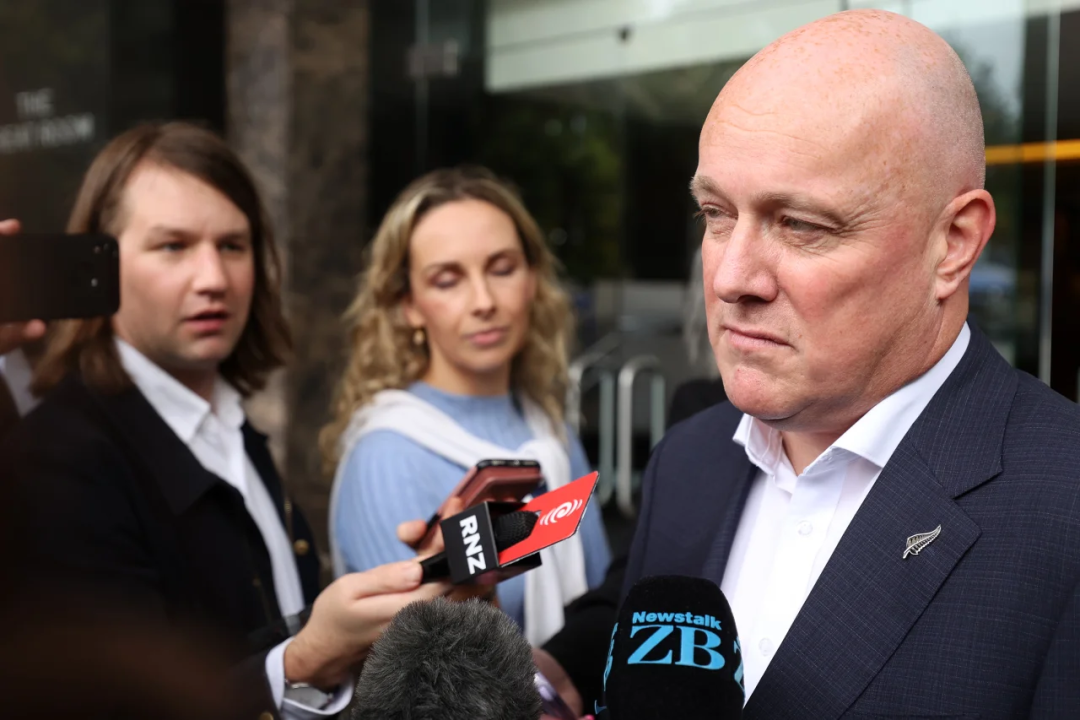
Luxon emphasised that, to ensure ACT and New Zealand First could support each other's work programmes, both leaders had read and understood the other's agreement with National. He also said the next step in negotiations was to allocate Cabinet roles, which would not take too long, although he gave no specific timetable.
He added that all three parties had needed to make concessions during negotiations, but there were also many areas of overlap. “Once the new government is formed, there will be a great deal of work to do.”
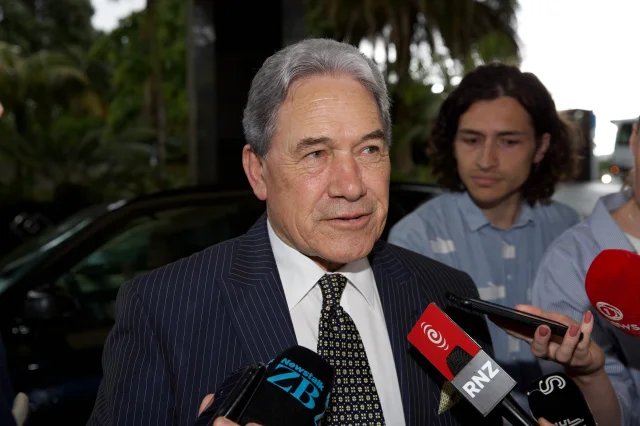
At around five in the afternoon, New Zealand First leader Winston Peters also spoke to reporters, saying he was almost ready to agree on a policy programme with National. Winston Peters had just finished a 90-minute meeting with National's leader and said they were in the “final stages” of agreeing on a policy programme.
 According to the latest data released by Stats NZ, rent growth remained strong in October. Average rents nationwide were up 6.1% on a year earlier, roughly double the long-term average growth rate of 3.2%。
Increases in Auckland (8.5%) and Canterbury (6.3%) were notably above the national average. By contrast, the rental market in the capital, Wellington, was somewhat subdued (-0.2%). There is reason to believe that strong net migration growth is sustaining the shortage of rental homes, with vacancy rates at historic lows and further rent increases possible over the coming months.

Stats NZ's latest report, released last week, said around 118,000 people had left New Zealand over the past year, a record high, while approximately 237,000 new migrants had arrived, also a record. This meant a net migration gain of around 119,000 people, also the highest on record for the corresponding period. Overall, New Zealand's total population continues to grow rapidly. Although many New Zealand citizens are moving to Australia, incoming migrants will support the local property market, and rents in many main centres are expected to keep rising.

According to CoreLogic's latest research, as of October this year, national property sales volumes had risen 13%, marking the sixth consecutive year of annual growth. However, despite the overall rise in national property sales volumes, regional trends varied. Even so, current sales volumes remain relatively low. Nationwide, 63919 properties sold over the past 12 months, broadly matching the low reached during the global financial crisis in 2008. CoreLogic economists predict that several years of steady growth will be needed before annual sales return to the normal level of 95000 properties.

According to the latest data released by the Reserve Bank of New Zealand, between July and September this year, only around 1% of first-home buyers and 8% of investors obtained mortgages at high debt-to-income ratios (DTIs), with “high” defined here as a DTI of 7 or above. This is far removed from market conditions at the house price peak in 2021, particularly for investors, around 35–40% of whom obtained high-DTI mortgages that year.
Ultimately, the key factor constraining high-DTI lending is rising mortgage interest rates, which substantially reduce the amount of debt that can be approved or serviced on a given income. We would not be surprised if high-DTI lending remained subdued for some time. However, the Reserve Bank of New Zealand may still choose to impose formal DTI limits in the second half of next year, positioning itself to get ahead of the housing market when mortgage rates eventually begin to fall. In theory, DTI limits would effectively restrict the number of properties an individual could own over the medium term, around 5–7 years, and curb long-term house price growth over the cycle.


{ad}This Friday, the Reserve Bank of New Zealand will release nationwide aggregate lending data for October, which is likely to show a continued slow recovery in some lending activity, such as new mortgages, top-up loans and refinancing between banks. We also look forward to seeing lending figures for different buyer groups across loan-to-value ratio (LVR) bands.
*Article content sourced from the internet