
New Prime Minister sworn in! What does the new government mean for the property market? Key developments for investors to watch this week
New government, new rules
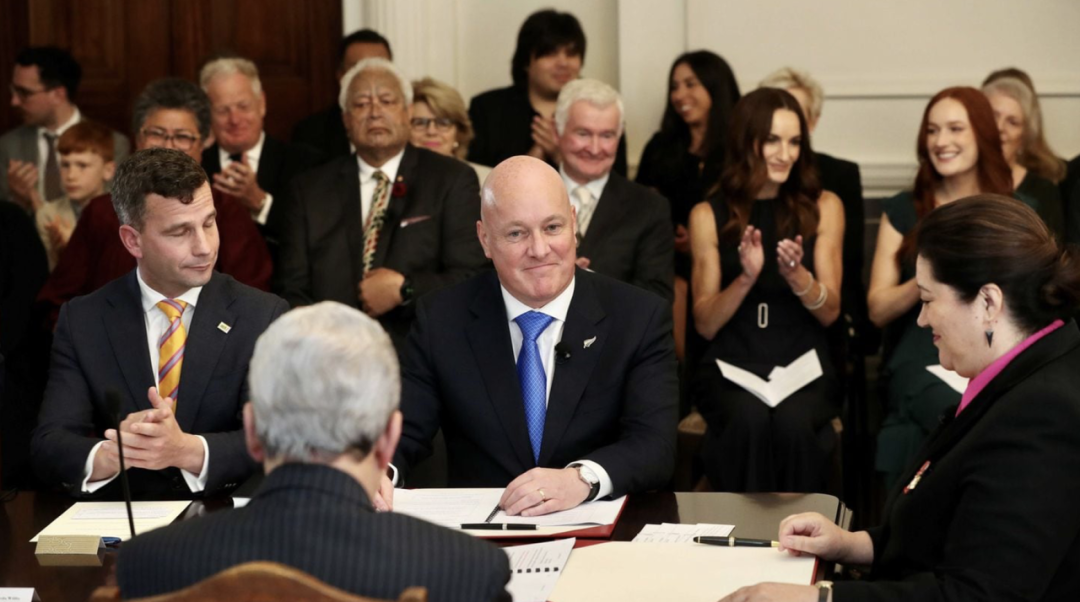

After a long wait, the new three-party coalition government was finally formed last week. This morning, Christopher Luxon was sworn in, officially becoming New Zealand’s Prime Minister.
So what does the new government mean for the property market?
The government will first tackle the Resource Management Act (RMA) reforms and Three Waters reforms, both of which could be repealed quickly. Other policy areas, such as tax cuts, will take longer. Significant changes are also coming to other property policies:
 |
|
||
 |
|
||
 |
|
||
 |
|
Overall, we can envisage these policies having some positive effects on the property market, but when we assess their likely scale, their impact appears limited.
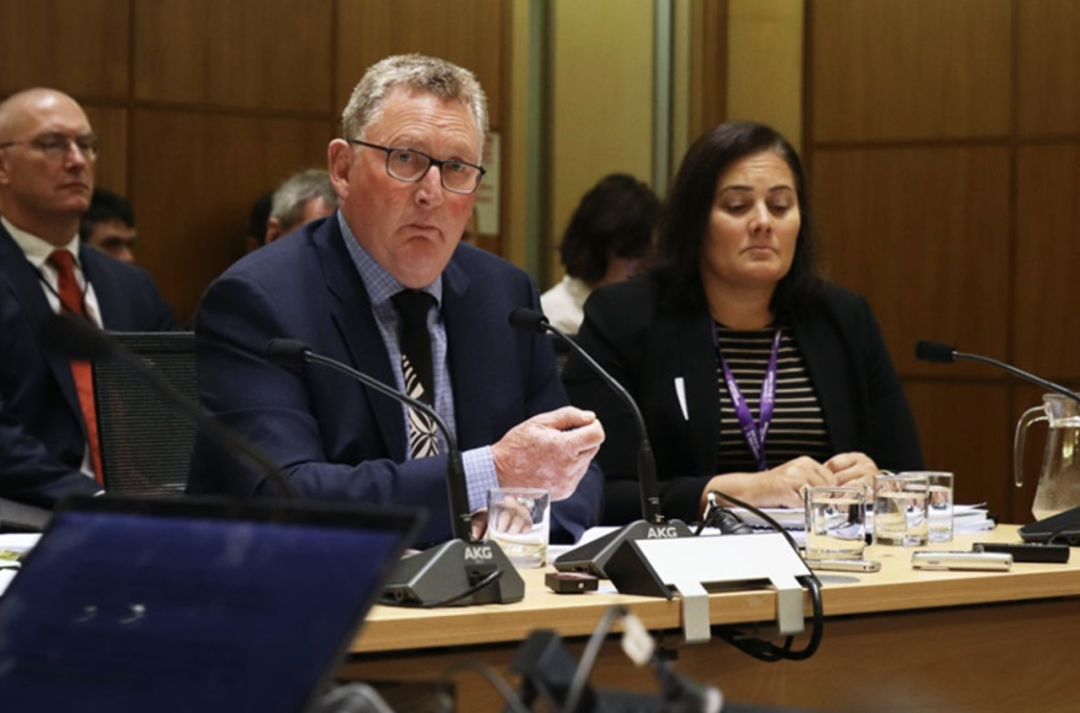 Reserve Bank of New Zealand Governor Adrian Orr

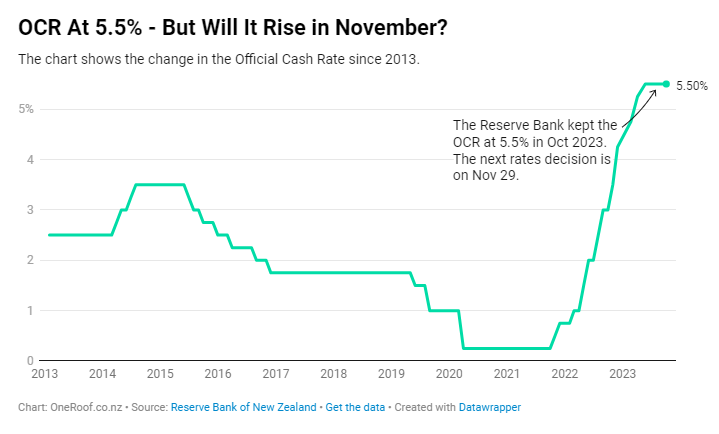
This Wednesday, the Reserve Bank of New Zealand will announce its final Official Cash Rate (OCR) decision of the year. The OCR is widely expected to remain at 5.5%. Wednesday’s focus will therefore be on the Bank’s stance rather than the decision itself, along with changes to its forecasts for GDP, employment, inflation, the OCR and house prices.
High inflation has still not been fully brought under control. Even if there are no further OCR increases in this cycle, the Reserve Bank of New Zealand still wants to avoid giving the impression that it is starting to consider rate cuts. That is because growing market expectations of an earlier OCR cut could push commercial banks’ mortgage rates down, potentially reigniting the property market and adding to inflationary pressure.
In short, the general expectation is that the Bank will leave the OCR unchanged this Wednesday while continuing to use firm language, such as saying the battle against high inflation is far from over.

Last week, the Reserve Bank of New Zealand released its latest lending data. Lending activity in October totalled NZ$5,800,000,000, including home purchase loans, refinancing between banks and top-up loans. This was about NZ$200,000,000 higher than a year earlier, marking the third consecutive monthly increase. However, with overall lending still starting from a low base, a recovery will not happen overnight. Weak growth in low-deposit purchases may partly explain this. In fact, property investors with deposits below 35% cannot obtain loans at all. Owner-occupier buyers with deposits below 20% account for less than 7% of the market, well below the Bank’s 15% limit.

This Tuesday, Stats NZ will release the New Zealand Activity Index for October, a timely indicator of GDP, along with employment data for the wider economy. Both measures have remained solid recently. Although the economy has not been growing rapidly, the activity index and actual employment numbers at least show that it has not gone backwards. The recent strength of the labour market has also helped borrowers adjust to higher mortgage rates, which is particularly important for the property market.


This Thursday, Stats NZ will release new dwelling building consent figures for October, which are very likely to continue declining. However, builders are still busy with previously approved housing projects, so workloads remain reasonably healthy. There is also a sense that the decline in new approvals may soon bottom out. This may be based more on anecdote than fact, but it still warrants close attention.

This Thursday and Friday, ANZ will release its business and consumer confidence indices for month 11. Attention is likely to centre on business costs, pricing and inflation. Encouragingly, these key economic indicators have recently shown a gradual improvement. Clearly, this is also what the Reserve Bank of New Zealand most wants to see.