
Mortgage rates surge, with recession still a risk? The key property market developments investors should watch this week
An analysis of this week's investment market developments from 6 perspectives.


Reports suggest New Zealand's mortgage market is showing early signs of a recovery in overall lending activity from a low base. First-home buyers continue to dominate low-deposit lending, and the rapid rise in interest rates over roughly the past two and a half years has increased their mortgage repayment pressures. It is also worth noting that outstanding mortgages currently total NZ$345,000,000,000, while New Zealand's total housing stock is estimated to be worth NZ$1,585,000,000,000. At least on paper, liabilities do not exceed assets.

CoreLogic chief economist Kelvin Davidson says a point of concern is that only 54% of loans are currently fixed-rate, and many will be repriced within the next 12 months. According to Reserve Bank of New Zealand statistics, existing borrowers currently pay an average fixed rate of around 5.3%, while the prevailing market average exceeds 7%. Although many borrowers have so far made a smooth transition from low to high interest rates without widespread bad debts, this will remain a key issue to watch in 2024, particularly if unemployment rises in some areas.
Last week, the Reserve Bank commented on the debt-to-income (DTI) restrictions it may introduce. Unfortunately, there is still no information on a specific implementation date or the caps that might be set. Davidson says DTI restrictions may not have a major impact on the current market because high mortgage rates are already limiting so-called high-risk lending. In other words, we will only see DTI restrictions restraining the market when mortgage rates fall again.

Data released by the Reserve Bank last week showed that 72% of newly approved loans in October, including home purchases, bank switches and loan top-ups, had fixed terms of no more than two years. In October 2021, the proportion was just 56%. One possible explanation is that, for much of the second half of this year, mortgage rates were widely believed to have reached or approached their peak. It therefore makes sense that borrowers would favour shorter fixed terms, giving them repayment certainty for a period while reducing the risk of overpaying if rates fall in the medium term.

This Wednesday, Stats NZ will release rental price data for November. Tenants are likely to face another fairly strong rise in rents, following annual growth of 6.1% in October, close to a record high. The drivers are rising wages, strong migration and population growth, and a relatively tight supply of rental properties.

This Tuesday, Stats NZ will release arrivals and departures data for October. Although net migration is unlikely to set another record, the net inflow into New Zealand could still remain high. Previous data has already shown a net migration inflow of 119,000 people.


Stats NZ will release third-quarter gross domestic product (GPD) data this Thursday. Recent figures have been very concerning, and overall economic performance over the next 12 months could also disappoint. This year's third-quarter economic figures and the outlook warrant continued attention.

The new government plans to repeal the Natural and Built Environment Act (NBEA) and the Spatial Planning Act before Christmas, reinstate the Resource Management Act (RMA), and amend it to streamline approvals for new infrastructure and create a 'fast-track, one-stop' approval service.
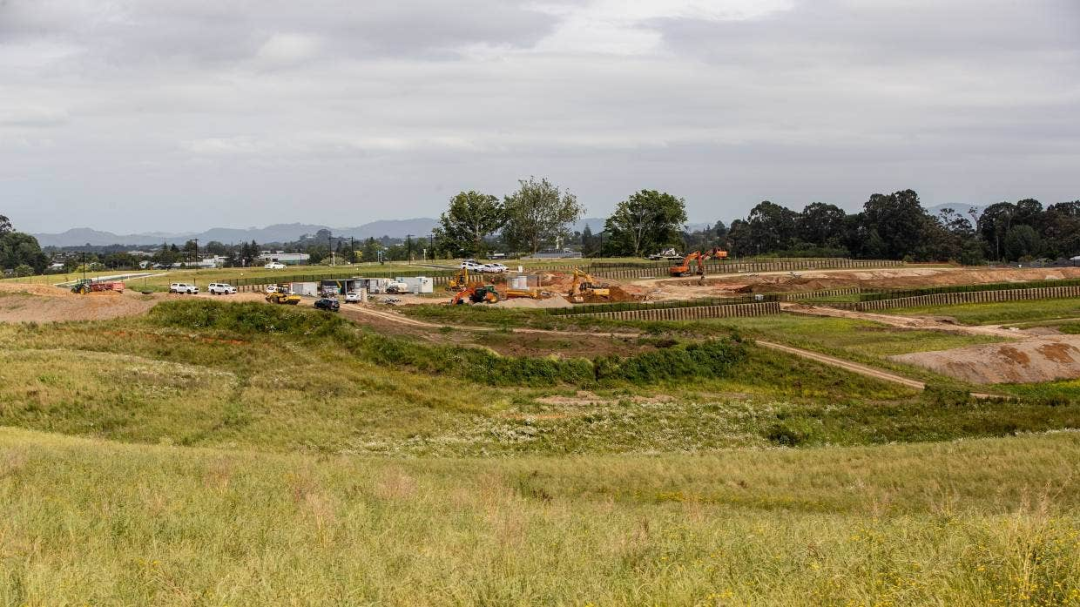
On the Medium Density Residential Standards (MDRS), National has withdrawn support for the earlier bipartisan housing intensification agreement. It will instead require councils to immediately zone land for 30 years of growth, whether through greenfield development or increased density. The government still supports the National Policy Statement on Urban Development (NPS-UD), requiring councils to allow greater density around certain public transport networks and other infrastructure. Councils will need to declare that infrastructure for new greenfield developments will be paid for through council rates and levies on those developments, rather than subsidised by other parts of the community. Whether to follow the MDRS will be their own decision.
Further policy details may be announced before Christmas. Keep following YIJU New Zealand for the latest reports.