
Property investors and developers, take note: the new National-led government's housing supply plan is out
Since the National-led coalition government was formed, its forthcoming policies for property investors and the rental market have attracted considerable attention. In this article, we explore the housing policies the new government plans to pursue and how these changes could affect future house prices and supply.


The government plans to repeal the Natural and Built Environment Act (NBEA) and the Spatial Planning Act (SPA) before Christmas. The NBEA was the Labour government's replacement for the Resource Management Act (RMA), requiring each region to prepare a natural and built environment plan for land use. The new government plans to reinstate the Resource and Built Environment Management Act and amend it to make approvals for new infrastructure easier, with a fast-track approval process and a one-stop service.
The government's long-term plan is to replace the Resource Management Act with rules based primarily on the enjoyment of property rights. However, economist Shmubeel Eaqub says this is likely to produce adverse outcomes similar to those seen in the past. In his experience, measures introduced to address housing problems often have no effect because housebuilding continually fails to keep pace with changes in demand, which is itself highly volatile.
Independent economist Cameron Bagrie says the impact of this policy change will depend on what the new system looks like. Current policies seem to involve simple tinkering rather than comprehensive change.
 Chris Bishop will be the minister responsible for overseeing most of the new policy reforms

National's housing policy committee withdrew its support for the Medium Density Residential Standards (MDRS) earlier this year. The standards had once been part of a housing intensification agreement between Labour and National. That agreement allowed buildings of up to three storeys on most sites in Auckland, Hamilton, Wellington and Christchurch without requiring a resource consent application.
They will be replaced by a new plan National intends to implement, requiring councils to immediately zone land for the next 30 years of urban growth, either through greenfield development, using undeveloped land generally some distance from towns, or through greater density. This means new residential areas could soon emerge in Auckland's current 'future urban' areas on the city's fringes. Although it has scrapped the MDRS, the government still supports the National Policy Statement on Urban Development (NPS-UD), which requires councils to allow greater housing density around certain key public transport networks and other infrastructure. Councils will need to declare that infrastructure for new greenfield developments will be funded through council rates and levies on those developments, rather than subsidised by other communities. Whether they follow the MDRS will be their own decision.
Eaqub says he is deeply disappointed to see the new government abandon the cooperation set out in the earlier bipartisan statement, particularly when the government had made some good progress on improving housing supply. No policy can be perfect, he says, but now we have to start from scratch to address the housing shortage, turning it into a political game.
Infometrics chief forecaster Gareth Kiernan says the change means house prices will rise in the short to medium term. He had expected the MDRS to deliver higher-density developments from around 2024. Any measures the government introduces now will take time to have an effect.

 John Tookey, professor at Auckland University of Technology's School of Future Environments
, says how much this helps housing supply will depend on how councils use the money. Councils need substantial funding to provide services for new developments and newly zoned areas. He believes it would be positive if the money were used to facilitate urban development.

Tookey says this could make the approval process faster and less risky. 'Builders with sufficient insurance cover can self-certify. All they are doing is freeing themselves from council inspections of their work, so the council is no longer responsible for construction quality and the builder takes responsibility instead. That makes sense in many respects, and it also reduces councils' risk.' This allows councils to get building work moving faster with less risk and enables construction to progress quickly. Conversely, some people could also be 'caught out trying to exploit loopholes'.

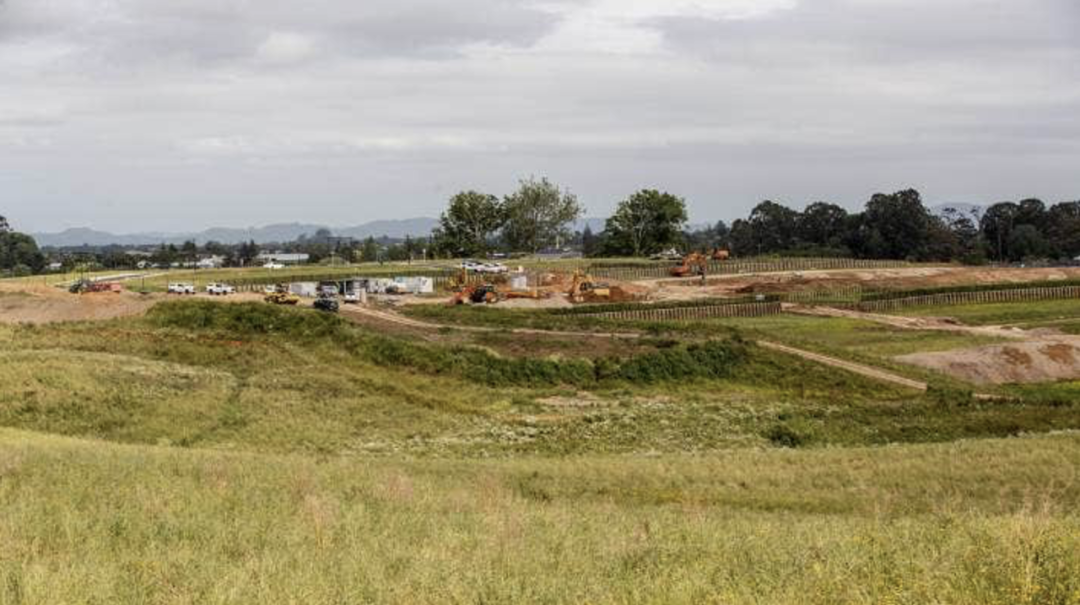 The government wants to zone more undeveloped land for development
Councils will be required to immediately zone land to meet 30 years of housing demand.
Bagrie says there has been plenty of discussion about high-density housing, but it is only part of the solution. We cannot overlook the need to open up land supply. Looking at New Zealand's internal migration figures reveals a common pattern: Auckland is losing people to surrounding areas, Hamilton to the outer Waikato, Christchurch to Waimakariri and Selwyn, and Wellington to Kāpiti and Wairarapa. Lifestyle is part of the reason, while the ability to work from home and transport connections also play a major role. However, housing affordability is a major reason for moving away from the big cities: these people want to obtain a cheaper section on which to build a home. He worries that government efforts in recent years have focused on building houses rather than communities. In ten years' time, we could pay the price for unplanned property development.

The new government has committed to introducing a NZ$1,000,000,000 'Building for Growth Fund'. Councils will receive an incentive payment of NZ$25,000 for every additional home delivered within their boundaries above the five-year average. This will be funded by closing KiwiBuiild and the Affordable Housing Fund, and ending Kāinga Ora's land acquisition programme.


The new government plans to reform the Infrastructure Funding and Financing Act to reduce the 'red tape' developers face when financing infrastructure. Housing growth will also become a priority for Waka Kotahi transport funding.

The new government plans to amend the Building Act and the resource consent system to allow backyard dwellings or other small buildings of up to 60 square metres to be built on the strength of an engineer's report alone.
Eaqub criticises the changes, saying that overall they seem less like reform and more like a return to the status quo. The housing shortage will remain unresolved, with housing supply falling, rents rising sharply and house prices increasing faster than they would under other options.
Kiernan also says that houses have become increasingly expensive over the past 20 years, yet no one has been willing to take action to change that. This is partly because politicians must balance efforts to make changes against retaining electoral support, as many of their supporters are homeowners.
What do you think of these policies? We welcome your views.