
Key figures are due out! Will banks cut interest rates faster? What property investors should watch this week
This Wednesday, Stats NZ will release inflation figures for the fourth quarter of last year!


This Wednesday, Stats NZ will release inflation figures for the fourth quarter of last year, the most closely watched data release this week. The Reserve Bank of New Zealand previously forecast that annual growth in the fourth-quarter consumers price index(CPI) would fall to 5%, down from 5.6% in the third quarter. This means that if inflation exceeds 5%, the official cash rate (OCR) could rise again, particularly given pressure from rising prices for non-tradable goods and services, such as rents. Likewise, a CPI result below 5% would ease concerns about another OCR increase.
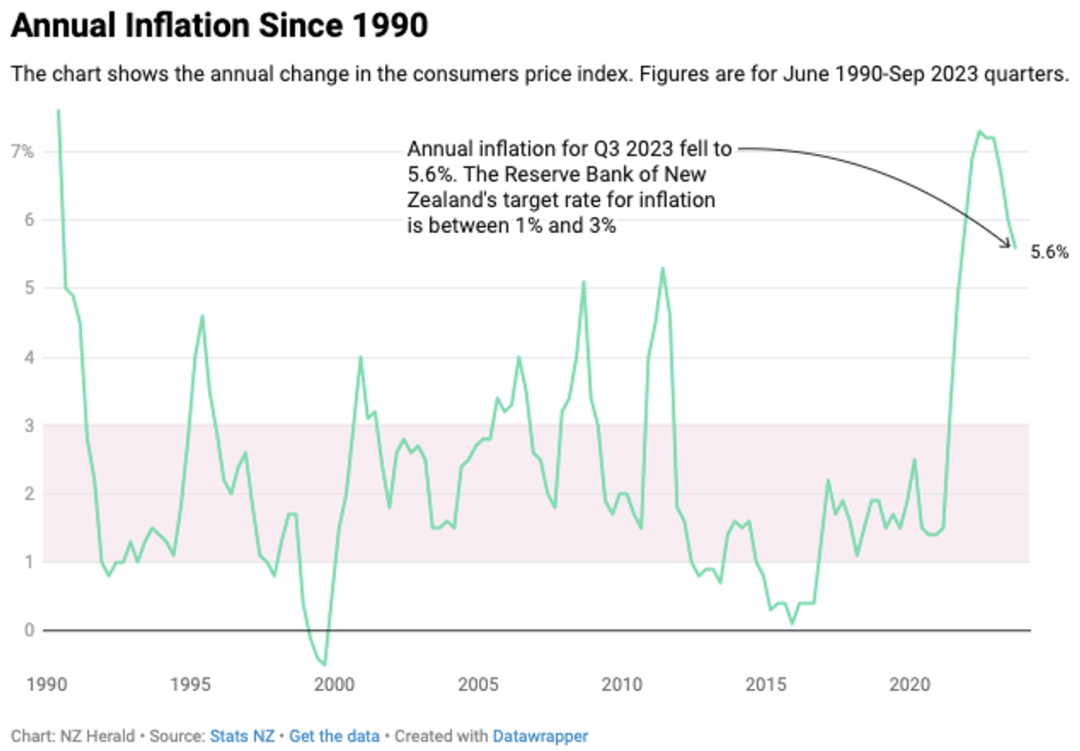 Chart of changes in New Zealand’s inflation rate from 1990 to the present
CoreLogic property economist Kelvin Davidson forecasts a result slightly below 5%. However, global issues such as recent regional armed conflicts and the resulting rise in shipping costs could affect prices in New Zealand. For the final figures, keep an eye on YIJU New Zealand’s coverage this Wednesday.


The latest figures released by Stats NZ last week show that rents for new tenancies signed in December last year were 7% higher than a year earlier. This marks a renewed acceleration after several months of modest increases. Rising net migration, and the resulting housing demand, together with relatively tight rental supply, are rapidly pushing rents higher and creating a landlord-led rental market. However, rents already account for a substantial share of household disposable income, limiting the scope for further increases. In the short term, though, rents appear likely to keep rising for some time.

First-home buyers continue to account for a high proportion of purchases. CoreLogic’s latest Buyer Classification report shows they made 27% of purchases in December last year and across the fourth quarter, as they had in the third quarter. Transaction numbers were also rising, with these figures reaching record highs. Government policies encouraging home ownership have provided effective support. These include allowing KiwiSaver funds to cover part of a deposit, broadening the range of homes eligible for grants, and allowing banks to approve loans with smaller deposits for first-home buyers. Meanwhile, high interest rates mean there is relatively little competition from other buyer groups.

In stark contrast, investors account for only around 21–22% of purchases, facing higher deposit requirements, rising mortgage rates, relatively low rental yields and a 100% interest deductibility policy that has yet to take effect. These figures clearly do not mean buyers have abandoned investment property altogether, but their market share remains below the long-term average of 25–26% and well below the peak of 28% in the first quarter of 2021.
House prices across New Zealand’s regions have continued to strengthen in recent months. Driven by continued price increases in cities such as Auckland, Tauranga and Christchurch, CoreLogic’s national house price index rose 1% in month 12. However, some other areas, including Gisborne and Napier, recorded only small gains. With mortgage rates remaining high, the house price recovery in 2024 may be relatively slow, and the scale of price increases will vary between regions.

Part of the reason house prices remain subdued may be relatively low transaction volumes. Although sales are still rising year on year, they are doing so from a low base. The latest property sales figures for December show that transactions through real estate agents and private sales increased by nearly 30% compared with a year earlier, but remained around 25% below the long-term average. In other words, transaction volumes continue to rise but are still far from normal market levels.