
The news everyone was hoping for! With CPI growth at its lowest in two years, how far away are interest rate cuts?
The latest CPI figures are out! What could they mean for our lives and finances?



Today, Stats NZ released the latest consumers price index(CPI) figures. Annual inflation fell to a two-year low of 4.7% in the fourth quarter of last year,This was clearly below the Reserve Bank of New Zealand’s earlier forecast of 5%. Stats NZ’s senior manager of consumer prices Nicola Growden commented that, although this was the smallest annual CPI increase in more than two years, it remained above the Reserve Bank of New Zealand’s target range of 1–3%.
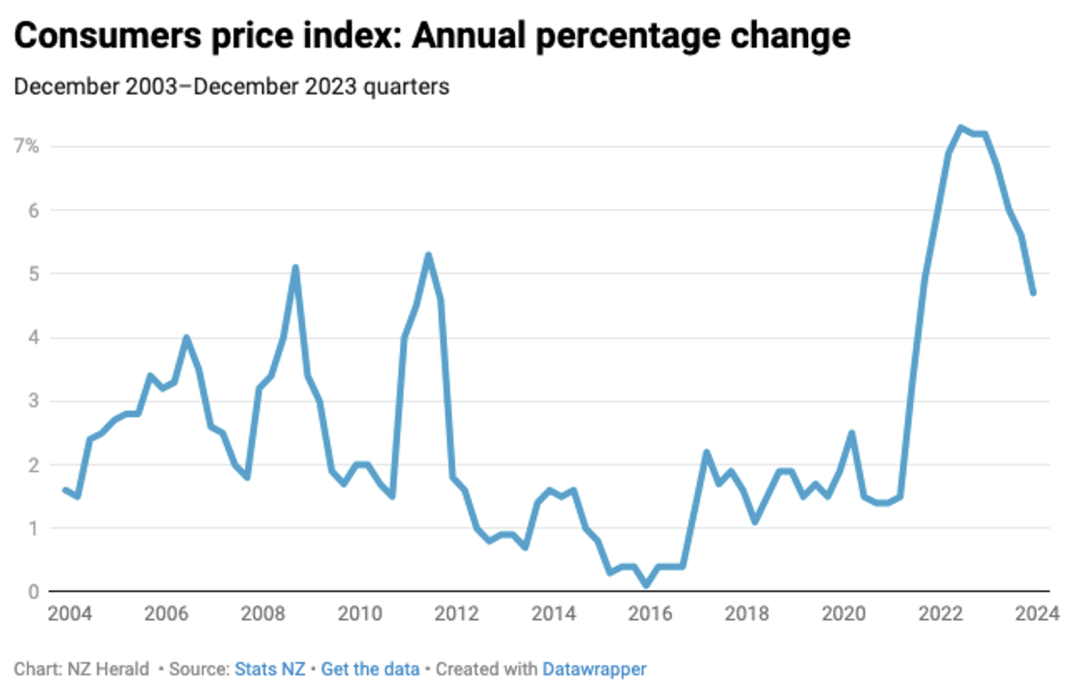
Chart of changes in New Zealand’s CPI from 2004 to the present
(Source: Stats NZ)
The figures show that housing and household utilities were the main contributors to inflation in the fourth quarter of last year, driven by increases in rents, construction costs and house prices。Over the twelve months to the end of last year, rents rose 4.5%, while construction costs and house prices increased 3.6% and 9.8% respectively. Growden said house prices rose noticeably in 2023, while rents were 4.5% higher than a year earlier. Although the cost of building a new home had fallen to 3.6%, it was still 41% more expensive than before the pandemic.
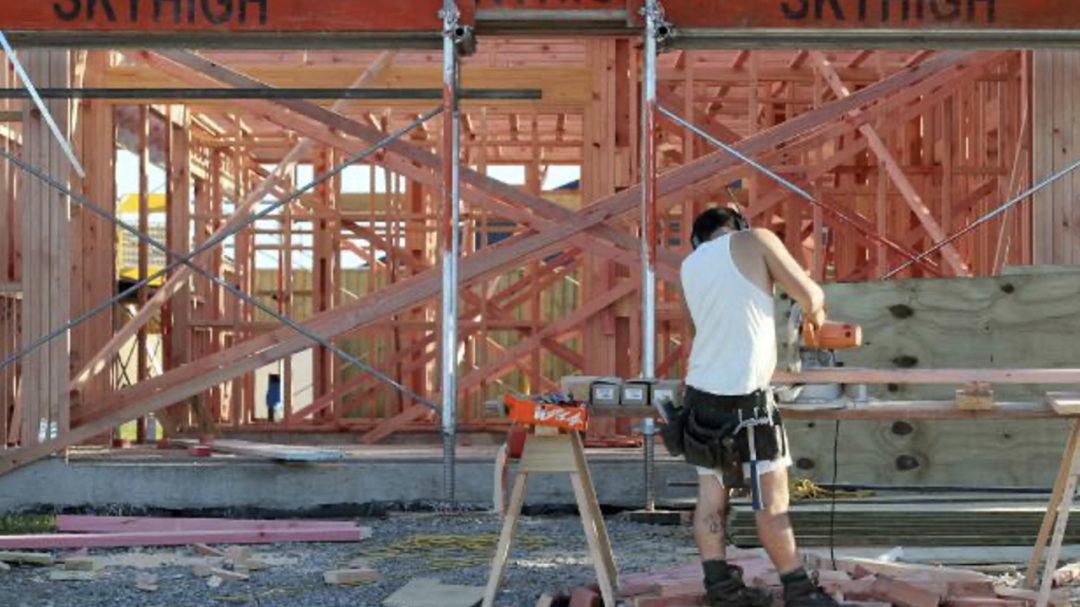
Food prices also fell, but remained the second-largest contributor to annual inflation.

Kiwibank economists said that although domestic inflation had become particularly challenging, the encouraging news was that things were moving in the right direction, albeit slowly. The flow-on effects of rising net migration were adding upward pressure to inflation, particularly in housing. The migration surge continued to drive rents higher. Core inflation fell from 6.1% to 5.2% in the third quarter of last year. Although this downward trend was continuing, there was still a long way to go to reach the 1–3% target range. They expect inflation could return to the Reserve Bank’s target range in the second half of this year.
Westpac senior economist Satish Ranchhod said inflation remained far above a level acceptable to the Reserve Bank’s Monetary Policy Committee. The Reserve Bank of New Zealand had expressed concern about the divergence between domestic and imported inflation and was trying to balance those differences.

Does slowing CPI inflation mean the official cash rate (OCR) will fall soon?
An increasing number of economists have recently said the OCR is likely to start falling in August this year。That is much earlier than the start of 2025, as many had previously expected, and well ahead of the Reserve Bank of New Zealand’s own forecast. The Reserve Bank had said rate cuts might not come until the middle of next year.
Infometrics chief forecaster Gareth Kiernan said his team was preparing a new set of forecasts to be released in a week. As part of those forecasts, they had revised the timing of the first interest rate cut to August this year. Kiernan’s model showed inflation in the system remained below previous levels, suggesting the Reserve Bank of New Zealand’s rate increases had worked. Annual inflation now looked likely to fall below 3% before the end of this year, ruling out further tightening and preparing the way to gradually ‘open the door’ in August this year.
Similarly, ANZ said last Thursday that it also expected the Reserve Bank to start cutting rates in August, with the OCR falling steadily by 25 basis points over 12 months to 3.5%. Under its current forecasts, inflation would return to the target range by the third quarter of this year, unemployment would pass 5% and continue rising, and the output gap would be deeply negative. However, ANZ economists believed the Reserve Bank would probably continue to ‘talk tough’. The wisest strategy would be ‘deny—deny—cut’, avoiding a premature easing of financial conditions that could undo the work already done to bring down high inflation.