Trouble ahead! House price growth has slowed markedly. Can Auckland’s housing market still turn things around this year?
Property data company CoreLogic recently released its latest House Price Index (HPI) figures.

Property data company CoreLogic recently released its latest House Price Index (HPI) figures. At the end of January, New Zealand’s national average residential property value had risen NZ$3696 over the month to NZ$928,184, up from NZ$924,389 in December last year. The monthly increase was 0.4%.
In the three months to the end of January, the national average house price rose 2.1%, but remained 2.7% below the same period a year earlier. The HPI has recorded rising average house prices for four consecutive months, but the marked slowdown in growth cannot be overlooked.
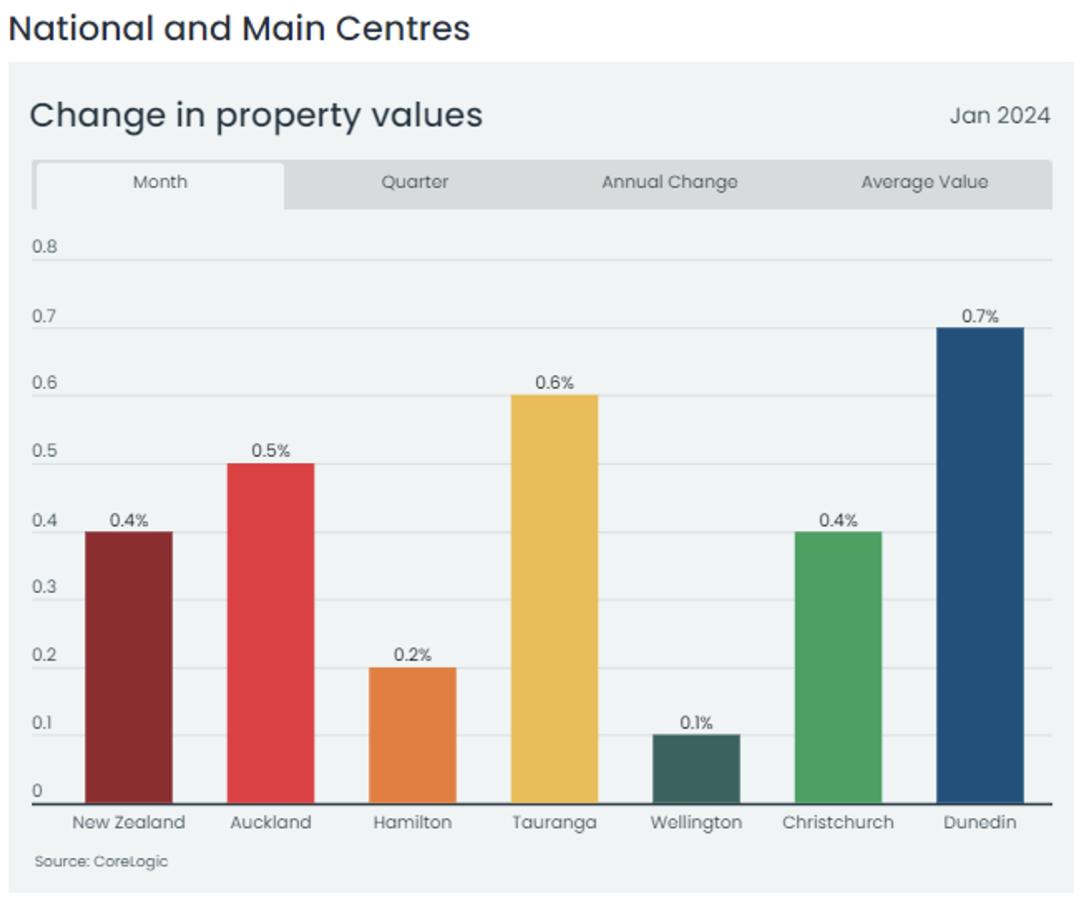
CoreLogic chief property economist Kelvin Davidson said the slowdown in monthly house price growth suggested that the latest housing market recovery could still prove to be a temporary illusion, with performance varying between regions。He explained that although most economic indicators were trending upwards, new borrowers and those refixing existing loans still faced the challenges of high interest rates. He acknowledged that signs of an Official Cash Rate (OCR) cut were emerging, but said this would take time and would most likely happen in the second half of the year.

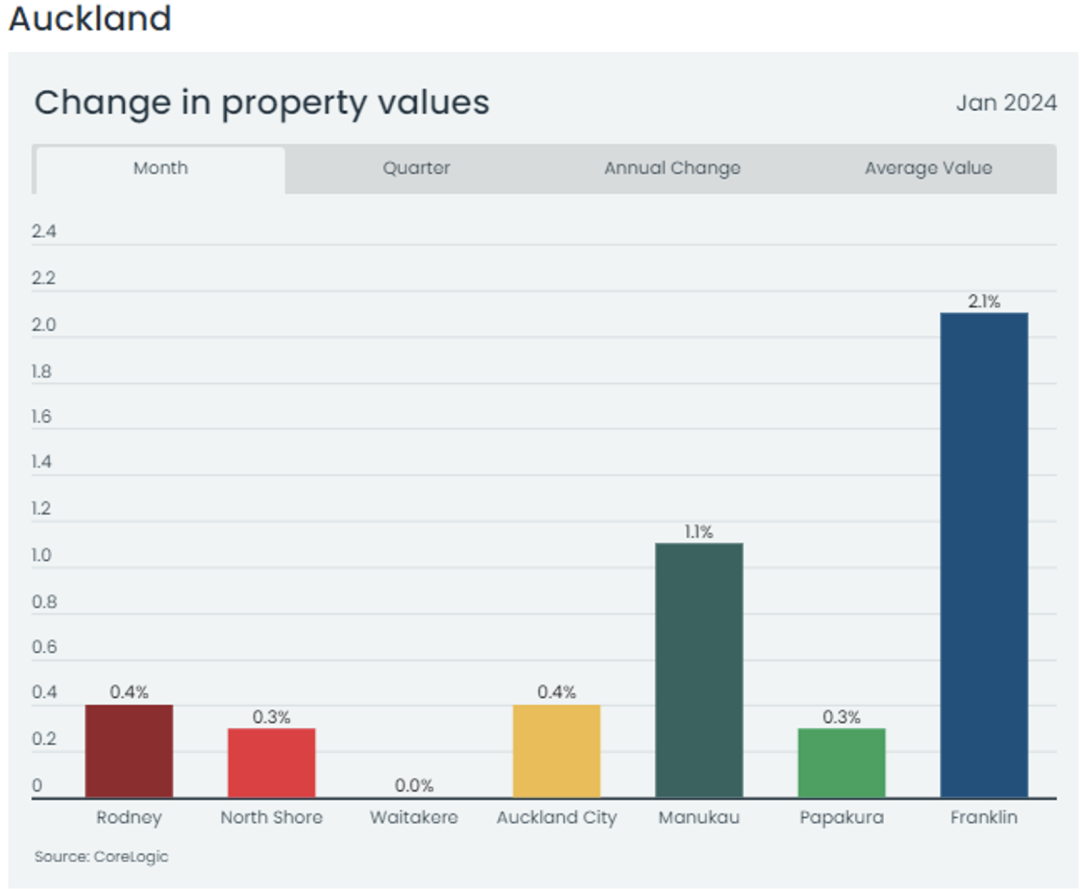
Since New Zealand house prices bottomed out in May last year, Auckland prices have risen just 4.2%, while prices elsewhere in the country have increased only 3.5%. If price growth continues to slow, can Auckland’s housing market still turn things around over the coming year?
Prominent independent New Zealand economist Tony Alexander recently addressed this question publicly. He said buyers should not rule out a substantial rise in Auckland house prices, offering what he considered two important reasons.
 Independent economist Tony Alexander

|
First, record net migration inflows have given Auckland’s population growth a greater boost than any other city or region in the country. The latest Stats NZ figures show that Auckland’s population at the middle of last year was 2.8% higher than a year earlier, compared with growth of just 1.7% outside Auckland. This contrasts sharply with population figures from the previous two years, when the pandemic had not yet ended. A year earlier, Auckland’s population fell 0.7%, while the population elsewhere grew 0.5%. Two years earlier, Auckland’s population fell 0.6%, while the rest of the country recorded growth of 0.9%.
Notably, Auckland’s additional population growth has not yet produced a substantial rise in house prices, partly because the supply of new homes has grown strongly recently. From 2004, applications for new dwelling consents in Auckland were unusually low, while the rest of the country maintained strong growth. As we emerged from the global financial crisis between 2009 and 2011, Auckland was identified as having a severe housing shortage, while other parts of the country did not face the same problem. This explains why Auckland house prices rose so strongly in the previous cycle while prices elsewhere stagnated. Clearly, Auckland’s housing shortage was recognised. Over the past decade, from 2014 to 2023, the number of new dwellings consented in Auckland increased 136% compared with the preceding decade, against growth of just 45% outside Auckland. This suggests Auckland’s ample supply of new homes has kept house prices relatively stable over recent years. It may also be the main reason Auckland house prices fell 23% between 2021 and mid-2023, while average prices elsewhere fell only 14% over the same period.
|


|
The latest Stats NZ figures show that new dwelling consents are falling faster in Auckland than elsewhere. Over the past year, Auckland’s building consent approvals fell 27%, exceeding the 22% decline outside Auckland. In the three months to the end of November last year, Auckland’s building consent approvals were 37% lower than a year earlier, compared with a 25% decline elsewhere.
Alexander noted that this analysis could not be the sole basis for predicting future movements in Auckland house prices, but it did suggest at least one thing: it is reasonable to expect Auckland house prices to rise more than those elsewhere in New Zealand over 2024–2025. Of course, such averages conceal substantial differences in price movements between regions. For example, house prices in the Wellington region have risen 7.1% since May last year, Queenstown prices have increased 8.8%, and Waikato prices have risen just 1%, while prices in the northern region (Northland) have fallen 1.3%. Alexander concluded that house price data from the past thirty years showed that areas with strong population growth eventually experienced strong growth in new housing, while areas with slower population growth also saw slower growth in new housing. This explains why, since 1992, Auckland’s population has grown by an average of 1.7% a year and average house prices have risen 6.5% annually. By contrast, Taranaki’s average annual population growth has been just 0.6%, with average annual house price growth of 5.6%.
|