
Could the OCR rise another 50 basis points to 6%? Bank economists offer differing answers
Just as most people thought the Official Cash Rate had peaked, a different view emerged in the market.
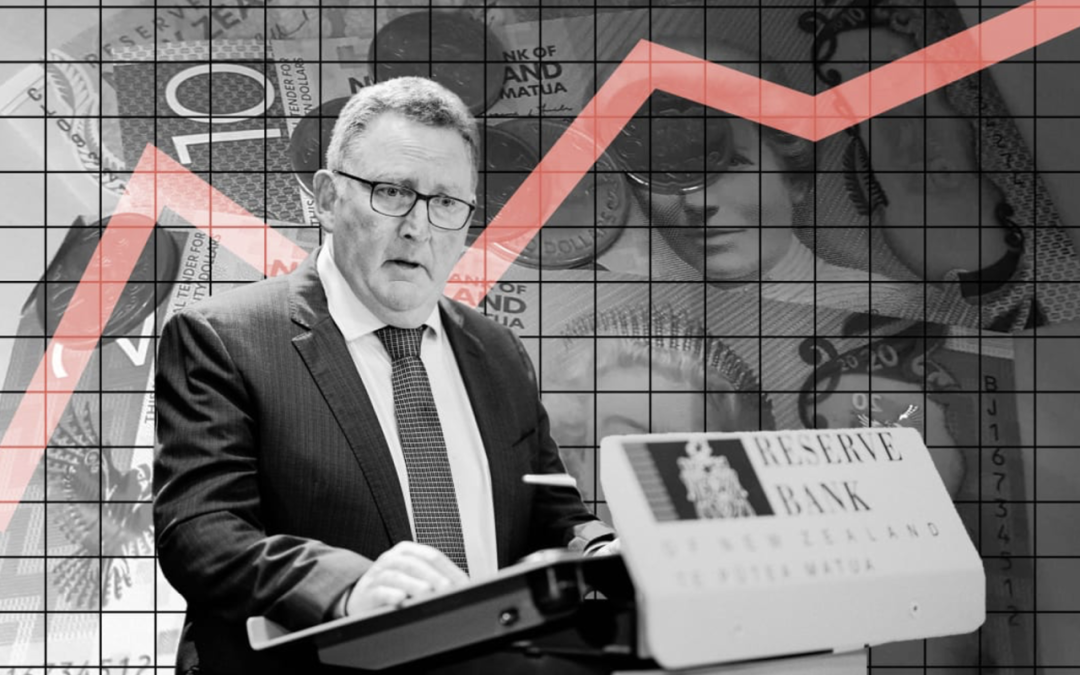
As the global economy recovers and inflationary pressures rise, whether the Reserve Bank of New Zealand will raise interest rates soon has once again become a focus for markets. Since the pandemic began, the Reserve Bank has pursued loose monetary policy to support the economic recovery. Yet as the economy has recovered and inflation has gathered pace, it has continued to issue hawkish statements. Just as most people thought the Official Cash Rate had peaked, a different view emerged in the market.

Last Friday, ANZ chief economist Sharon Zollner said in her latest report that a series of unexpected changes in economic conditions made it very likely that the Reserve Bank of New Zealand would resume its rate-hiking cycle. ANZ predicts that the Reserve Bank will announce OCR increases totalling 50 basis points at its next two Monetary Policy Statements in February and April, taking the rate to a new high of 6%.
 ANZ chief economist Sharon Zollner
Those surprises include strong consumption growth, a slight rise in non-tradable inflation and a more resilient labour market than expected. Zollner said that, beyond these factors, second-tier economic surveys and high-frequency activity data also showed other signs of capacity pressures. Strong net migration, recovering commodity prices and falling wholesale interest rates are further reasons why the Reserve Bank may want to raise rates. She believes conditions are now very close to the threshold for another increase.
In its Monetary Policy Statement in November last year, the Reserve Bank made it clear that its Monetary Policy Committee could raise rates again if inflation remained slow to return to the target range. She further explained that the OCR is currently 5.50%, while the Reserve Bank’s projected peak is 5.69%. Restarting the hiking cycle for just 25 basis points would not be worthwhile, so she considers two consecutive increases somewhat more likely than no increase。Of course, monetary policymakers could still hold steady and try to push up wholesale interest rates through sufficiently hawkish language. Unfortunately, they already tried that in November, with unsatisfactory results.
Zollner acknowledged that restarting rate increases would unsettle many households and business owners. The shock could have a negative effect on the property market and investment greater than the nominal “50 basis points” would suggest. If that happened, the Reserve Bank could well accelerate rate cuts to bring the OCR back to a more neutral level. Historically, it has not been unusual for the Reserve Bank to resume increases after a pause: it has happened three times since the global financial crisis.


ANZ economists’ comments about possible further rate increases caused an immediate stir in financial markets. Economists at other commercial banks offered differing interpretations, with some strongly rejecting the market view that the Reserve Bank could raise the OCR further.

 Kiwibank chief economist Jarrod Kerr
In Kiwibank’s latest First View weekly economic report, chief economist Jarrod Kerr, senior economist Mary Jo Vergara and economist Sabrina Delgado jointly rejected that view. They believe the Reserve Bank of New Zealand has already done enough to bring inflation back to its 2% target. They maintain that 5.5% is the OCR’s peak.
They explained that although the Reserve Bank has repeatedly cried wolf over inflation, they see no need for further increases at present. Economic data already show sufficient weakness, and Kiwibank’s transaction data indicate that many households with loans are under considerable financial pressure.
Data for December last year, released last week, showed that the labour market continued to weaken, although less sharply than expected. Unemployment rose from 3.9% to 4%, ending a run of 9 consecutive quarters below 4% and reaching its highest level since early 2021. It was nevertheless below the forecasts of Kiwibank (4.2%) and the Reserve Bank of New Zealand (4.3%).
Economic growth is slowing, demand is weakening under the weight of high interest rates, and businesses are less keen to hire more staff. Economists expect unemployment to continue rising for some time. The signs suggest that the Reserve Bank of New Zealand’s sharp rate increases have substantially suppressed household demand and held back business growth. Labour market performance typically lags the wider economic cycle because employers retain staff for as long as possible before making redundancies. However, unemployment will soon respond to the slowdown in activity. They forecast that it will exceed 5% later this year.

 Westpac chief economist Michael Gordon
In his Weekly Economic Commentary, Westpac chief economist Michael Gordon said last week’s labour market data alone were unlikely to prompt another round of rate increases by the Reserve Bank of New Zealand. He believes the figures support his team’s longstanding view that the OCR will remain unchanged throughout 2024.
However, Westpac economists regard the Reserve Bank’s concerns about the need for higher rates as credible. Further increases remain possible over the next six months if core inflation pressures do not ease sufficiently. In that case, the next Monetary Policy Statement on 28 February would be the best opportunity for the Reserve Bank to explain its case for raising rates.

 ASB chief economist Nick Tuffley
, in the latest edition of his “Economic Weekly”, responded to talk of further OCR increases. He does not believe the Reserve Bank of New Zealand needs to “go that far”. He remained optimistic that, despite some recent economic surprises, inflation would fall below 3% in the third quarter of this year, bringing CPI inflation back into the Reserve Bank’s target range of 1–3%.
“Growth across the economy is already being significantly constrained,” Tuffley explained. Despite record net migration, real demand continues to decline, and GDP per capita has already fallen by 3%. The data show signs of inflationary pressure associated with migration growth only in the residential rental market. Meanwhile, labour supply is expanding, and unemployment is expected to reach 5% by year-end, which will help ease future wage growth.
For the Reserve Bank, the timing of OCR cuts will depend on when it is sufficiently confident that inflation will enter and remain within the target range. ASB economists retain their forecast that the Reserve Bank will cut the OCR after August. They still believe inflation and other economic data should give it greater confidence to cut between 8 and November. However, they also recognise that the economy is at a turning point, making conditions difficult to interpret and forecasts easy to get wrong.

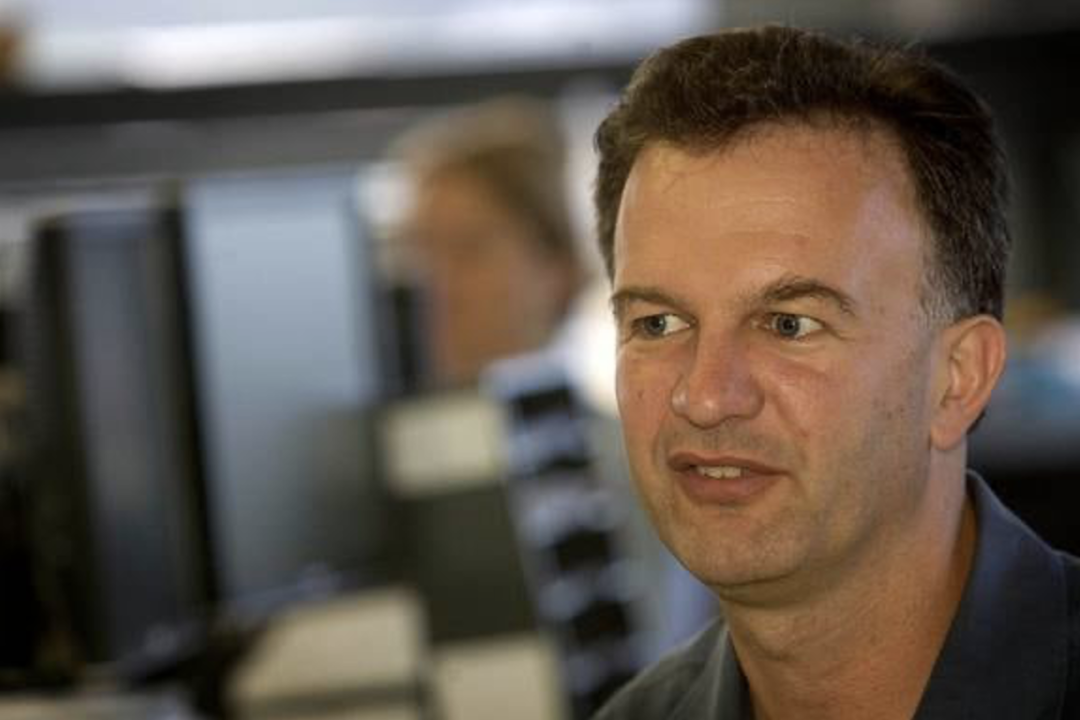 BNZ head of research Stephen Toplis
In his latest Markets Outlook, BNZ head of research Stephen Toplis said that while recent data might persuade the Reserve Bank of New Zealand to maintain its restrictive stance, “we do not believe this justifies further tightening”. Put simply, inflationary pressures may not ease as quickly as the Reserve Bank hopes, but the trends are following the plan: the economy is contracting, the labour market is slowing, core and headline inflation are falling, and a substantial amount of tightening has yet to have its full effect on the economy.
Toplis said, “In the current environment, market pricing for rate increases could be very important.” If markets price in tightening, the Reserve Bank of New Zealand may well take the necessary action… We will continue to watch the OCR outlook closely as the next Monetary Policy Statement on 28 February approaches.