
Prime Minister responds to housing allowance scandal: “I’ll pay it back”! ANZ apologises! Will interest rates really keep falling from here?
The scandal over Prime Minister Christopher Luxon claiming a housing allowance dominated New Zealand’s major media outlets today
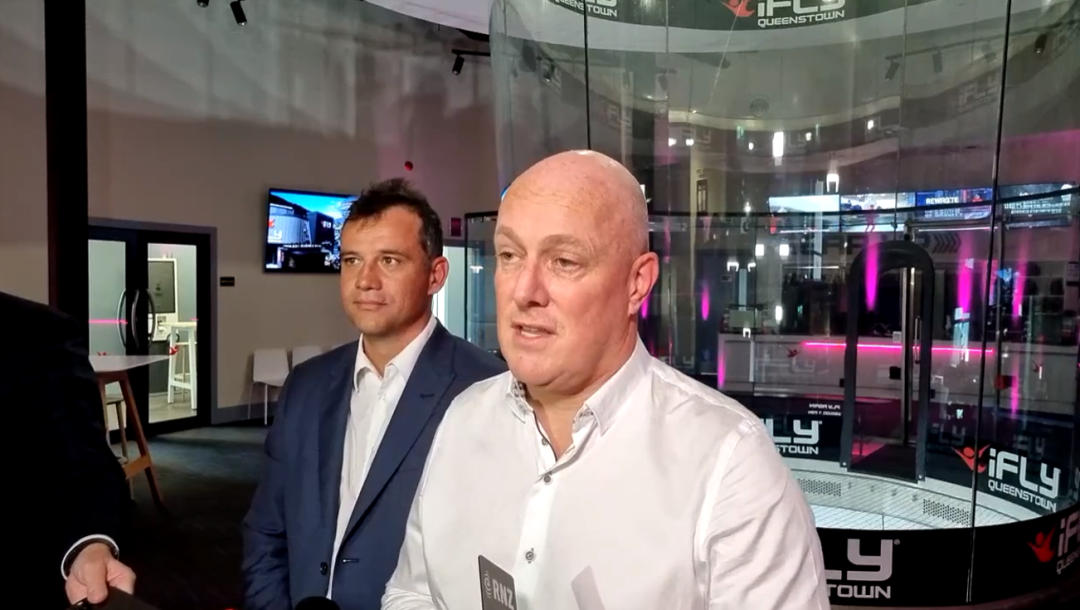

The scandal over Prime Minister Christopher Luxon claiming a housing allowance dominated New Zealand’s major media outlets today. At around 15h, he appeared publicly and responded: “It’s an entitlement, and I’m fully within the rules.” This immediately sparked a strong public reaction.
Then, at around 17h, he spoke again, saying he would repay the money he had claimed for staying in his Wellington apartment. In a statement, he said: “It is clear that the issue of my accommodation allowance is becoming a distraction. I have therefore decided today that I will no longer claim any of the allowances I have received since becoming Prime Minister.”
Here is what happened: media reported today that Christopher Luxon was claiming a NZ$52000 housing allowance intended to cover his accommodation costs in Wellington, even though he already owned a mortgage-free apartment there and was, in fact, living in it.
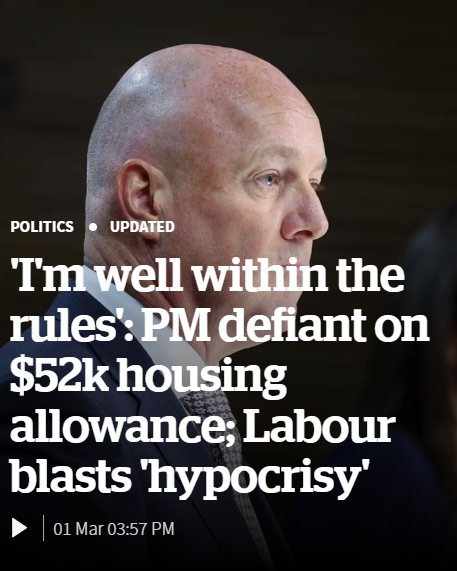
Over the past 34 years, almost no prime minister has claimed this allowance. Prime ministers whose homes were outside Wellington, such as Jacinda Ardern, generally chose to live at Premier House, while others, including Chris Hipkins and Bill English, already lived in Wellington.
Asked why he was not living at Premier House, Christopher Luxon said maintenance issues, including leaks, made it uninhabitable. Former Prime Minister Chris Hipkins, however, said the official residence was perfectly fit to live in.
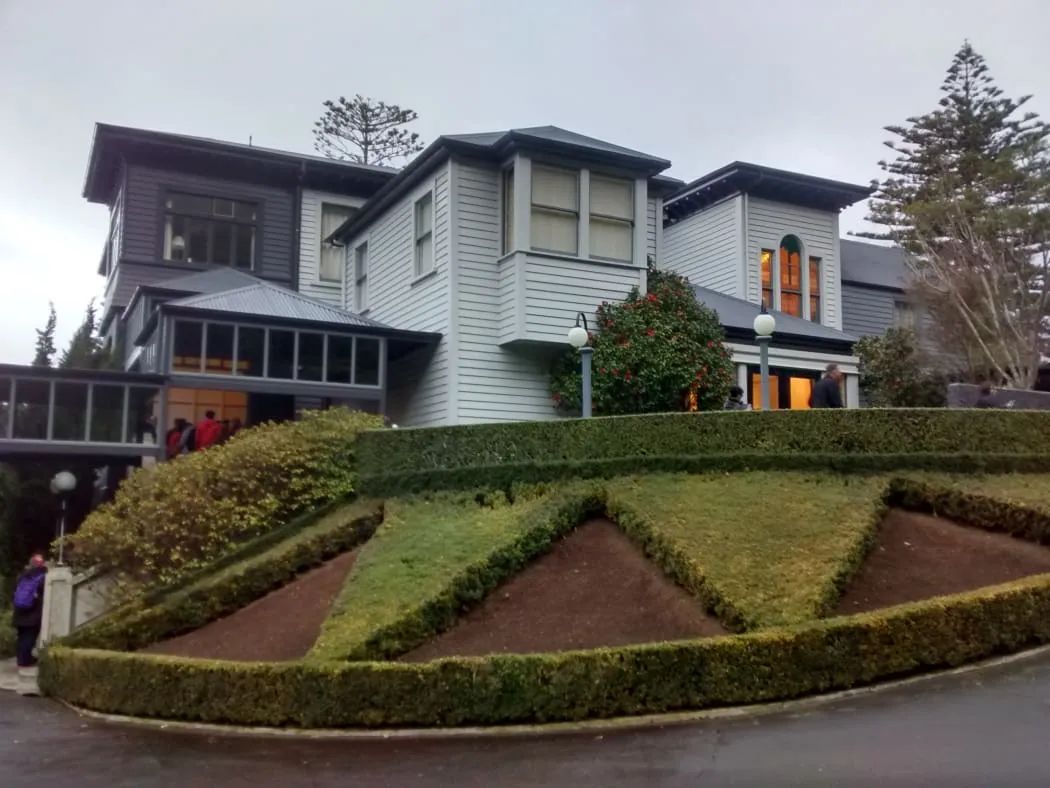 Premier House
This afternoon, Luxon responded publicly: “It’s an entitlement, and I’m fully within the rules.”
“This is part of the entitlements available to MPs who live outside Wellington. Whether you are an MP or a minister, you are eligible for a range of allowances, because I don’t have my primary residence in Wellington.”
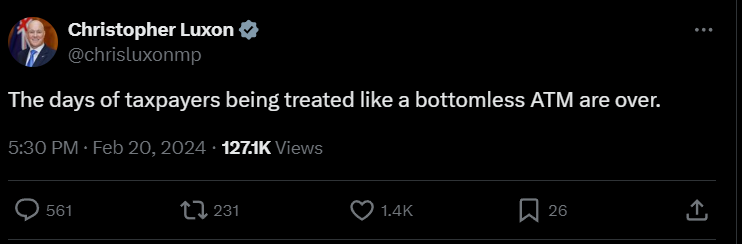
Adding to the irony, the Government is currently asking public service agencies to cut their budgets by 6.5% to 7.5%, while strictly cutting welfare spending. Just 10 days earlier, Luxon had said on social media that “the days of treating taxpayers as a bottomless ATM are over”. The scandal has therefore provoked a strong public response, with some people even asking in comments on Luxon’s social media whether he would resign.
Christopher Luxon reportedly owns 7 properties. At the housing market’s peak in 2021, they were valued at NZ$21,145,000; their current estimated value is around NZ$19,136,000. He also claims NZ$3750 a month in rent for his electorate office in Northpark, Auckland, despite owning that property himself.

On Wednesday, the Reserve Bank of New Zealand officially announced that it would hold the official cash rate (OCR) unchanged at 5.5%, saying it needed to remain at its current elevated level for an extended period. The Reserve Bank also said core inflation and most measures of inflation expectations had declined, while risks to the inflation outlook had also diminished.
The Monetary Policy Committee remained confident that the current OCR was constraining consumer demand, but capacity pressures in the New Zealand economy needed to keep easing to ensure headline inflation returned to the 1–3% target range. Reserve Bank of New Zealand Governor Adrian Orr reiterated: To ensure this goal is achieved, the money supply must remain at a restrictive level for a sustained period.
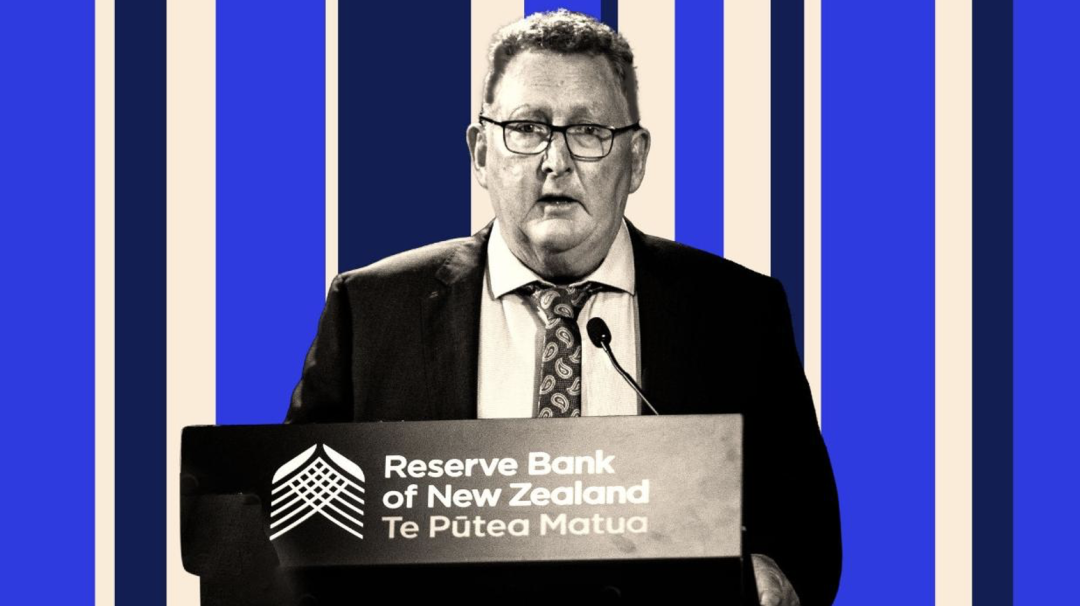 Reserve Bank of New Zealand Governor Adrian Orr reiterated that the OCR would remain elevated
Before this, ANZ economists had predicted a 25-basis-point OCR increase, pushing up market expectations of a rate rise. However, within half an hour of the Reserve Bank’s announcement on Wednesday, the two-year swap rate fell by 20 basis points to 5.01%, with markets expecting two OCR cuts by November this year.
Following the OCR announcement, ANZ economists publicly acknowledged that their assessment of its direction had been “completely wrong”. They were surprised by the Reserve Bank’s decision, and particularly astonished by its assessment that inflation risks had become less pronounced since November last year.
ANZ concluded that its assessment had gone wrong in two main respects:
First, they had taken the November Monetary Policy Statement at face value as signalling a low threshold for further rate increases. In reality, the Reserve Bank was simply using more “hawkish rhetoric” to temper expectations of falling interest rates.
Second, ANZ economists had incorrectly judged that indicators of spare capacity in the economy would offset the negative implications of weak third-quarter GDP. In fact, the Reserve Bank had discounted the former and considered labour market performance to be in line with its expectations.

ANZ economists stressed that an OCR of 5.5% could still very well be insufficient to bring inflation back into the target range within the expected timeframe. However, they also said they had “no choice” but to shelve their rate-rise forecast for now, and did not expect an OCR cut before the middle of 2025.
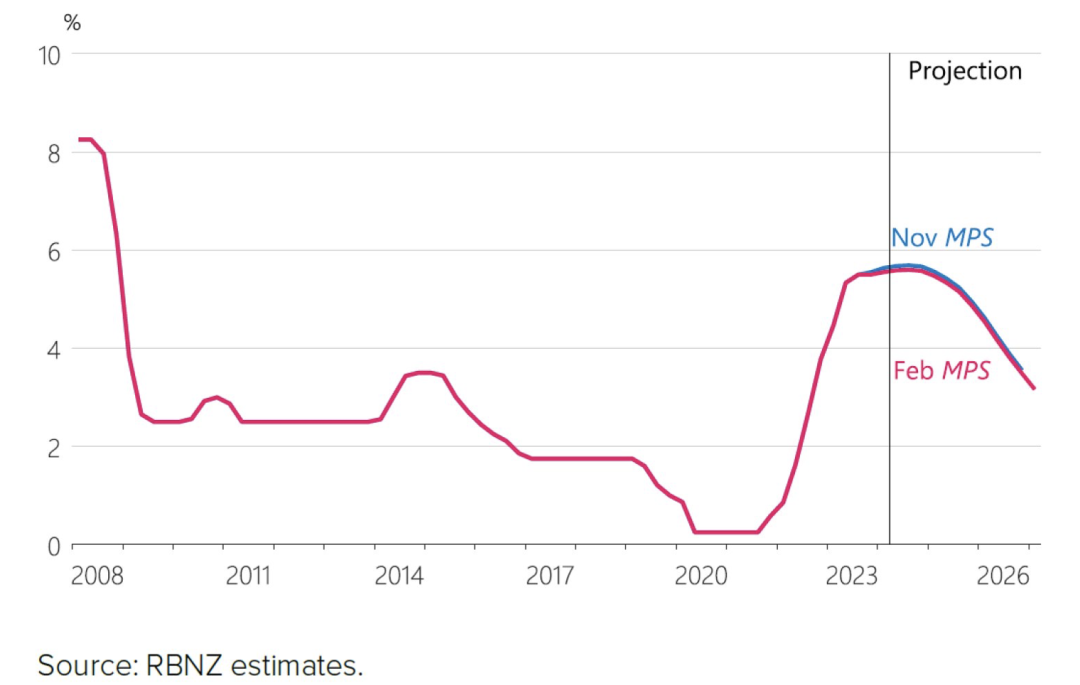 OCR movements and forecasts (Source: Reserve Bank of New Zealand)
Kiwibank economists said the Reserve Bank of New Zealand’s experts had finally understood that raising rates on Wednesday would have been a clear mistake. This was because many key indicators had clearly turned, and market expectations were already aligned with that view. Traders were positioning for two rate cuts before November, with the first likely to be delayed until August. Unsurprisingly, the decision to put rate cuts on hold led to a sharp decline in wholesale interest rates, forcing a reversal of the mistaken forecasts of rate increases.
Infometrics chief executive Brad Olsen said perceptions of the Reserve Bank’s OCR decision this month may have been distorted by ANZ’s “outlier” forecast. However, he believed that borrowers should not expect large rate cuts from the Reserve Bank. Mortgage rates could return to the 5% range, but that would not happen within the next six months to a year. The Reserve Bank would proceed cautiously, making considered, measured cuts because it did not want the market to get out of control again.
 Independent New Zealand economist Tony Alexander believes there is no prospect of another rate rise this year
Recently, independent New Zealand economist Tony Alexander also shared his views on the issue. He stated firmly that there was no prospect of another rate increase this year. He explained that monetary policy generally takes a long time (18–24 months) to have its maximum effect on inflation. After the OCR reached a record low, the Reserve Bank of New Zealand began raising the cash rate in October 2021. However, the increases were small, at just 0.25 percentage points each time, so few people were alarmed.
It was not until April 2022 that the Reserve Bank accelerated its rate increases, beginning with increments of 0.5 percentage points. It eventually raised the rate by 0.75 percentage points in a single move in October 2022, while warning of a recession. The rate-rise programme only really got under way towards the end of 2022. Only now are we entering the period when restrictive monetary policy is likely to have its greatest effect. This suggests that, along the Reserve Bank’s monetary tightening path, the scope for further rate increases is very limited, but there is still a long way to go before cuts.
Several other key indicators also show that the Reserve Bank’s decision not to cut rates was wise. Inflation currently stands at 4.7%, still well above the 1–3% target range. Annual private-sector wage growth exceeds 6.5%, also well above its long-term average of 3.3%.
Alexander also stressed that beneath some still-concerning signs of inflation, the economy was experiencing a clear downturn。Retail spending has fallen for eight consecutive quarters. Current per-capita spending is down nearly 7% on a year earlier and 11% on two years earlier. Business investment intentions are weak, with only 2% of businesses planning to invest in new equipment and systems, compared with a thirty-year average of 11%. In the three months to January, New Zealand’s exports fell 8% compared with the same period a year earlier, while the outlook for growth in bilateral trade with its largest trading partner is also unpromising. Housing construction is falling rapidly as developers struggle to secure presales and banks consequently stop providing finance. The Government is also tightening fiscal policy. These factors are likely to prompt the Reserve Bank to hold the OCR at 5.5% for longer.