
Homeowners are anxious: should we still trust the Reserve Bank of New Zealand's timetable for interest rate cuts?
This article includes the latest figures from the major commercial banks

Last Wednesday, the Reserve Bank of New Zealand decided to hold the Official Cash Rate (OCR) at 5.5%. In its subsequent statement, it said that although 'the risks to the inflation outlook have become more balanced', the cash rate needed to 'remain at a restrictive level for a sustained period' to ensure headline inflation returned to the 1%–3% target range.
|
That raises a question: what does the Reserve Bank of New Zealand mean by 'a sustained period'? Although its latest outlook for CPI and the OCR is more 'dovish' than that outlined in its November 2023 statement, it appears to have no intention of cutting the OCR before the end of this year or early 2025.
|
Several major banks have already responded to the Reserve Bank's latest decision last week. ASB, ANZ, BNZ and Kiwibank have each cut some of their home loan rates. Ironically, ANZ cut its fixed mortgage rates ahead of the other banks despite having forecast that the Reserve Bank would raise the OCR further this year.
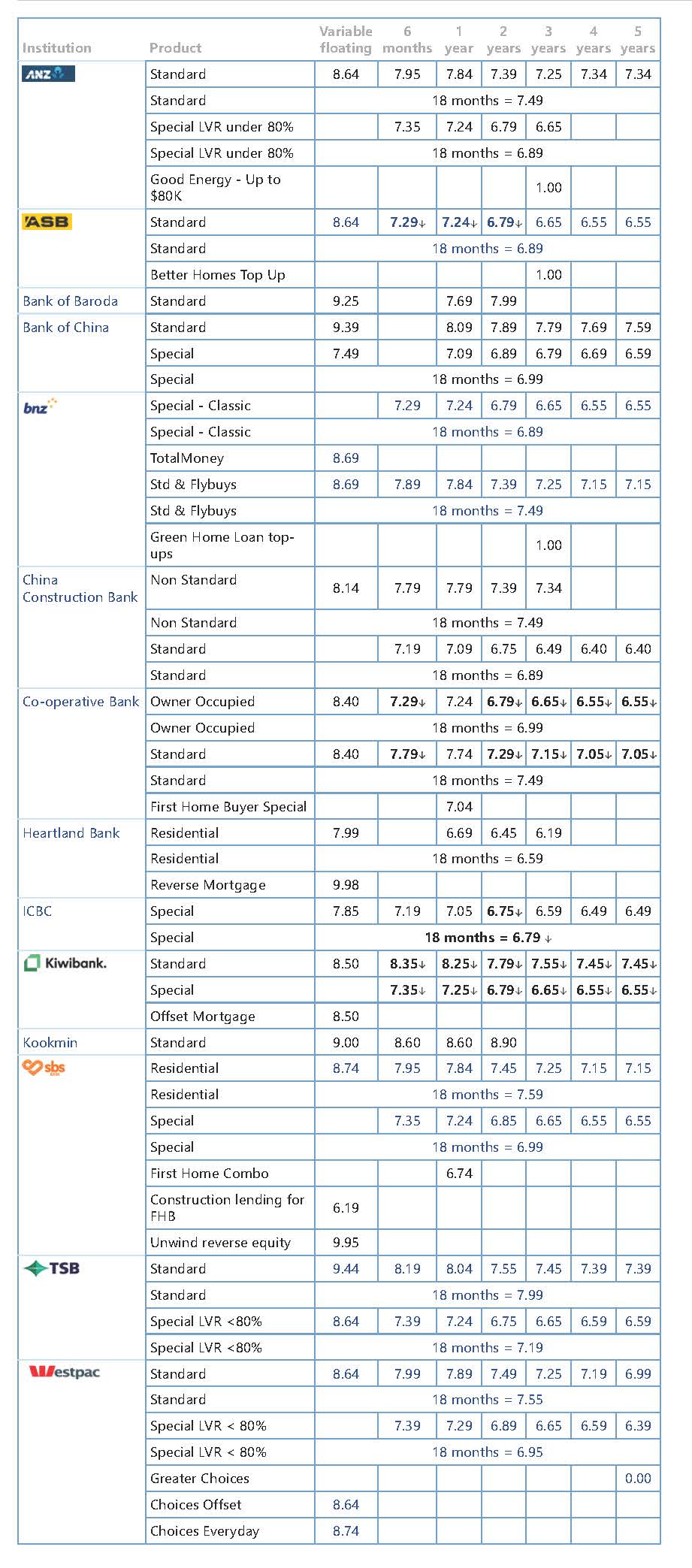 The latest interest rates from major banks (image source: interest.co.nz)
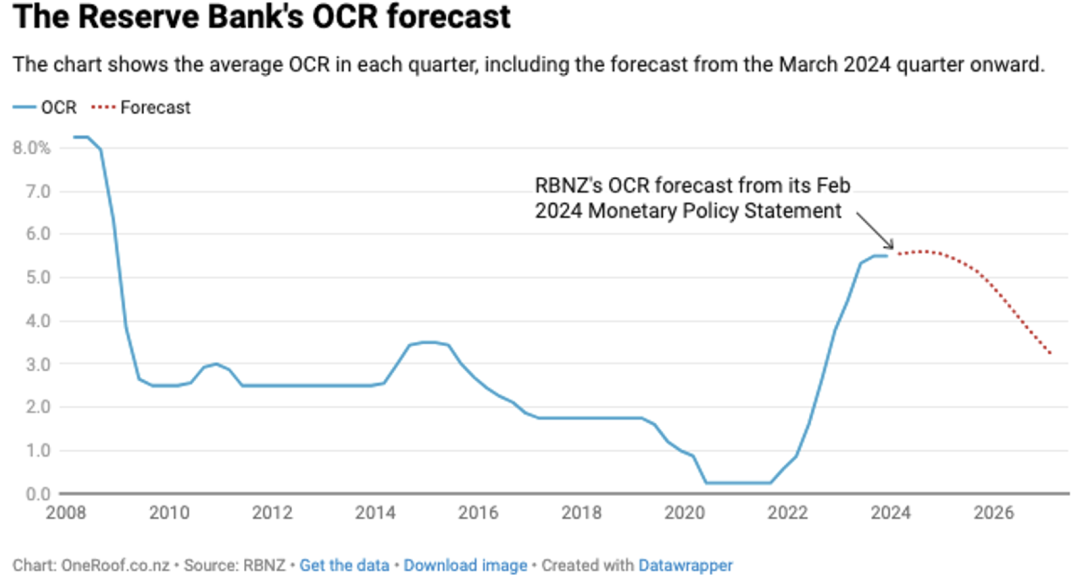 The Reserve Bank of New Zealand's projected OCR track (source: Reserve Bank of New Zealand)
The chart above shows the Reserve Bank of New Zealand's latest cash rate forecasts. These are important for understanding the future OCR path, as they also influence sentiment and expectations in the current property market. Let us examine how reliable the Reserve Bank's forecasts are.

Although the Reserve Bank of New Zealand's language on inflation in last week's statement was less stern than before, we can be certain that it has no intention of cutting the OCR in the short term. This is because the current inflation rate of 4.7% is still too high. The Reserve Bank acknowledges that high interest rates are working to curb inflation, which means another OCR increase in the short term is less likely.
Back in November last year, the Reserve Bank of New Zealand's forecasts implied a 75% chance of another OCR increase, while its latest forecasts reduce that risk to 40%. This therefore means an increase in the OCR at the next decision becomes more likely. The forecasts also indicate that when the Reserve Bank eventually starts cutting the OCR, interest rates will return to lower levels more quickly. We cannot help asking: will the Reserve Bank stick to its position and hold the OCR until around the end of the year? Judging by its past performance, the Reserve Bank tends to adhere closely to its own projected OCR track in the first half of this year. The market currently expects an OCR cut in September at the earliest. Ed McKnight, resident economist at Opes Partners, believes this is possible and consistent with the Reserve Bank's own approach.
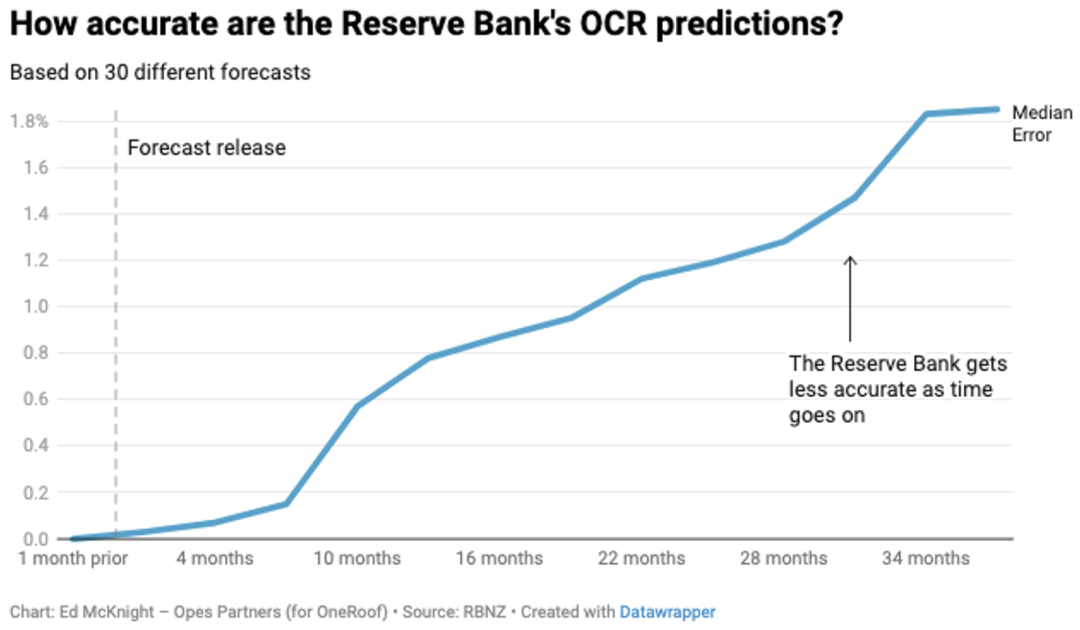 Data on the accuracy of the Reserve Bank of New Zealand's OCR forecasts shows that accuracy declines over longer time horizons (source: RBNZ)
 According to the Reserve Bank of New Zealand's latest forecasts, New Zealand house prices will rise by 3.4% in the year to the end of December this year, below its previous forecast for 2024. Statistics show that the Reserve Bank's house price forecasts have been significantly off target since the outbreak of COVID. On average, its forecasts tend to miss by 4.6%, so when it expects house prices to rise by 3.4%, the actual figure could range from -1.2% to 8%.
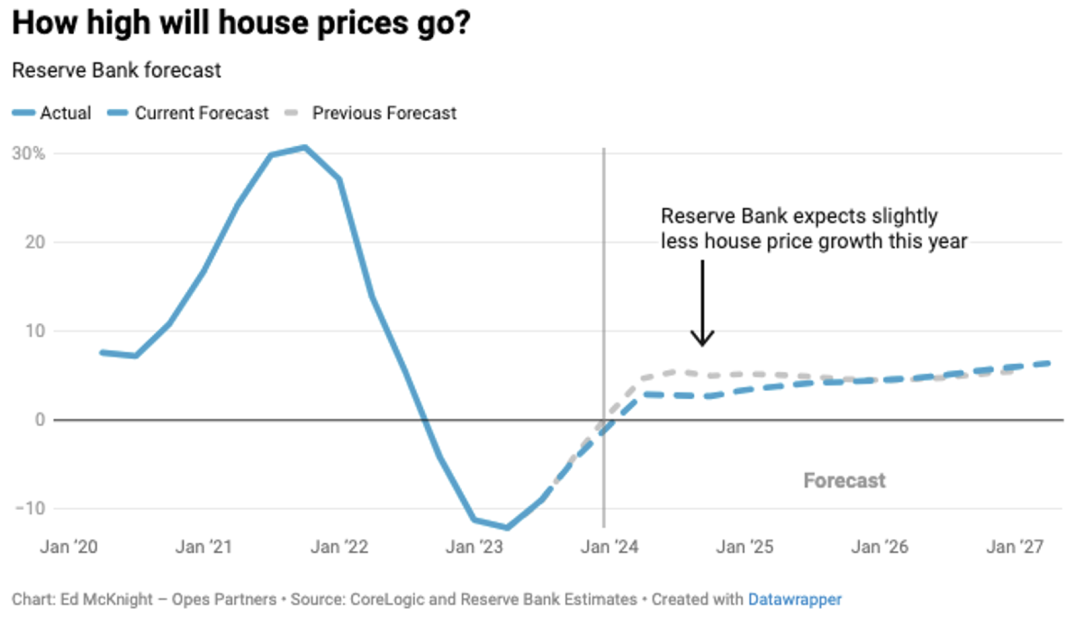
A chart illustrating the Reserve Bank's substantially inaccurate house price forecasts (sources: CoreLogic and RBNZ)

Before last week's Reserve Bank statement, there was speculation that the Reserve Bank of New Zealand would speak privately with the major banks, urging them to maintain high interest rates. However, it appears to have abandoned that idea.
Last week, responding to a question from a New Zealand Herald reporter, Reserve Bank Governor Adrian Orr said he was pleased to see commercial banks' mortgage rates falling. He said: 'Yes, this is a competitive environment... Banks should compete with each other on pricing. I hope there is ample competition in the market, because I think this is a low-volume market. We should see pressure on pricing, margins being squeezed, and banks working hard to compete with each other.'
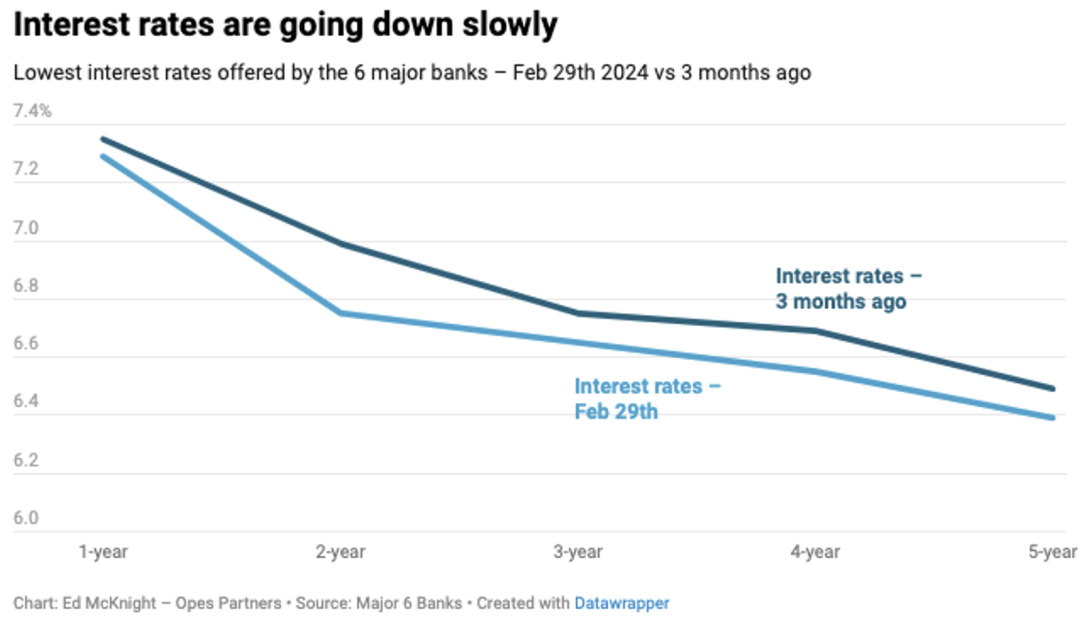 A comparison of interest rate curves on 29 February and before March (sources: commercial banks)
The Governor's comments make it clear that he is not worried about concerns that banks cutting interest rates could drive inflation higher and trigger another round of OCR increases. Indeed, over the past three months, most major commercial banks have cut their mortgage rates. Although the cuts have been limited, they have offered mortgage borrowers some comfort while also signalling the broad direction of interest rates next year.