
Revealed: timing matters when buying and selling property! Data shows which months offer the ‘cheapest’ homes
In this article, we examine which season offers the ‘best value’ in the property market.

With winter approaching in New Zealand, many home buyers are wondering whether postponing their purchase until June or July could secure them a better price.
In this article, we examine which season offers the ‘best value’ in the property market.
|
In New Zealand, winter is widely regarded as the traditional quiet season for the property market. This is because strong winds, heavy rain and cold weather are thought to reduce attendance at open homes (Open Home) and bring a corresponding reduction in the number of homes for sale. Fewer competing listings mean less pressure on sellers, while buyers also have greater bargaining power when competition in the market is less intense.
But is winter really the season when house prices are lowest?
The property market does appear relatively subdued in winter, but data suggests that, in terms of house price growth, its quietest months actually fall in summer and autumn.
|
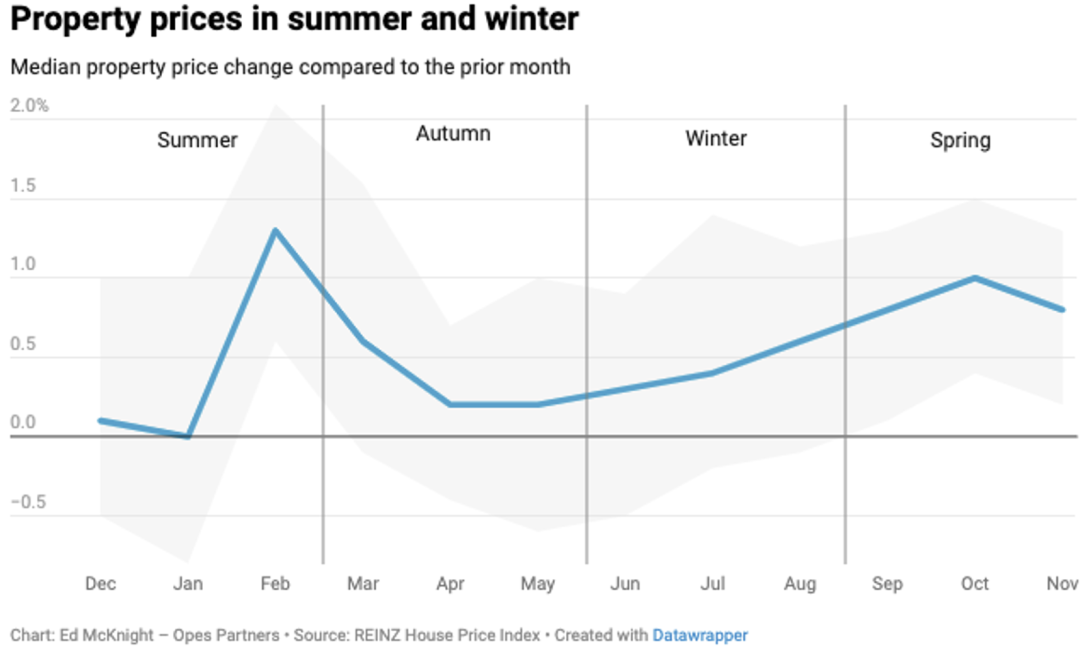 Comparison of New Zealand property sale prices across the seasons (Source: REINZ)
In other words, hot summer weather does not necessarily mean a hot property market. Therefore, the best months for buyers to negotiate are December and January, followed by April and May。
Research has found that slower house price growth is unrelated to weather and temperature, but is linked to holidays. Historical data shows that in December and January, Christmas, New Year and school holidays mean people seldom make time to view and buy homes. April also brings public holidays, including Easter and Anzac Day, along with school holidays, prompting buyers to postpone their purchasing plans.
This can be seen in the property sales data above. Fewer properties sell over Christmas, followed by a marked decline in transaction volumes in April. As a buyer, you may therefore find some sellers more willing to negotiate a lower sale price when sales slow.

Comparison of New Zealand property sales volumes across the seasons (Source: REINZ)
The comparative chart above makes it clear that cooler weather does not necessarily mean a cooler housing market. For example, January is the month when property prices are most likely to fall. Yet data for January over the past 32 years shows that prices fell only 50% of the time. In the other half of those years, prices still rose in January. Conversely, prices are less likely to fall in February and September. Even so, over more than 30 years, prices still fell in those months 9% and 12.5% of the time respectively.
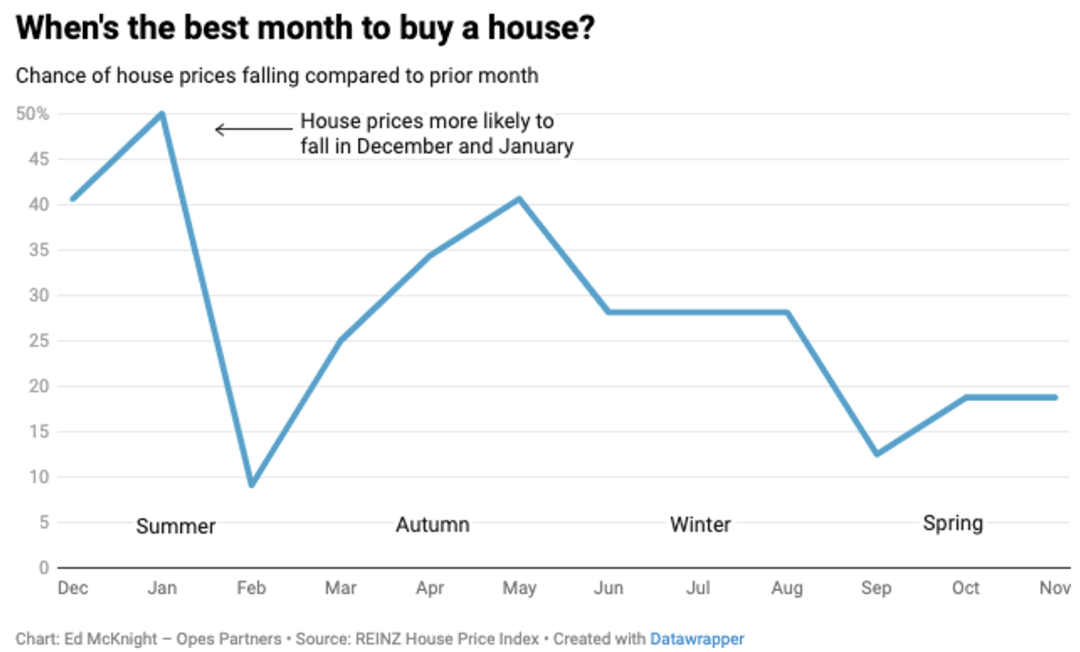 Comparison of how often house prices fall in each month (Source: REINZ)
The chart above indicates that January, December, April and May are the most favourable months for price negotiations. However, this does not mean buyers should expect house prices always to fall in these months.
Should prospective buyers wait until winter to purchase a home? Based on analysis of many years of data, our conclusion is that although winter does not necessarily offer cheaper homes, market competition tends to be less intense. This can give buyers enough time to find a suitable property and more room to negotiate a deal. The data also suggests that buyers may have better luck in months with more public and school holidays.
For homeowners seeking a good sale price, the situation is generally reversed. House prices heat up in February and March, then again in September, October and November. Preparing a home for sale during winter to meet the warmer spring market may therefore be a selling strategy worth considering for buyers.