
May’s latest property report is out: these luxury suburbs recorded the biggest house price swings! With unemployment rising to 4.3%, will the Reserve Bank cut rates earlier?
ANZ economists say a slowing labour market will reinforce the Reserve Bank’s view that its policies to curb inflation have been working


According to Stats NZ, the unemployment rate in the March quarter of 2024 was 4.3%, up slightly from 4.0% in the previous quarter.
The annual figures showed that the seasonally adjusted unemployment rate rose 0.9 percentage points from a year earlier, increasing from 3.4% in the March quarter of 2023 to 4.3% in the same quarter this year.
The seasonally adjusted unemployment rate is a macroeconomic indicator reflecting spare capacity in the labour market. In the March quarter of 2024, the unemployment rate rose to 11.2%, compared with 10.7% in the previous quarter and 9.1% a year earlier.
Labour market manager Deb Brunning noted:
‘Spare capacity includes not only unemployed people, but also part-time workers who want and are available to work more hours, and people who want a job but are either unavailable to start work or are not actively looking for work.’
The number of unemployed people increased by 31,000, while overall spare capacity rose by 75,000 people. Increased unemployment and spare capacity among young people aged 15 to 24 were significant contributors to both increases.
ANZ economists said the slowing labour market would reinforce the Reserve Bank’s view that its policies to curb inflation had been working, but would not be enough to prompt a rate cut: ‘The Reserve Bank of New Zealand is not seeing the momentum towards lower domestic inflation that it expected. Until it is confident it has done enough, it is unlikely to consider lowering the OCR (Official Cash Rate). We still expect no cuts before 2025.’

The latest OneRoof–Valocity House Value Index report, released today, showed that average house values across New Zealand increased 0.4% in the three months to the end of April, reaching NZ$977,000. Although property sales over the past three months rose 19% year on year, they could not keep pace with the increase in new listings, which were up 30% on the same period last year. The report concluded that unusually high listing volumes and high interest rates had affected house values, while the surge in properties for sale nationwide had put homebuyers back in control, turning the market into a buyer’s market.
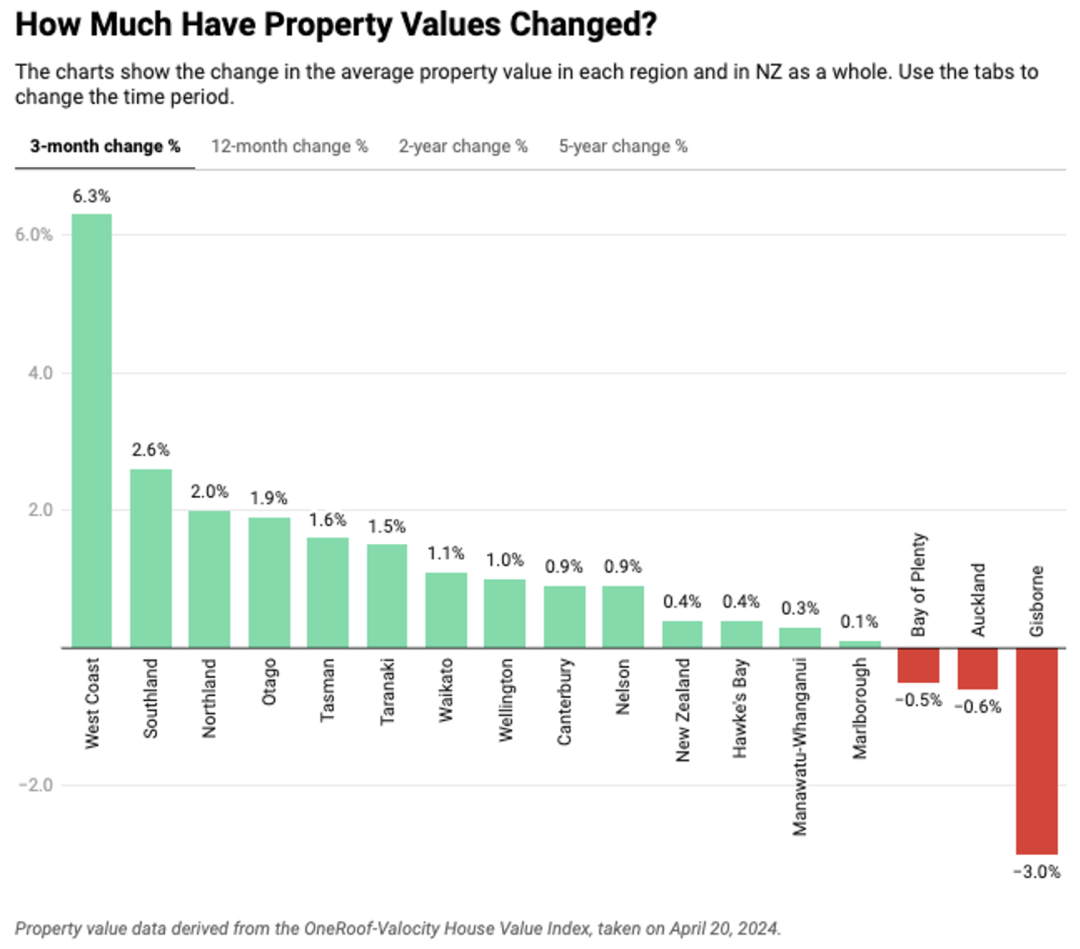
Regional house value changes across New Zealand over the past three months (Source: OneRoof/Valocity)
The survey figures showed that house values in Auckland and the Bay of Plenty slipped slightly over the past three months, falling close to 1%, while gains in Canterbury and Wellington were also modest, at around 1%.
Two regions stood out in the latest three-month figures. Gisborne’s average house value fell 3% (NZ$20,000) to NZ$642,000, while the West Coast’s average rose sharply by 6.3% (NZ$28,000) to NZ$471,000. Unfortunately, neither region’s market conditions were typical. Gisborne’s housing market was still struggling with the aftermath of Cyclone Gabrielle, while the West Coast’s gains reflected its nationally lowest house prices meeting many buyers’ basic needs. The figures also showed year-on-year house value growth in every region except Gisborne, although market uncertainty could easily erode these hard-won gains. The report expected the balance of power to return to sellers when interest rates began falling again, with markets expecting OCR cuts to begin late this year or early next year.
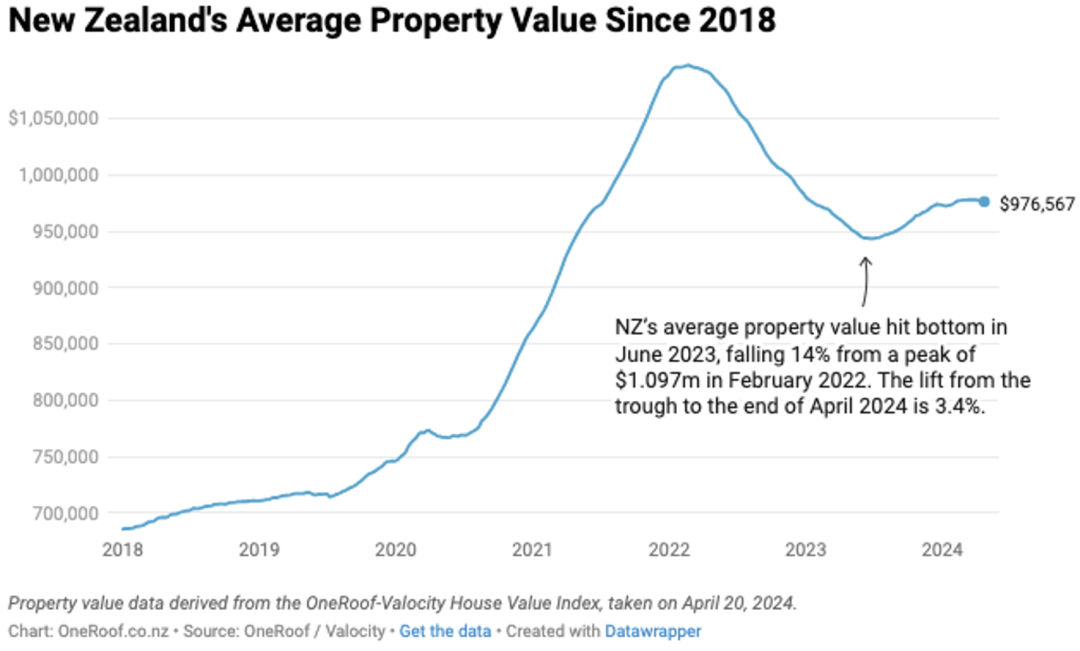
Changes in New Zealand’s national average house value from 2018 to 2024 (Source: OneRoof/Valocity)
Dunedin was a regional city with more representative house value growth. Driven by relatively affordable prices and tight stock levels, its house values rose 3% over the past three months, a standout gain among New Zealand’s other main centres. Looking at individual residential areas nationwide, the largest gains over the past quarter were on the West Coast, while the largest falls were in neighbouring Southland. Low house prices were a shared characteristic of both regions, suggesting a shift in local markets.
Among residential areas recording at least 20 sales over the past 12 months, more than 60% saw house values rise over the past three months, and 72% recorded year-on-year gains. However, only around 15% had returned to their pandemic peaks.
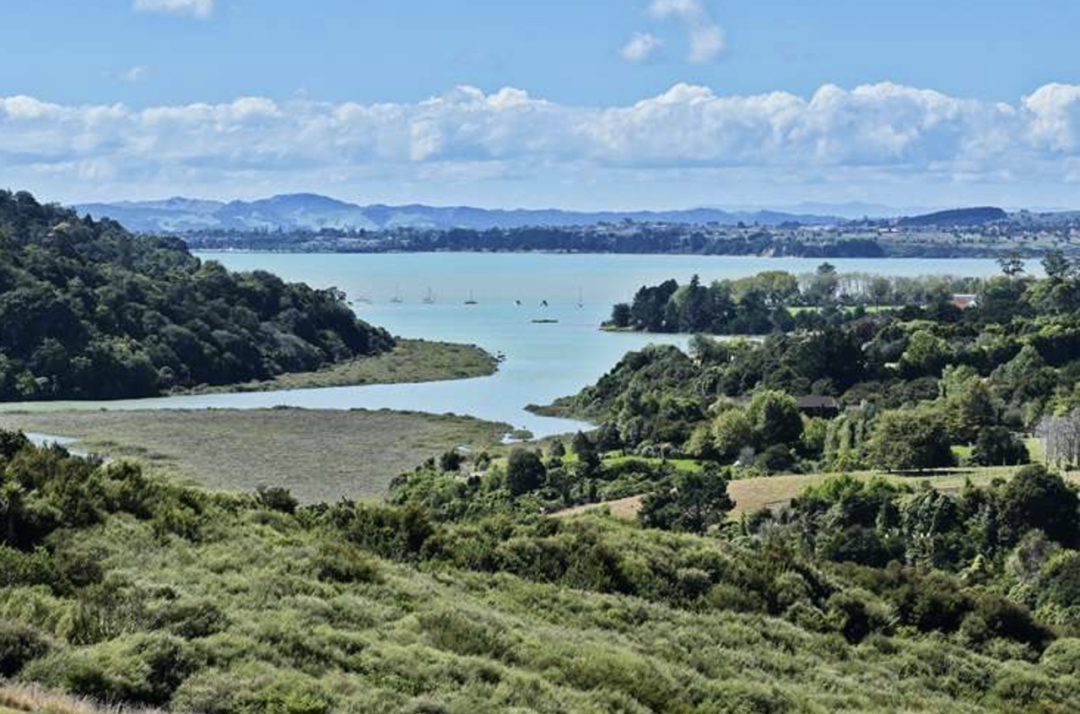
Whitford, on Auckland’s eastern fringe, recorded an increase of NZ$160,000 in its average house value over the past month
The report also showed that the largest gains over the past three months were in some of the country’s wealthiest residential areas. Whitford’s average house value rose NZ$160,000 to NZ$3,550,000. Other strong performers included Arrowtown, with an average increase of NZ$141,000, Remuera, up NZ$115,000, and Russell, up NZ$114,000.
Meanwhile, the residential areas with the largest house value falls last quarter also included expensive luxury suburbs. Tamahere’s average house value fell NZ$64,000, Epsom’s dropped NZ$57,000, and Westmere’s declined NZ$56,000. The large swings in these two groups of figures showed that buyers at the upper end of the market remained selective about where they invested in property.
Property investors should note that the total number of properties for sale on OneRoof.co.nz has now exceeded 41,000, a surge of 17% from the same period last year. This upward trend may continue: new listings nationwide rose 27.9% year on year in April, while Auckland’s new listings surged 39%. Looking ahead, economic uncertainty and high interest rates are making some homebuyers cautious, but recent moves to ease lending restrictions may persuade some prospective buyers to act. Keep following YIJU New Zealand’s latest coverage of changes in the local housing market.