
Auckland council rates rising again? All four major banks cut interest rates! Is fixing for the long term still worthwhile?
A week ago, Westpac sharply cut its three-year fixed mortgage rate to 6.29%, putting it 26 basis points below the 6.65% offered by its main rivals.
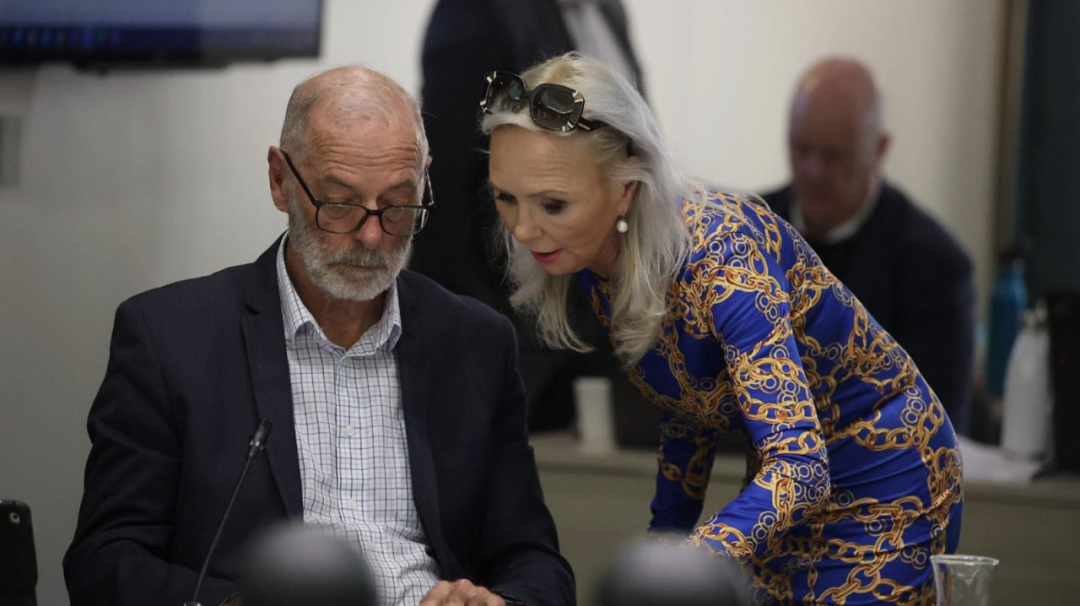

In May 2024, Auckland Council met at the Town Hall and approved its long-term plan for the next 10 years. Under the plan, average household council rates will rise by 6.8% in 2025, 5.8% in 2026 and 7.9% in 2027. Annual increases thereafter will be no more than 3.5%.
Mayor Wayne Brown said the plan balanced the need to invest in growth and protect the environment while taking cost-of-living pressures into account. The council also discussed establishing the Auckland Future Fund and how its funds would be managed. Despite concerns from some councillors about rates increases, the plan was ultimately approved and will be formally adopted in June.

A week ago, Westpac sharply cut its three-year fixed mortgage rate to 6.29%, putting it 26 basis points below the 6.65% offered by its main rivals.
Yesterday, ASB made a similar move, cutting its three- to five-year mortgage rates to 6.39%. These rates are already very “low” for a major bank, but still well above SBS Bank’s three-year “special” rate of 5.99%.
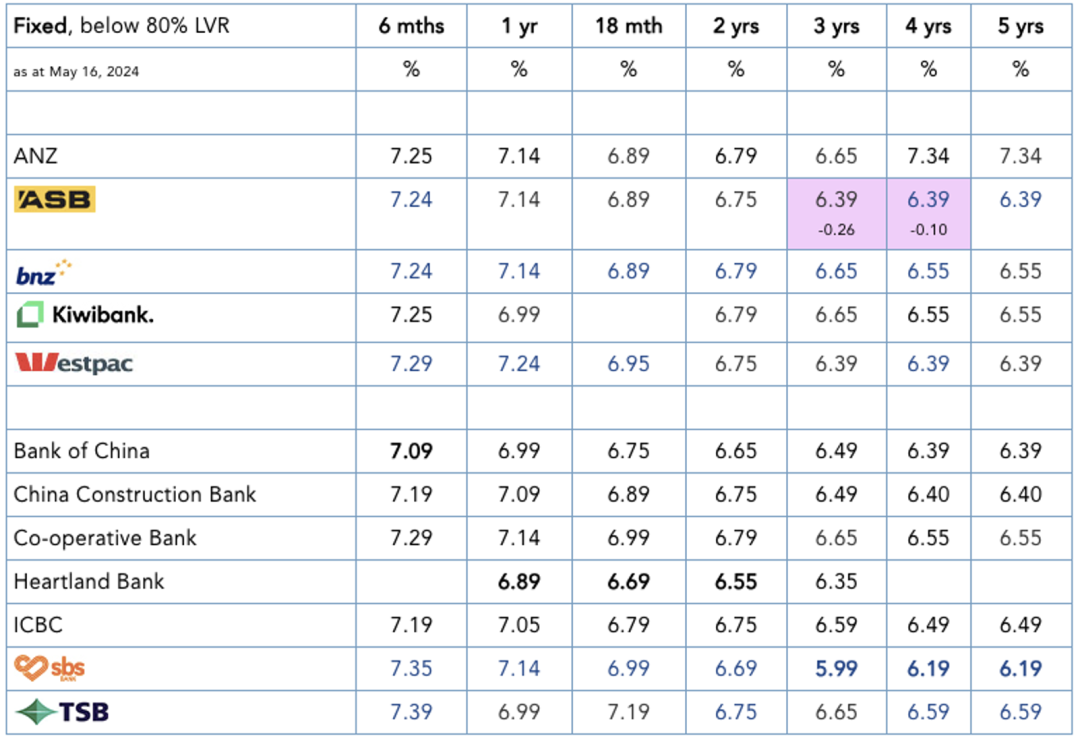
Latest mortgage rates across banks (Source: interest.co.nz)
However, despite the fierce battle between banks over longer-term fixed mortgage rates, borrowers have shown little enthusiasm. Data shows that, with expectations of falling rates increasing, most borrowers are choosing shorter fixed terms of 6 or 12 months. So, is it better to fix for a longer or shorter term now?
Some industry insiders say borrowers could still consider a three-year mortgage rate of 6.39%. Mathematically, fixing at the lower three-year rate will not necessarily mean paying more interest than fixing for one year now at 7.14%, another year at 6.50%, and then a further year at 5.90% two years from now.
Calculations compare choosing a three-year rate of 6.39% now with the one-year rate of 7.14% offered by other major banks, assuming rates will be lower after May 2025 and May 2026. On a NZ$450,000 mortgage, monthly repayments would be NZ$2812 with the three-year option, compared with NZ$3036 for the one-year option: a monthly saving of NZ$224. Total mortgage repayment savings in the first year would be NZ$2688. Borrowers whose fixed term has not yet expired could also consider breaking it and refixing if rates change substantially. Break fees are minimal when rates are rising, but become a significant consideration when rates are falling.

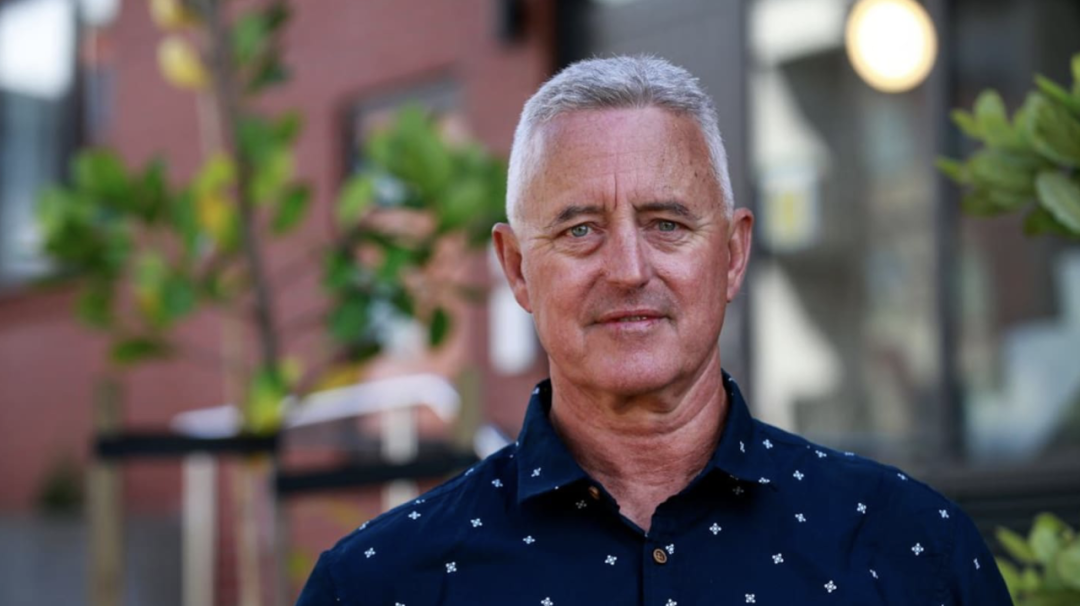
Shane Brealey, head of property developer Simplicity Living
Shane Brealey, head of a development company building hundreds of new apartments in Auckland, recently publicly criticised Auckland Council’s property agency Eke Panuku over lengthy but fruitless discussions about the sale of Northcote Central. He said the relevant council agencies were “too difficult to deal with”. What was needed now was more housing construction, rather than time spent in meetings.
The company said the masterplan for Northcote’s town centre was in the public interest, and it had believed its involvement could make a major difference to the city. Unfortunately, Simplicity Living could not overcome the demands on time and resources involved in dealing with Eke Panuku. This was a real disappointment for Tāmaki Makaurau.
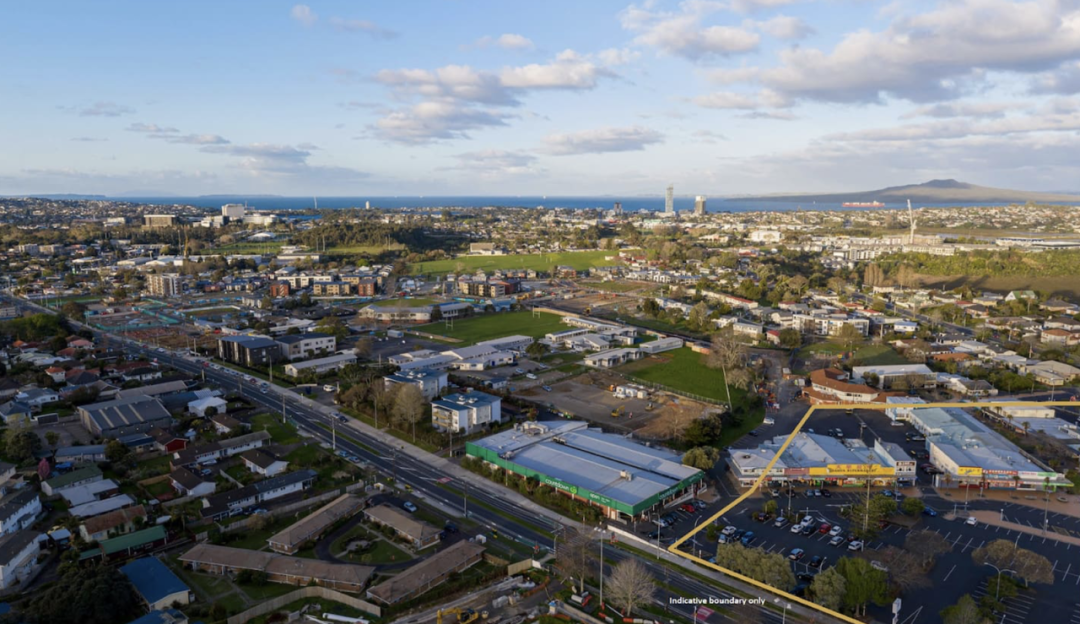
Eke Panuku is seeking a development partner for the land within the yellow boundary in Northcote
Eke Panuku is understood to be selling a 3.13-hectare site at Northcote Central for urban development. The site will be familiar to many in the Chinese community: it includes a 600-space car park and several surrounding shops. PwC is managing the sale. There is speculation that the land could sell for NZ$60,000,000 or more.
Brealey wrote to Eke Panuku development manager Allan Young: “It is clear to us that the way we operate is incompatible with the way Eke Panuku operates, so we cannot participate further in the procurement process for a developer for Northcote Central.

Artist’s impression of the proposed Northcote town centre development
A council spokesperson subsequently responded to Brealey. She explained that deals such as Northcote Central involved more than a straightforward land transaction: developers had to meet the needs of the surrounding community. Eke Panuku’s work ranged from small, single-site projects to large, complex sites, all requiring a masterplan to guide and deliver integrated development outcomes over many years.
She said Northcote Central was a large, complex sustainable development project. This type of development, and the requirements for entering into agreements with development partners, would not necessarily suit every developer, as many preferred to “do their own thing”. Eke Panuku accepted the company’s decision to withdraw and looked forward to working with it again.