
Questions raised: will tax cuts fuel high inflation? Treasury nevertheless forecasts a faster-than-expected fall in CPI and quicker interest rate cuts
Many property industry figures say the government’s Budget offers nothing new, and that Willis’s tax cuts will largely help people cope with rising living costs rather than encourage them to buy more property

Yesterday, New Zealand Finance Minister Nicola Willis reconfirmed that the government would spend NZ$729,000,000 to restore interest deductibility and NZ$45,000,000 to shorten the bright-line test to two years.
However, many property industry figures say the government’s Budget offers nothing new. They believe Willis’s tax cuts will largely help people cope with rising living costs rather than encourage more property purchases, leaving their impact on the future property market very limited. Some went further, saying the tax cuts would not stimulate property transactions and people would not invest the extra money in any part of the property sector.
CoreLogic chief economist Kelvin Davidson likewise said the Budget contained no surprises. He even joked that it might have been more surprising had the scrapping of the First Home Grant not been announced in advance. Davidson said the Budget contained nothing likely to have a positive impact on the property market. Its effects would be more indirect: for example, whether further tax cuts would fuel high inflation, potentially keeping mortgage rates elevated for longer and putting downward pressure on the property market.

He also agreed that the extra income from tax cuts would go towards debt repayments and living expenses, as the NZ$50 saved each fortnight would be a drop in the ocean when buying a home. People would be more likely to put it towards their existing mortgages.
Kiwibank chief economist Jarrod Kerr also described yesterday’s Budget as containing ‘no surprises’. Although the government delivered on its election promises, little else had changed. In his view, the promised tax cuts, increasing people’s take-home pay by NZ$10 to NZ$20 a fortnight, were ‘nothing earth-shattering’ and unlikely to have any impact on the property market.
Kerr said high interest rates remained the biggest factor affecting the property market. Once the official rate falls and banks begin progressively lowering mortgage rates, investors will return to the market.
Chris Farhi, head of insights at real estate company Bayleys, shared this view, saying interest rate movements were the more significant influence on the property market. If the tax changes translated into mild inflationary pressure, interest rate cuts would stall. Fortunately, given the limited scale of the tax changes, he did not expect any major impact on inflation.
New Zealand Sotheby’s International Realty managing director Mark Harris said the announcement contained little that would change the state of the property market. He was disappointed that it included nothing about overseas buyers purchasing property. He still hoped the government would reconsider lifting the foreign buyer ban at some point, saying he did not want New Zealand to keep shutting out investment.
What other important information did yesterday’s announcement reveal?
Although whether tax cuts will worsen inflation remains open to debate, Treasury said yesterday that it expected inflation to fall more quickly.
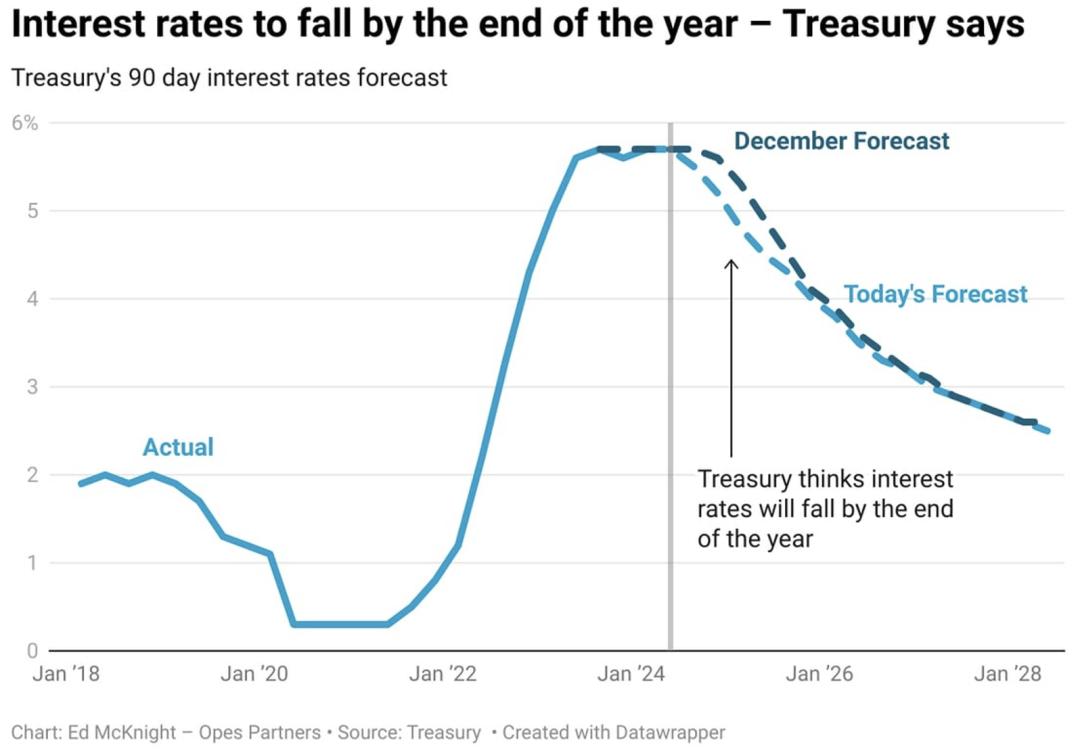
Treasury forecasts a faster-than-expected fall in CPI (source: Treasury)
Treasury believes inflation will fall faster than expected, which is good news for property investors. Its economists expect inflation to return to the Reserve Bank of New Zealand’s 1–3% target range by September this year. That is 3 months earlier than they forecast in December 2023.
Will interest rates fall faster?
Treasury also believes interest rates will fall somewhat faster than it expected 6 months ago.
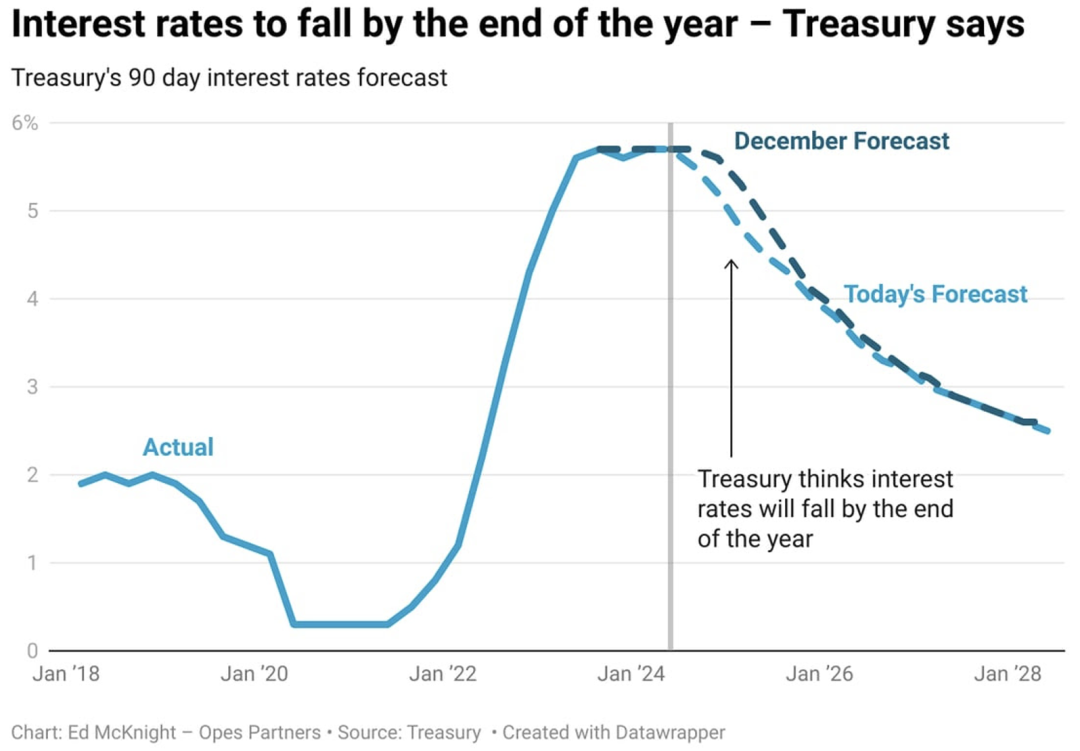
Treasury’s forecast for interest rates to fall towards the end of this year (source: Treasury)
Yesterday, Treasury forecast rapid interest rate cuts in September and December this year. This could mean swift reductions in the OCR towards the end of this year and early next year. If Treasury’s forecasts prove correct, this would be hugely positive news for property investors and homeowners.