
6-month fixed mortgage rates are actually rising?! The best mortgage fixing term for borrowers right now may be…
Under these circumstances, mortgage rates could very well fall significantly before Christmas.
The latest survey data released by the Reserve Bank of New Zealand shows that around 73.6% of new owner-occupier mortgage lending in April, including floating-rate loans, was on terms of one year or less. This indicates that the preference for shorter fixing terms continues, with borrowers favouring shorter terms as expectations of falling mortgage rates grow.
One striking feature of the April data was that 6-month fixed loans accounted for a record 16.5% of all owner-occupier mortgages. Interestingly, before this year, owner-occupiers barely considered 6-month fixing terms. An online contributor also revealed (see image below) that one commercial bank’s special 6-month fixed rate had risen rather than fallen, from 6.89% at the end of April to 6.99%.
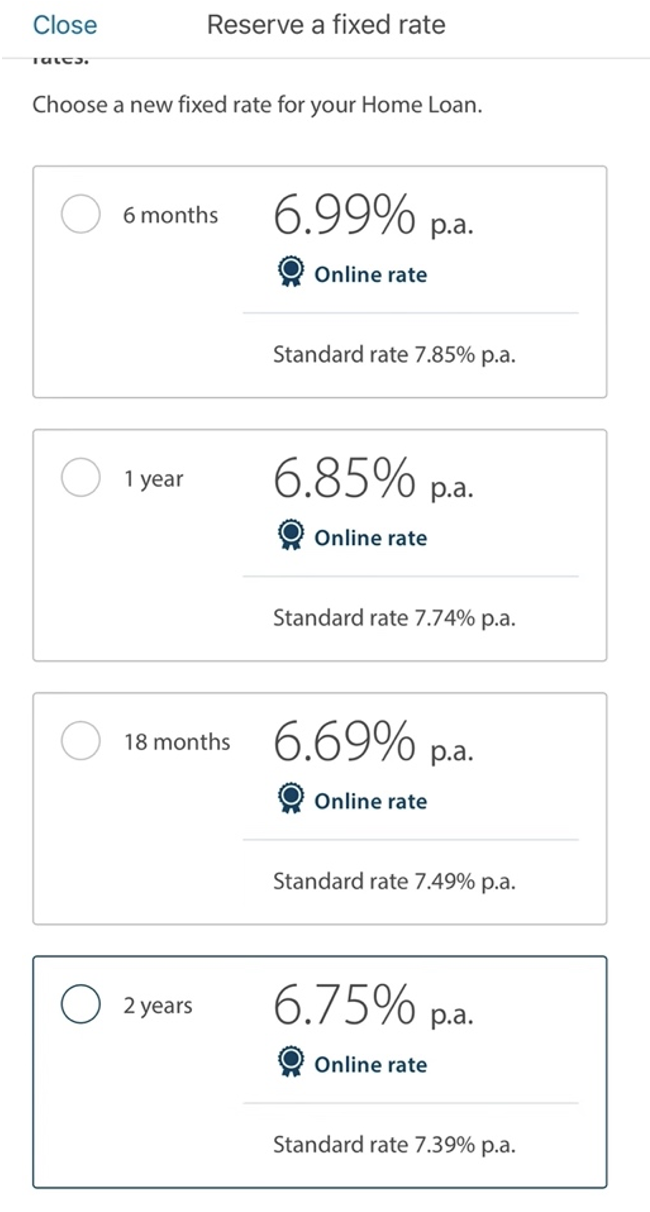
A commercial bank’s special 6-month
fixed mortgage rate for existing customers rises rather than falls (source: online image)
Overall, one-year fixed mortgages remained owner-occupiers’ preferred choice in April, accounting for 39.4% of total lending to these borrowers, down from 42.1% in March. Longer fixing terms, by contrast, have become less popular with owner-occupiers. In its summary, the Reserve Bank of New Zealand said the share of owner-occupiers choosing fixing terms longer than 18 months was at or near record lows. For example, the share of two-year fixed loans fell from 10.2% to 8.6%, while three-year fixed loans fell from 3.3% to 2.8%. The share of four-year fixed loans remained steady at 0.3%, also at a long-term historical low.
So the question is: in the current environment, is choosing a one-year fixed rate over a lower three-year rate the wisest decision for borrowers?
Economist David Chaston believes borrowers need to consider two points:
First, if borrowers now accept a one-year rate of 7.14%, the lowest offered by the major banks, and forgo a three-year fixed rate of 6.35%, rates would need to fall by 120 basis points after a year for them to recoup the additional interest paid by initially choosing the one-year term. Even then, the continuing uncertainty may not justify the risk.
Taking a NZ$500,000 loan with a 30-year repayment term as an example,
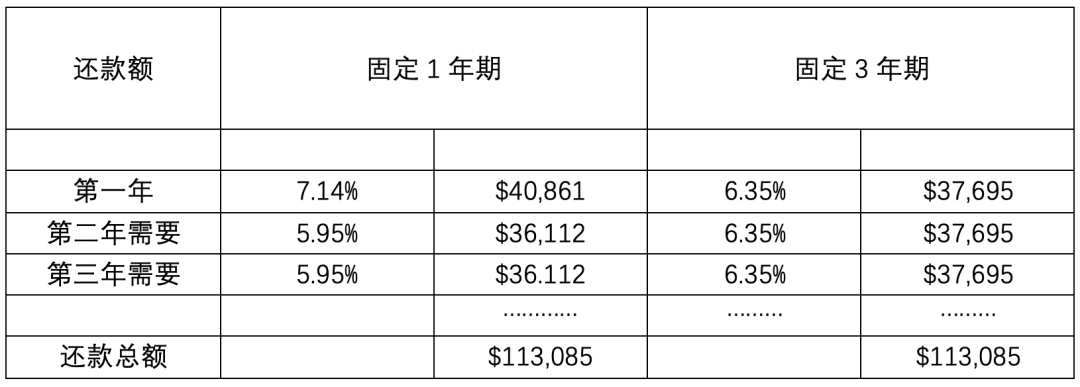
a borrower choosing a one-year fixed rate is effectively betting that the Reserve Bank of New Zealand will win its battle against high inflation within a year, then cut the Official Cash Rate (OCR) at least 5 times by 25 basis points each time. They are also betting that global economic conditions over the coming year will not disrupt the Reserve Bank’s progress in lowering the OCR. If borrowers believe these expectations are unlikely to be met within the next year, choosing the current lower, certain three-year fixed rate may be the wiser move.
Second, we can examine the issue historically by looking at the lowest rates offered by different banks.
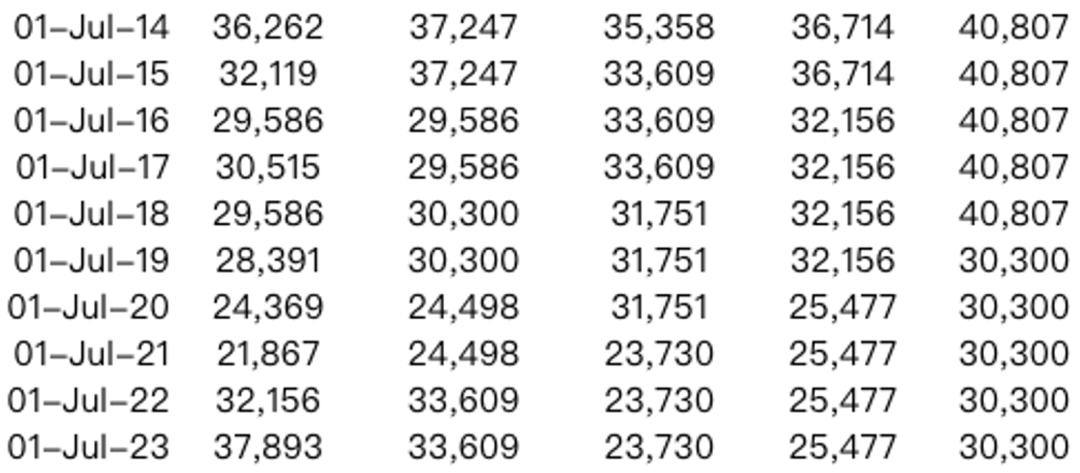
If a borrower has a NZ$500,000 mortgage coming up for renewal on 1 July this year, and has chosen the lowest available rate across all fixing terms over the past five years, their repayments would look like this:
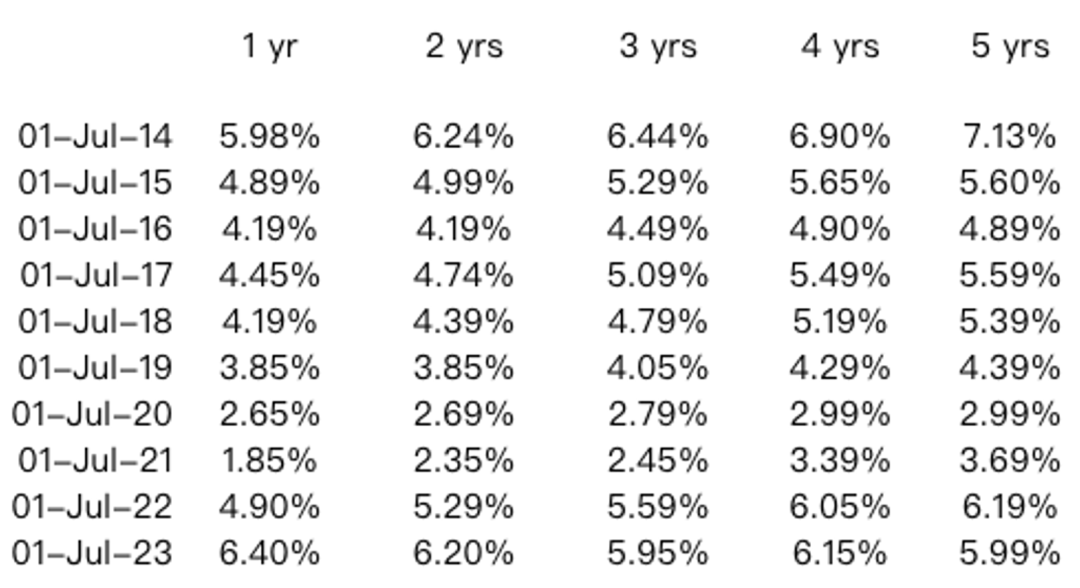
Lowest rates available from banks
Annual repayment costs

Comparison of total repayment costs over five and ten years

Difference compared with the lowest-cost option
David Chaston explained that, over the past five years, borrowers would have been better off choosing BNZ’s 4-year fixed rate of 2.99% than any other bank’s rate. In the year before that decision, their best option would have been the one-year rate of 3.85% offered by ANZ, BNZ or Kiwibank. Following this ‘lowest current rate’ strategy, borrowers would have made NZ$130,299 in repayments over the full five-year borrowing period. This would have saved NZ$14,377 compared with always choosing the lowest one-year fixed rate, and NZ$16,214 compared with always choosing the lowest two-year fixed rate.
Extending the analysis to 10 years, a combination of the lowest one-, two- and three-year rates worked best. This meant BNZ’s two-year rate in 2016, followed by one-year options from Kiwibank and other banks from July 2018 to July 2020, then Heartland Bank’s three-year rate from July 2021. By always choosing the lowest rate across all terms whenever a decision was needed, borrowers would have paid NZ$281,088 over those 10 years, substantially less than sticking with the lowest one-year rate, saving NZ$21,655.
This hindsight analysis suggests that always choosing a one-year fixed rate is not necessarily the wisest option.
The future direction of mortgage rates remains uncertain
Notably, before the Reserve Bank of New Zealand’s latest OCR decision, markets had confidently anticipated the first OCR cut in October this year, with a strong possibility of two cuts by November. Under those circumstances, mortgage rates could very well fall significantly before Christmas.
However, the Reserve Bank of New Zealand’s latest Monetary Policy Statement, released on 22 May, was much more hawkish than expected. The Bank pushed back its expected timing for the first cut to the OCR, currently 5.5%, until the second half of next year. If events unfold as the Bank forecasts, mortgage rates will not fall this year.
Nevertheless, wholesale interest rate markets are still pricing in an OCR cut in November, so the Reserve Bank of New Zealand’s comments do not necessarily rule out earlier mortgage rate cuts. Will its latest stance change homebuyers’ mortgage fixing strategies? We will have to wait and see.