
Confirmed! OCR slashed by 50 basis points! Fierce mortgage rate competition brings major benefits for borrowers
The committee noted that annual consumer price inflation was already within its target range of 1% to 3% and was approaching the 2% midpoint. The rate cut was in line with market expectations, and economists generally expect the Reserve Bank to continue monitoring economic performance closely to ensure macroeconomic stability.

The Reserve Bank of New Zealand announced today that it would cut the official cash rate (OCR) by 50 basis points, from 5.25% to 4.75%. The decision marks a further easing of monetary policy as the economy faces inflationary pressures. The Reserve Bank's Monetary Policy Committee said the reduction was an appropriate step to help achieve and maintain low and stable inflation, while seeking to avoid unnecessary volatility in output, employment, interest rates and the exchange rate.
The committee noted that annual consumer price inflation was already within its target range of 1% to 3% and was approaching the 2% midpoint. The rate cut was in line with market expectations, and economists generally expect the Reserve Bank to continue monitoring economic performance closely to ensure macroeconomic stability.
Swift responses across the board

Following the Reserve Bank's announcement, New Zealand Finance Minister Nicola Willis was interviewed about the decision
New Zealand Finance Minister Nicola Willis said the 50 basis point cut announced today would be good news for households and businesses that had been “doing it tough” in recent years. “That is changing as inflation gradually returns to target, interest rates fall, and businesses regain the confidence to invest and hire,” Willis said.
She said: “Last week's ANZ Business Outlook survey showed that businesses are more optimistic about the future and plan to invest more, which is good news for all New Zealanders. The Mood of the Boardroom survey reinforced this, showing economic confidence at its highest level since 2016.”
She said: “Although it is still early days and there is more work to do, our careful and orderly plan to rebuild the economy is working. Like businesses, we believe brighter days lie ahead.”
“Currently, about half of mortgage borrowing is either on floating rates or fixed for six months or less. This is the largest proportion since records began in 2017. This means that many people will have the opportunity to move to lower interest rates over the coming months, freeing up more cash for many people. That money will flow into the tills of local businesses, benefiting our economy.”
Major banks responded swiftly to today's OCR cut, with ASB and BNZ adjusting rates within minutes of the announcement. BNZ announced that it would cut its floating mortgage rate by 0.5% to 7.49% from Thursday. Meanwhile, ASB's floating mortgage rate will also fall by 50 basis points, from 8.39% to 7.89%, while its Orbit rate will fall from 8.49% to 7.99%. ASB's business and rural floating base rate will also fall from 6.69% to 6.19%.
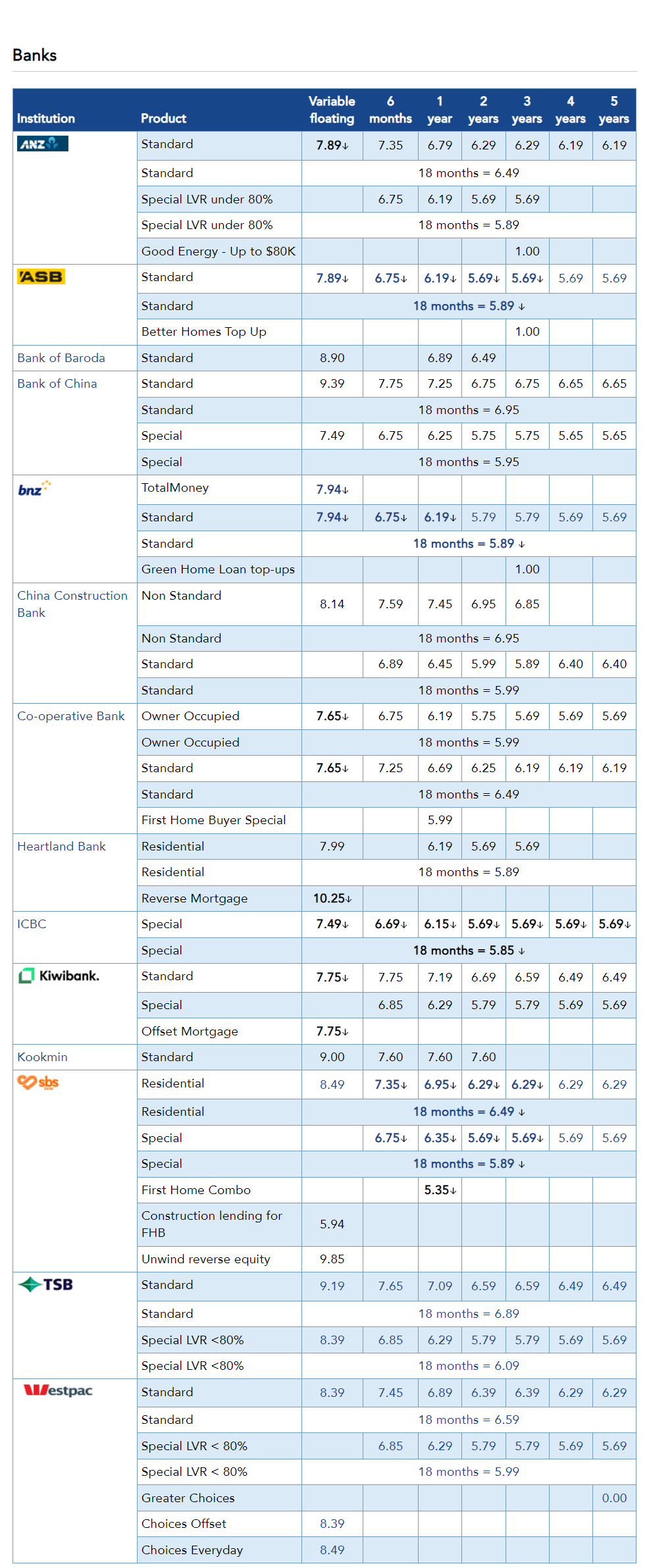
Fierce market competition brings major benefits for borrowers
ASB announced cuts today to its fixed mortgage and term deposit rates, following Kiwibank's lead. The move came ahead of the Reserve Bank of New Zealand's imminent official cash rate (OCR) decision. Some of ASB's short- and medium-term mortgage rates were cut by up to 16 basis points, while term deposit rates fell by 5 to 20 basis points, applying to both new and existing customers. ASB executive general manager of personal banking Adam Boyd was optimistic, saying the OCR decision due today would bring financial relief to more borrowers.
Kiwibank moves first, cutting rates to ease economic pressure
The day before ASB announced its rate cuts, Kiwibank took the lead by reducing its floating lending rates by 50 basis points. Kiwibank chief customer officer Elliot Smith said prolonged high interest rates had placed a serious financial burden on households and businesses, making it essential for the market to respond quickly and provide the necessary financial support. Kiwibank expects the cut to benefit around 35,000 mortgage and business banking customers.
Kiwibank's floating mortgage rate will fall from 8.25% to 7.75%, while its revolving credit rate will fall from 8.3% to 7.8%. These new rates will take effect for new customers on 14 October and existing customers on 29 October.

ANZ quietly cuts its one-year rate as the rate war intensifies
Meanwhile, ANZ has made a quiet but significant move, cutting its one-year mortgage rate to 5.59%, well below its advertised special rate of 6.19% and standard rate of 6.79%. This unadvertised discounted rate is available to existing and new customers, provided they have at least 20% equity in their property. The move came the day before the Reserve Bank's OCR announcement and attracted considerable market attention.
EasyStreet Mortgages adviser Gareth Veale said ANZ's cut came earlier and was larger than expected, showing that the bank had fully anticipated an imminent OCR reduction. He noted that the market widely expected the OCR to fall by 50 basis points to 4.75%, with some even expecting it to reach 3% in August next year. Veale believes ANZ's move could prompt other banks to follow. With major banks competing for market share, he expects others to announce similar cuts soon.
Tella chief executive Andrew Chambers agreed, describing ANZ's move as “a bold signal of where the market is heading” that could prompt other banks to adjust their rates quickly. He added that rate cuts would ease borrowers' financial burdens and further fuel property price rises.
New Zealand Banking Association: despite tough economic conditions,
most New Zealanders are in good financial shape

Despite the sharp rise in mortgage rates between 2021 and 2023, the latest figures show that nearly 40% of New Zealand mortgage holders have not experienced repayment pressure. According to the New Zealand Banking Association's (NZBA) latest Retail Banking Insights report, as at June 2024, there were 1,380,000 mortgages held by 1,140,000 customers. The average mortgage was NZ$318,000, while the average for first-home buyers was NZ$472,000.
Despite the economic challenges, only 1.4% of mortgage customers were behind on repayments, unchanged from the same period last year. The figures also show that around 39.7% of mortgage holders were paying more than the minimum repayment. Although this was down from 45.8% in the period from January to June 2022, it still indicates that most New Zealanders are able to cope with rising mortgage rates.
NZBA chief executive Roger Beaumont said that despite the challenging economic environment, the vast majority of New Zealanders were continuing to manage their finances well. He acknowledged that some customers were experiencing financial difficulties, but said New Zealanders overall had shown a relatively strong ability to cope with rising interest rates.
Reserve Bank of New Zealand figures also show that, as at August 2024, around NZ$2,000,000,000 in mortgages, or 0.6% of the total, were classified as “non-performing”. This figure rose rapidly over the past year but has recently stabilised. Meanwhile, deposit rates are also facing downward pressure as the Reserve Bank begins cutting the official cash rate. Beaumont expects further OCR reductions to affect deposit rates. However, the report also shows that savers continued to benefit from higher rates in the first half of 2024, with an average term deposit rate of 6.1%.