
Are rate cuts still having an impact? The latest rates are here! Why did this villa sell within 24 hours while ordinary sellers face a 4-month wait?
For Murray, the villa's quick sale was both a reward for years of painstaking renovation and an opportunity to move smoothly on to his next project.

Changes in wholesale market interest rates have recently prompted significant adjustments in New Zealand's mortgage market. TSB announced today that, from next Monday, it will cut its 1-year fixed mortgage rate to 5.99%, a reduction of 30 basis points. This is the first time since December 2022 that the bank has offered a 1-year fixed rate below 6%. It is also the first bank in the current market to formally announce a cut in this rate to below 6%.
Following the Reserve Bank of New Zealand's cut to the Official Cash Rate (OCR) this Wednesday, most commercial banks cut their floating rates by 50 basis points, reflecting a positive response to the OCR change. Although wholesale funding markets fluctuated over the past few days, they eventually stabilised, with interest rates continuing to fall. Wholesale markets currently expect the Reserve Bank to make another 50-basis-point cut at its monetary policy review on 14 November. Funding cost pressures therefore remain, and fixed mortgage rates are expected to continue falling against this backdrop.
Fierce competition behind the scenes: actual rates may be lower
Banks need new deals to meet their lending targets; refinancing alone cannot sustain their performance. Competition in the current market is therefore exceptionally intense, with banks offering increasingly attractive rates to win customers.
Although TSB was the first to advertise a 1-year fixed rate below 6%, some banks have already been offering lower rates through private channels. For example, some ANZ and Kiwibank customers have seen personalised offers below 6% in their banking apps. Rates offered through this competition behind the scenes are often more attractive than those on banks' published rate cards.
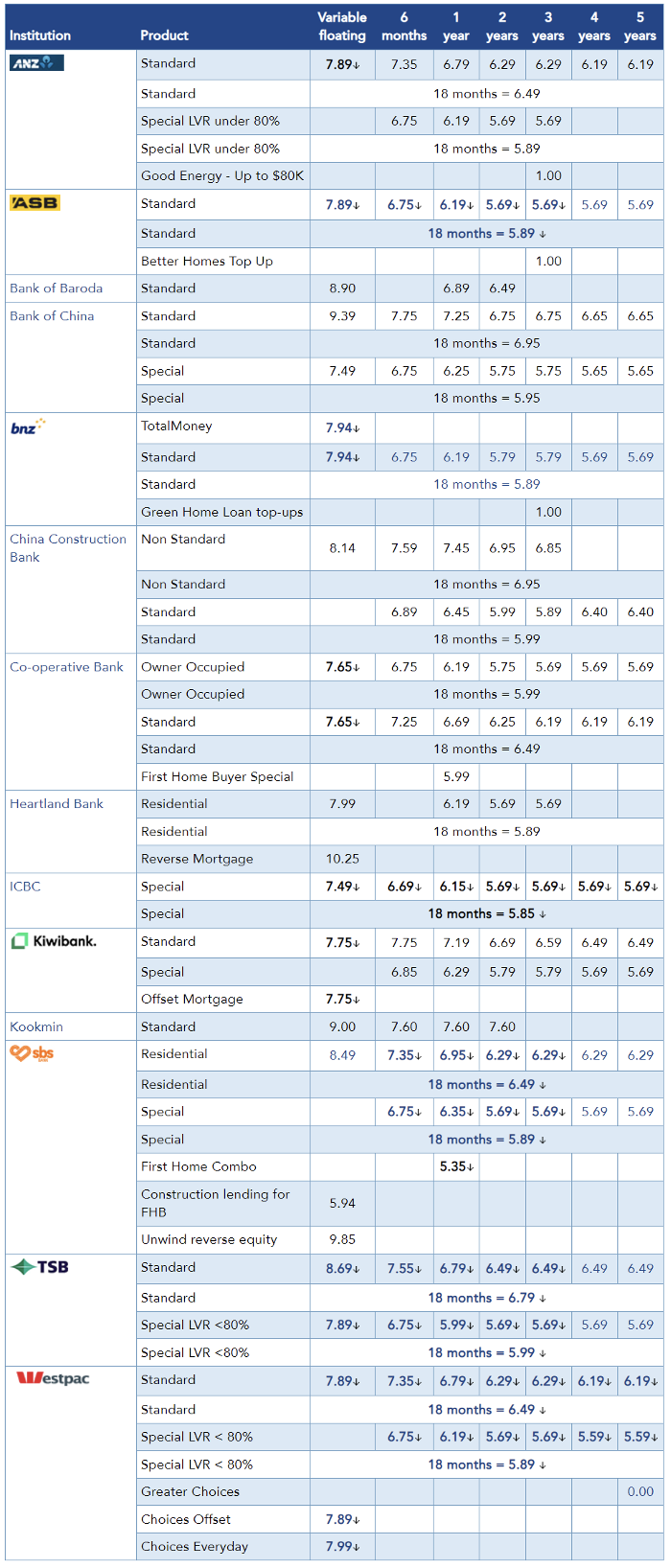
Mortgage rates across banks (Source: interest.co.nz)
Readers are welcome to share the special rates they have actually received in the comments below, helping reveal the latest market trends. This will give borrowers a clearer picture of actual conditions in the current mortgage market.
24 hours versus 4 months:
why do home-selling times vary so widely in New Zealand?
Recently, New Zealand Olympic champion Eric Murray's Cambridge villa found a buyer just 24 hours after listing, a lightning-fast sale that quickly attracted market attention. Murray's villa is a three-bedroom character home at 114 Victoria Street, Cambridge, given a new lease of life through careful renovation by him and his partner. The buyers fell in love with its historic charm and modern improvements, making an offer immediately and even prompting the auction date to be brought forward.
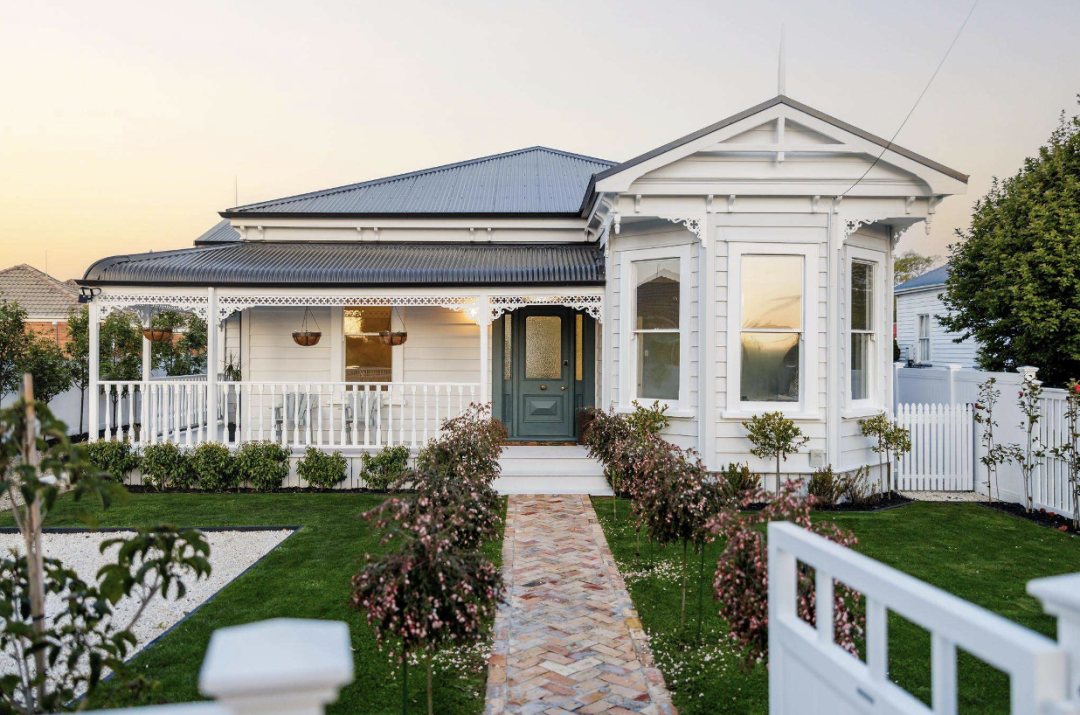
A three-bedroom character home at 114 Victoria Street, Cambridge received an offer within 24 hours of listing
For Murray, the villa's quick sale was both a reward for years of painstaking renovation and an opportunity to move smoothly on to his next project. He invested considerable time and money in the renovation, with every aspect reflecting his care, from restoring details to creating modern, open-plan spaces. That meticulous work ultimately won buyers over. However, sellers like Murray, who secure a sale within 24 hours of listing, are in the minority. For most sellers, the process is much longer and more complicated.
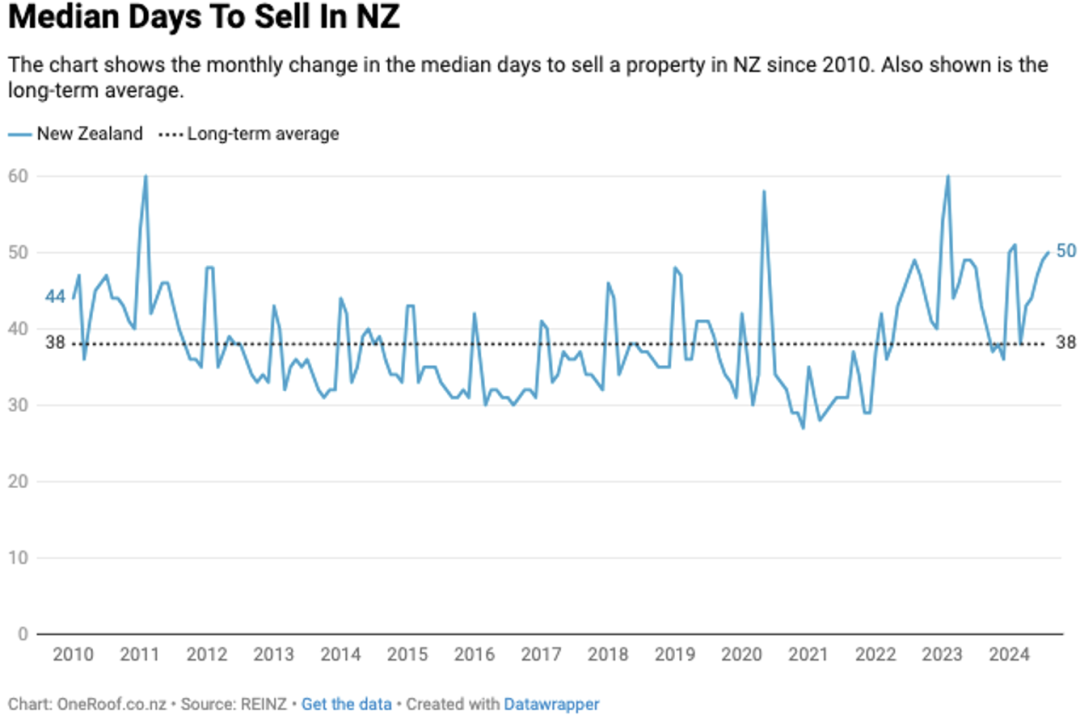
Chart showing changes in median days to sell homes in New Zealand from 2010 to the present (Source: REINZ)
Murray's story spread rapidly on social media, with many viewing it as a sign of a recovering market. The reality, however, is less optimistic. According to the Real Estate Institute of New Zealand (REINZ), median days to sell have continued rising since February 2024, reaching 50 days nationally by August (51 days in Auckland). Compared with Murray's sale within a day, most homes face weeks or even months on the market.
Opes Partners economist Ed McKnight commented that Murray's success owed much to his high-quality renovation and distinctive market positioning. Professional presentation, thoughtful design and realistic pricing are key to attracting prompt offers. For ordinary sellers, however, the market does not always respond so quickly. Particularly in the current economic environment, buyers are more cautious about purchasing, and the overall pace of sales is slow.
Preparing to list: a necessary step for every seller
In fact, Murray's quick sale reveals how much preparation he had to complete before listing. From choosing the right agent and presenting the home to the final listing process, putting his property on the market was no casual undertaking. This careful preparation was an important prerequisite for a quick sale.
For other sellers, the process is equally complex and time-consuming. Finding the right agent, preparing the home for presentation, completing necessary repairs and taking photographs all require at least two weeks of preparation. In poor weather, agents may recommend postponing photography, as good presentation directly influences potential buyers' first impressions. If the property is tenanted, sellers must also factor in a 90-day notice period for tenants to move out.
Waiting on the market: the norm for more sellers
Murray's success is unusual in the market, while most sellers must face a longer wait. Selling times vary markedly across New Zealand. For example, in August, median days to sell were 71 in Northland, compared with just 37 in Southland. These figures reflect differences in regional economic conditions, buyer numbers and market demand. During the booming market of 2021, New Zealand's median days to sell fell to 28, but that boom is now firmly in the past.
Property type and listing date also affect selling times. High-end properties usually take longer to sell because their higher prices mean fewer potential buyers. Homes listed in December also tend to take longer to sell because of the Christmas holidays. More importantly, these figures cover only properties that successfully sold. In reality, around a third of homes do not sell, meaning they may remain listed for longer.
From sale to receiving the funds: it does not happen instantly