
Three major banks cut mortgage rates today! How should borrowers choose to avoid missing the lowest rate?
From today, BNZ has cut its standard six-month fixed mortgage rate by 26 basis points to 6.49%. Its one-year rate has also fallen from 6.19% to 5.99%, a reduction of 20 basis points, while its two-year rate remains unchanged at 5.89%. Rates for terms of two to five years have all fallen by 10 basis points.
1
Three major banks make substantial mortgage rate cuts
Nearly a week after the Official Cash Rate (OCR) was cut, competition between banks over mortgage rates remains fierce, with no sign of the battle subsiding.
From today, BNZ has cut its standard six-month fixed mortgage rate by 26 basis points to 6.49%. Its one-year rate has also fallen from 6.19% to 5.99%, a reduction of 20 basis points, while its two-year rate remains unchanged at 5.89%. Rates for terms of two to five years have all fallen by 10 basis points.
Meanwhile, ANZ has responded with cuts to some short-term and special lending rates. Its six-month special fixed rate has fallen by 25 basis points to 6.50%, and its six-month standard rate has dropped to 7.10%. Its one-year rates have each fallen by 20 basis points, to 5.99% and 6.59%, respectively.
Kiwibank has also cut its special and standard fixed mortgage rates today for terms from six months to three years. Its two-year and three-year special rates have both fallen to 5.69%, while the corresponding standard rates have dropped to 6.59% and 6.49%.
These changes follow last week's OCR cut of 50 basis points to 4.75%. All major banks have since reduced mortgage rates to varying degrees. BNZ's six-month standard fixed mortgage rate has fallen to 6.49%. Kiwibank had already cut its floating mortgage rate by 50 basis points, from 8.25% to 7.75%, the day before the OCR announcement. Following the OCR cut, Westpac immediately reduced its standard and special fixed rates by 10 basis points, while ASB cut its floating mortgage rate from 8.39% to 7.89% and its Orbit rate from 8.49% to 7.99%.
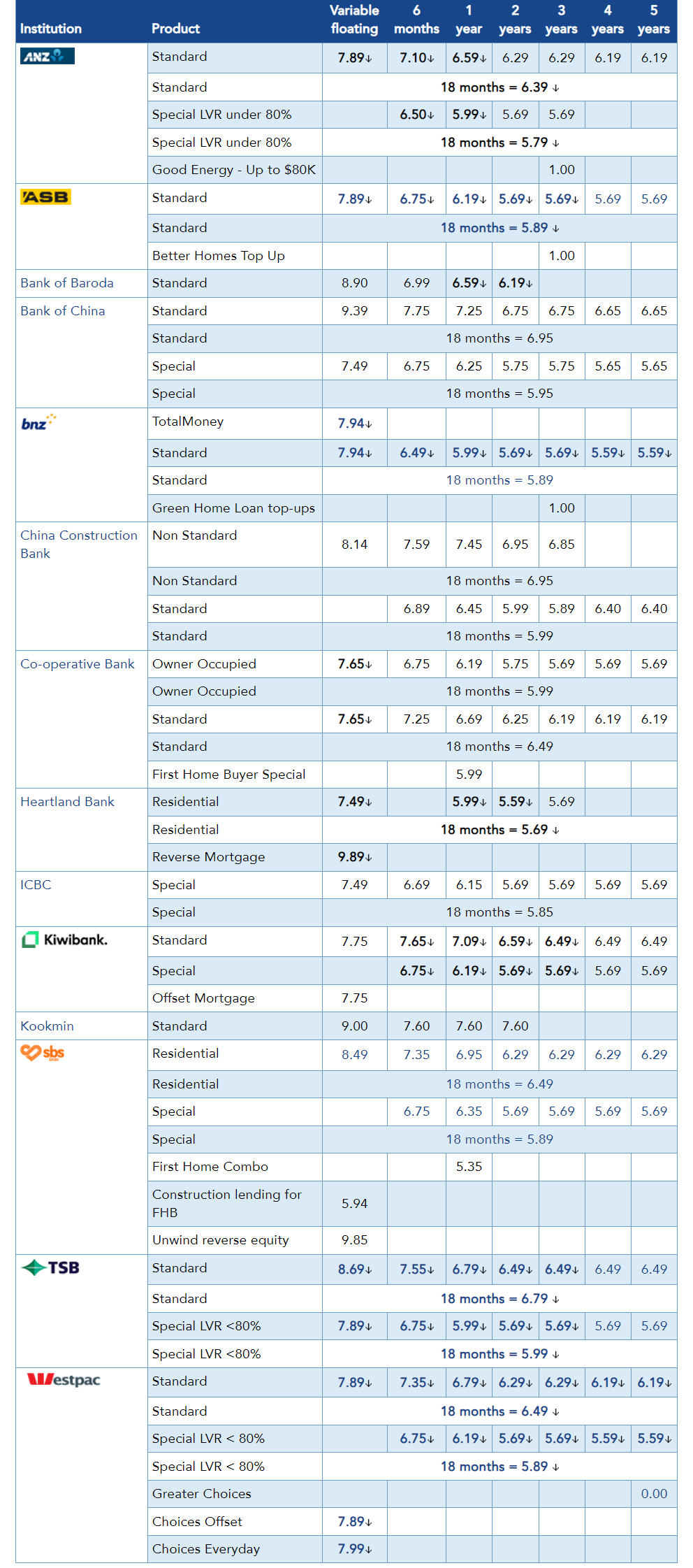
Comparison of the latest mortgage rates across banks (Source: interest.co.nz)
This narrowing gap between rates means borrowers must consider their options more carefully: should they choose the relative stability of a fixed rate, or opt for a floating rate to benefit from potentially larger cuts ahead?
2
Fixed or floating: the dilemma facing mortgage borrowers
As mortgage rates continue to fall, many borrowers, particularly those whose fixed-rate terms are about to expire, are actively weighing their next move. According to the latest Reserve Bank of New Zealand data, around 66% of existing fixed-rate loans will reach the end of their fixed terms within the next 12 months. This means many borrowers will soon face pressure to decide whether to refix, and which fixed term and rate to choose.
Squirrel Mortgages founder John Bolton believes borrowers could temporarily opt for a floating rate, but warns that high floating rates make this suitable only as a short-term transition. He said: “Floating rates are still relatively high, so this can only be a temporary measure. One-year fixed rates have already started falling below 6%, and we expect longer-term fixed rates could fall below 5% by Christmas.”
This means that, for borrowers whose fixed terms are about to expire, a floating rate could be a short-term option, particularly ahead of the Reserve Bank's next OCR review in November. However, as fixed rates gradually fall, Bolton also reminds borrowers not to overlook their appeal, particularly with further rate cuts expected.
3
Where are rates heading, and when should borrowers lock in a fixed rate?
Loan Market Agile partner Rodney King takes a similar view, believing that rates could continue falling over the next 12 to 18 months, and borrowers need to choose carefully when to lock in a fixed rate. “Using a floating rate while waiting for lower fixed rates can quickly become uneconomic. Floating rates can rise fast enough to wipe out any potential savings from waiting. For most borrowers, fixing for a short term of six months or 12 months may therefore be a safer option, unless they intend to float only briefly while waiting for the next OCR review and a possible rate cut.”
King also stressed the importance of seeking professional advice. He noted that, when choosing between floating and fixed rates, borrowers should consider their personal finances and market trends alongside interest rate movements to ensure they make the most beneficial decision.
4
Strategies for borrowers: how to manage interest rate fluctuations
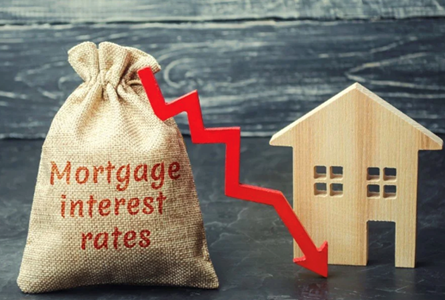
As New Zealand's mortgage market enters a cycle of interest rate cuts, how should borrowers respond to interest rate fluctuations?Whether choosing a fixed or floating rate, borrowers need to monitor market trends closely and plan their mortgage repayment strategy carefully.
For borrowers who choose a floating rate, repayments may become more manageable in the short term, but they also need to watch for the risks of future rate fluctuations. As more banks cut longer-term fixed rates, borrowers should follow market developments closely and adjust their strategy promptly to avoid greater financial pressure if rates rise.
For borrowers who choose a fixed rate, locking in a lower repayment rate may mean missing out on potential future rate cuts. When choosing a fixed term, borrowers are therefore advised to select a repayment plan that suits their risk tolerance and financial circumstances.
Overall, as interest rate changes accelerate in New Zealand's mortgage market, borrowers should make decisions cautiously, seek advice from a professional mortgage adviser and develop a suitable repayment strategy based on their personal circumstances.