Key figures are due this week! Will they provide the decisive factor that forces an earlier Reserve Bank rate cut? This week’s major events for property investors
Most borrowers are coping well with higher living costs, but the bank will continue proactively contacting mortgage customers who may be facing financial difficulties to ensure they are well supported and understand their options.

1
Reserve Bank confirms OCR remains unchanged
Last week, the Reserve Bank of New Zealand held the official cash rate (OCR) at the high level of 5.5%. This came as no surprise, but what attracted the most attention was that the wording of its accompanying monetary statement was clearly the softest in several months. Inflation remains above the 1–3% target range, and price shocks, such as a rise in petrol prices, could occur at any time. The Reserve Bank of New Zealand will therefore remain highly cautious about cutting rates too soon. Attention now turns to this week’s inflation figures, labour market statistics on 7 August, and the next OCR decision on 14 August. An OCR cut now may be premature, but reasonable changes to the Reserve Bank of New Zealand’s forecasts for inflation and the cash rate itself could pave the way for a possible cut in November.
2
Watch the latest CPI figures
Stats NZ will release consumer price inflation figures for the second quarter of this year at 10:45 am this Wednesday. These are also the most important factor in the Reserve Bank of New Zealand’s decisions on the future direction of the OCR. The Reserve Bank of New Zealand expects second-quarter headline inflation of 3.6%, still above its medium-term target range of 1–3%, but the lowest since the second quarter of 2021 (3.3%). This means any result below 3.6% would strengthen the likelihood of a possible OCR cut in November. A higher CPI reading would, of course, have the opposite effect.
3
Are residential construction costs continuing to fall?
According to the Cordell Construction Cost Index (CCCI), the cost of building a standard three-bedroom house fell 1.1% in the second quarter of 2024, the first decline since the index began in 2012. The CCCI tracks the construction cost of a single-storey, three-bedroom brick-and-tile house, including labour, materials, subcontracted services and equipment hire, but excluding land. The quarterly decline will bring annual cost inflation down to 0.6%.
CoreLogic chief property economist Kelvin Davidson said:
“Declining workloads in the construction industry have eased capacity pressures, bringing down construction costs. Slower growth in average hourly wages and stable building material costs have also contributed to the reversal in construction costs.”
Davidson noted that the surge in construction costs in 2022 resulted from pandemic-related supply chain problems and increased demand for building materials during the peak in construction activity. These factors have now been resolved, with material supplies returning to normal, fewer consents and reduced workloads easing pressure on the industry.

4
Migration is also declining
Another trend that could curb inflation and influence the property market is declining net migration. In fact, departures exceeded arrivals in May, the first negative monthly migration result since June 2022. This was mainly due to increased departures by both New Zealand and non-New Zealand citizens, alongside a stabilisation in arrivals.
5
Has Westpac fired the first shot on rate cuts?
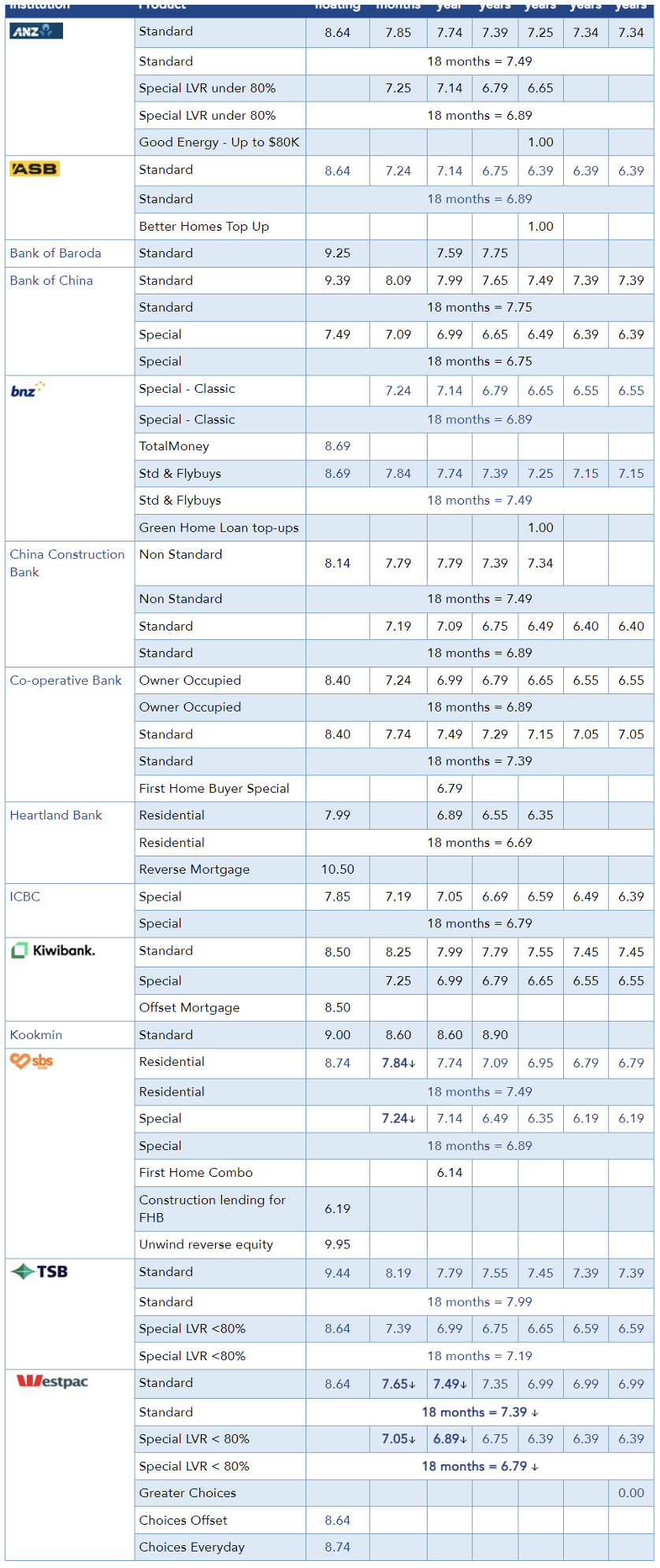
Last week, Westpac lowered its fixed mortgage and term deposit rates for terms of 6, 12 and 18 months. The cuts took effect on 12 July, with the 12-month mortgage rate falling by 25 basis points to 6.89%. The 6-month special rate fell to 7.05%,18-month rates fell to 6.79%.
It is worth noting that this move came despite the Reserve Bank’s decision to hold the official cash rate at 5.5%.
Westpac general manager of product, sustainability and marketing Sarah Hearn said most customers were coping well with higher living costs, but the bank would continue proactively contacting mortgage customers who might be facing financial difficulties to ensure they were well supported and understood their options.