
New Zealand or Australia: a buyer’s paradise or an investor’s nightmare? A closer look at which property market holds greater appeal
Australia and New Zealand are geographically close and share similar cultural backgrounds, yet their property markets have followed markedly different paths.
As New Zealand’s property market endured its worst June since 2008, with the median house price down 1.3% year on year and sales plunging 25.6%, Australia across the Tasman was enjoying a resurgence, with its median house price surging 6.55% year on year to a record high. This contrast is striking and deserves careful consideration. Australia and New Zealand are geographically close and share similar cultural backgrounds, yet their property markets have followed markedly different paths.
New Zealand’s housing market: a roller-coaster ride for prices
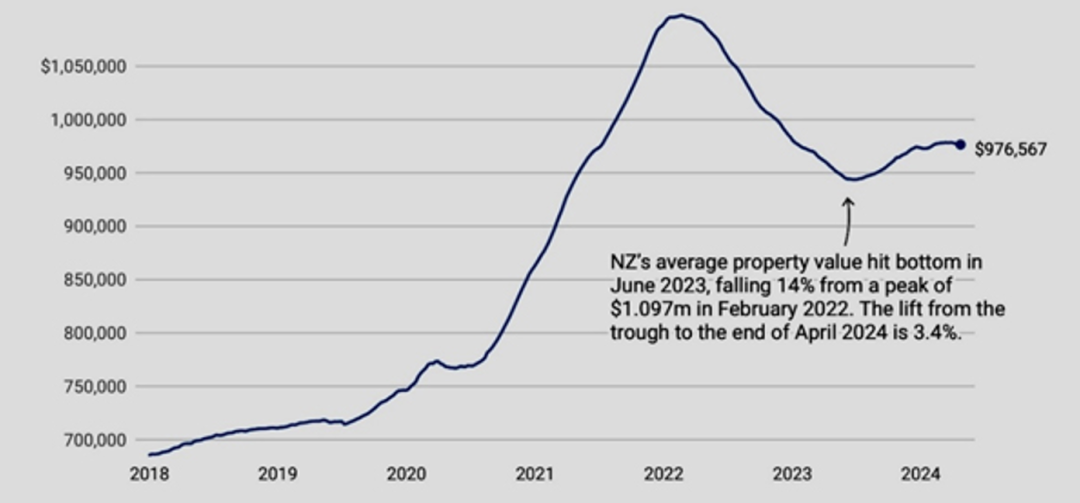
New Zealand average house price trends from 2018 to 2024 (Source: OneRoof)
New Zealand’s property market was on an upward trajectory when the pandemic broke out in early 2020. Pandemic uncertainty briefly pushed prices down, but this dip was quickly replaced by rapid growth, with prices soaring from the second half of 2020 to early 2022. An equally rapid decline followed, however, and by mid-2023, prices had almost halved. Although the market has recovered slightly since then, it remains below its 2022 peak. According to the Real Estate Institute of New Zealand, June this year was a poor month for the country’s property market, with the national median house price down 1.3% year on year and sales down 25.6%.
Australia’s housing market: steady growth and recovery
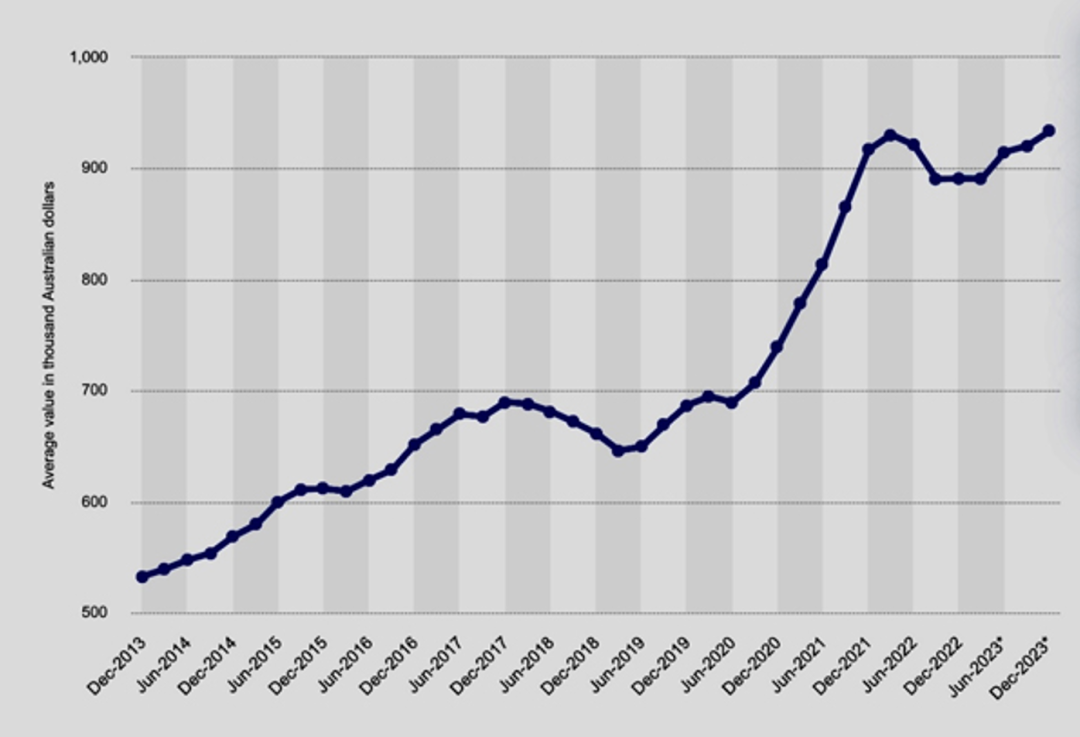
Australian average house price trends from 2013 to 2023 (Source: Statista)
Australia’s property market has moved in a similar direction to New Zealand’s, but with smaller fluctuations. Australian house prices also dipped slightly early in the pandemic before rising rapidly from mid-2020 to early 2022, although the increase was smaller than in New Zealand. The subsequent decline from the peak was both smaller and shorter than New Zealand’s, at around 5% over six months. Australian house prices have risen steadily since then. According to property website realestate.com.au, prices reached a new peak in June following 18 consecutive months of growth.
Does this mean Australia’s property market has a bright future while New Zealand’s faces a gloomy outlook?
Before answering that question, we need to consider the significant differences between the two property markets.
Differences in supply and demand
New Zealand’s housing market was flooded with new listings early in the year, shifting from an emerging seller’s market to a firmly established buyer’s market. In neighbouring Australia, listings have increased but still fall short of demand. According to realestate.com.au, strong population growth, a tight rental market and a “severe shortage of new housing” are the main drivers of rising Australian house prices.
Differences in confidence and economic conditions
Australians and New Zealanders differ markedly in their confidence in their respective economic futures. Valocity senior research analyst Wayne Shum said that although recession was the biggest challenge facing both countries, he had seen little news of Australian government spending cuts or public sector job losses compared with New Zealand. This meant Australia continued to experience strong net migration growth, while migration to New Zealand had declined in recent months.
Matt Grudnoff, senior economist at the Australia Institute, also noted that Australian unemployment remained very low, but another key factor was the tax incentives encouraging investors. A combination of tax incentives was driving Australia’s property market, making property investment highly profitable. Australia has capital gains tax and a capital gains tax discount. While owner-occupiers do not pay capital gains tax, investors can receive a discount. This means that if they buy a property for A$500,000 and sell it for A$700,000, the tax office taxes only the increase in the property’s value.
The outlook for both housing markets remains difficult to predict
Where, then, are the Australian and New Zealand property markets heading?
The answer is difficult to predict. The most striking development over the past four years has been the sharp rise in house prices in Australia and New Zealand during the global pandemic, highlighting how difficult it is to forecast price trends. Nevertheless, differences in interest rates and economic conditions clearly continue to have a significant influence on property markets. Australia’s high migration levels and insufficient new housing construction are also important drivers of rising prices. New Zealand faces similar conditions, with migration even more pronounced. Yet its market recovery has been weaker than Australia’s, and the reasons warrant closer examination.
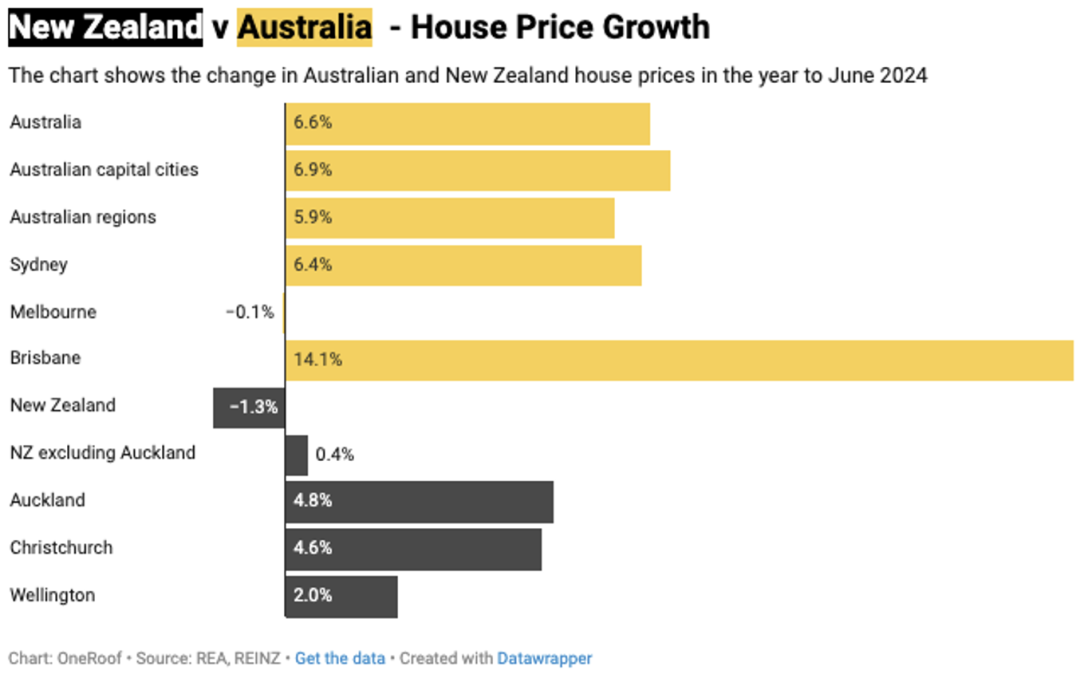
Bar chart comparing New Zealand and Australian house prices, 1–June (Sources: REA, REINZ)
CoreLogic chief economist Kelvin Davidson said the two markets shared similarities, but their mortgage rates differed and remained high. “Housing affordability remains stretched here in New Zealand, and the same is true in Australia.”
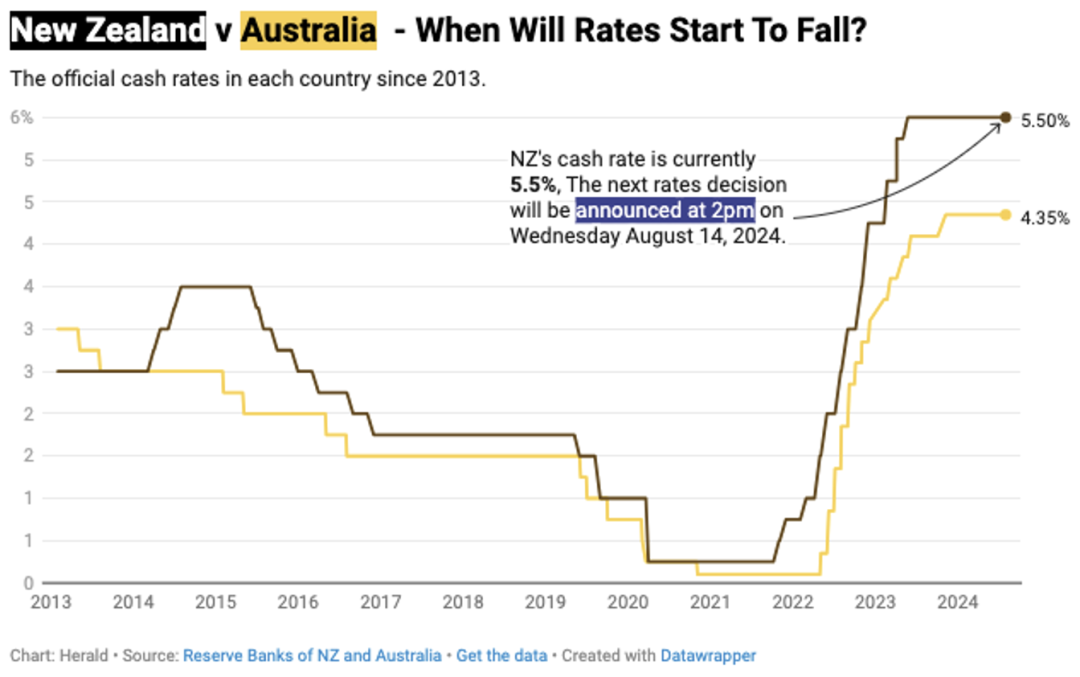
New Zealand and Australian OCR trends from 2013 to the present (Sources: RBNZ, RBA)
Overall, differences between the Australian and New Zealand property markets reflect the combined effects of supply and demand, economic confidence, tax policy and labour market conditions. Although sentiment in New Zealand is currently subdued, future interest rate changes could bring a turnaround. Buyers and investors would be wise to remain alert and follow market developments closely.