
A townhouse revolution in New Zealand! Has Auckland already added 25,000 homes? This week’s key events for property investors
This shows how supportive planning rules can transform the market: townhouses make efficient use of land and can be built near existing infrastructure, such as transport links.

1
Does Auckland need to build more townhouses?
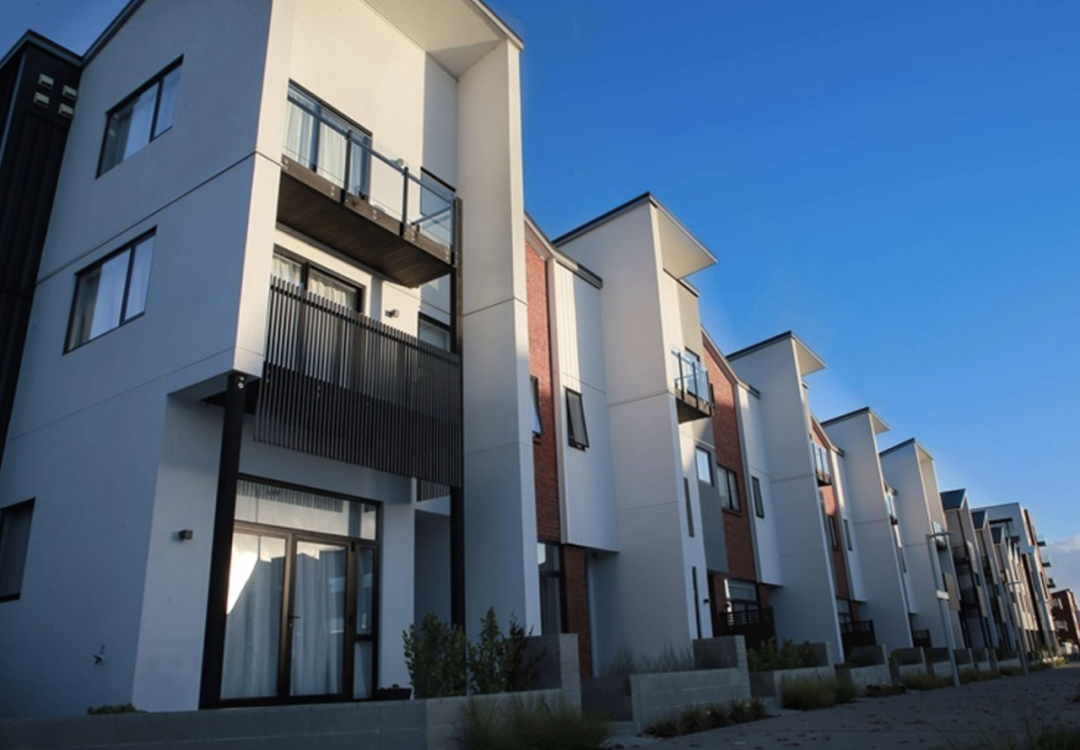
A townhouse development in Hobsonville, Auckland
The latest data from CoreLogic shows that New Zealand is in the midst of a townhouse construction boom. Some commentators see this as more than a surge in building numbers, describing it as a revolution in urban planning and housing policy.
In 2012, townhouses accounted for just 6% of all new dwelling consents; today, they account for 45%. This construction boom has been concentrated in Auckland, supported by the Unitary Plan. According to CoreLogic, New Zealand’s total number of townhouses has increased by around 39,600 since 2016, with Auckland accounting for nearly 25,000, or roughly 63% of the overall increase. Around a third of the new townhouses are in Waitakere in the west, including Hobsonville, a quarter are in Manukau in the south, and 20% are in Auckland.
This shows how supportive planning rules can transform the market. Townhouses make efficient use of land and can be built near existing infrastructure, such as transport links. They offer more property buyers a different, more affordable option, while also demonstrating the importance of government rules that support housing supply.
2
Westpac cuts rates twice in 14 days
On the afternoon of 24 July, Westpac cut its advertised rates again, just 14 days after launching a fresh round of retail interest rate reductions. The changes brought its rates into line with competitors, while retaining a market-leading position for some terms. Its six-month fixed rate remained at 7.05%, without matching ASB’s 6.99%, but its five-year fixed rate fell to 5.99%. Westpac also lowered its three-year and four-year fixed rates to 6.29% and 6.19% respectively, leading the market. Westpac said that although most customers were not experiencing significant difficulty with living costs, many households were still struggling. The bank encouraged customers to negotiate borrowing rates, with individual rates depending on their financial circumstances and property valuations.
The latest advertised mortgage rates from the banks as at 29 July are shown below:
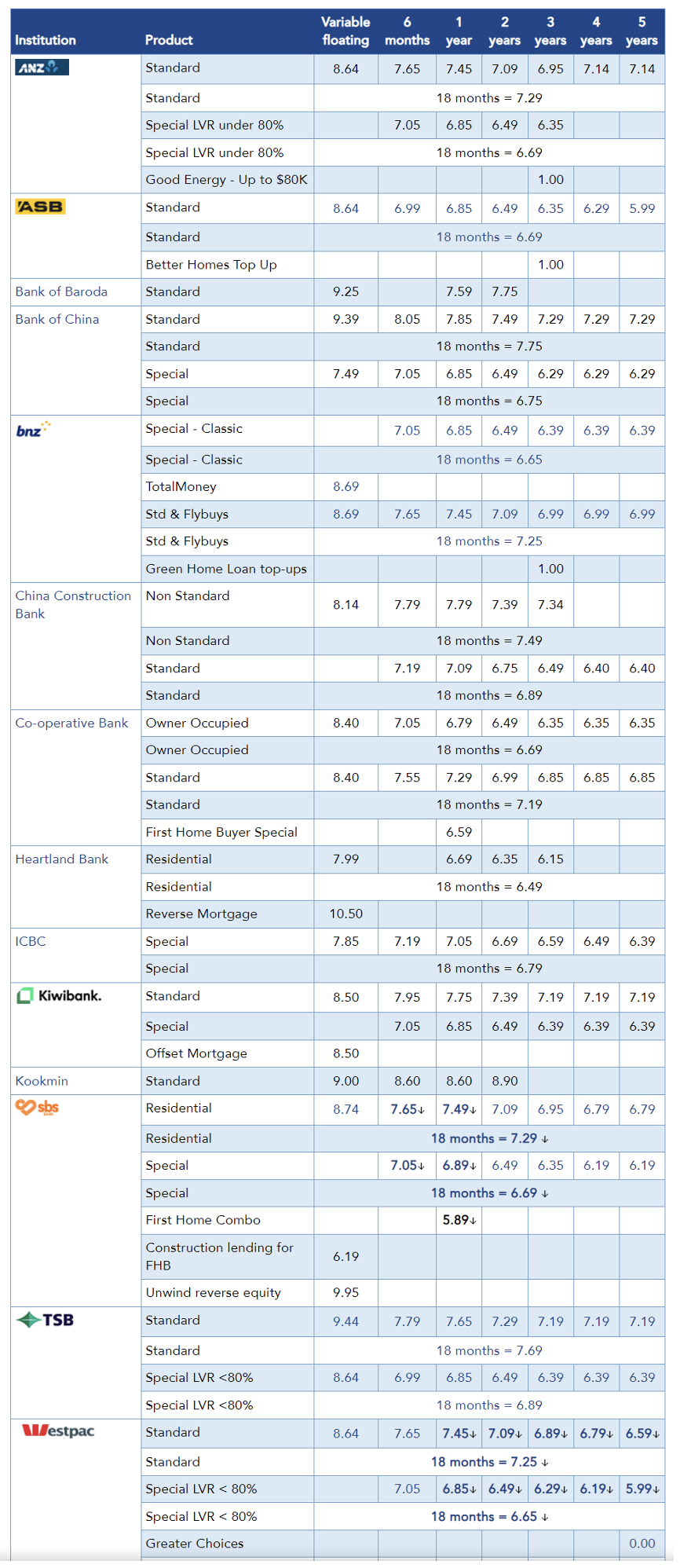
Source: interest.co.nz
3
No increase in high loan-to-value ratio (LVR) lending
With property sales low in June, a year-on-year decline of NZ$10,000,000 in total new mortgage lending is unsurprising. This weakness mainly reflected a decline in lending to owner-occupiers, while investor lending also showed no significant growth. There was also no evidence of banks or borrowers bringing forward high loan-to-value ratio (LVR) borrowing into June. In fact, the share of owner-occupier lending at high LVRs remained steady at 10%, well below the current 15% speed limit, let alone the new 20% rule. This may reflect the continuing constraints imposed on the market by high mortgage rates.
4
A sharp rebound in consumer confidence?
ANZ’s overall consumer confidence index rose sharply in July, although its overall level remained low. The increase was driven mainly by the survey’s forward-looking components rather than sentiment about current conditions. This suggests that although conditions remain difficult, ordinary New Zealand households are hopeful about the economic outlook. It may reflect widespread expectations that the Official Cash Rate will start falling before the end of the year; some banks’ mortgage rates have already begun to decline. More encouragingly, the inflation expectations measure in ANZ’s consumer confidence survey fell further in July, reaching its lowest level since September 2020.
5
Are filled jobs starting to decline?
This week, Stats NZ will release June’s filled jobs data. These employment figures have levelled off in recent months, and given the evident operating difficulties facing many businesses, a slight decline in filled jobs in June would be unsurprising. The cooling labour market is undoubtedly another major reason for caution about the property outlook.
6
Banks’ bad debts warrant attention
On Wednesday, the Reserve Bank of New Zealand will release June’s mortgage lending stock data. The figures offer various breakdowns, but a key measure is the amount of non-performing housing debt on banks’ balance sheets. Mortgage borrowers’ bad debt rate has remained very low so far. However, with unemployment rising and mortgage rate reductions yet to arrive, this indicator still needs close attention.