
A scramble for homes looms: investors dominate with unconditional offers, potentially squeezing first-home buyers out of the market!
Investors are actively taking advantage of the current low-interest-rate environment, using unconditional cash offers to try to gain an edge over competing homebuyers.

Recent reports show that growing numbers of investors are rapidly capturing the market through unconditional cash offers. Particularly since consecutive Official Cash Rate (OCR) cuts in August and October, more experienced investors have been removing all conditions and using cash transactions to quickly gain an advantage. This strategy has given them a dominant market position while putting first-home buyers under mounting pressure.

An investor secured a three-bedroom investment property on Howden Road in Hamilton with an unconditional cash offer, beating strong competition
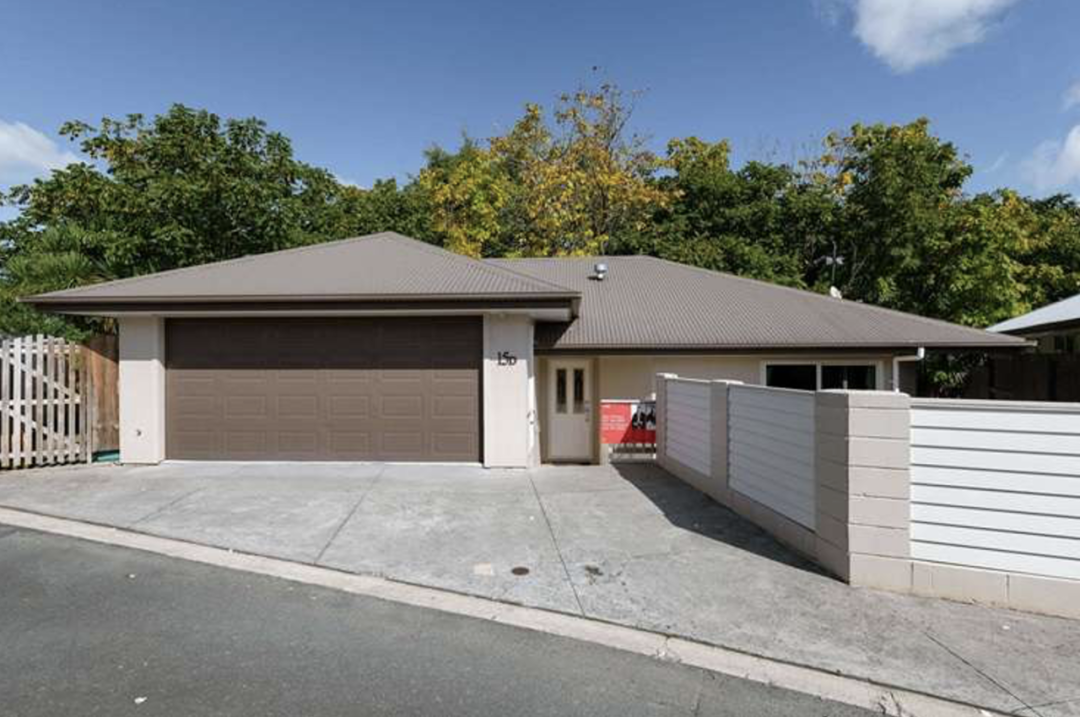
A three-bedroom home on Gordonton Road in Hamilton’s Chartwell suburb sold this month after receiving an unconditional cash offer from an investor
Lodge real estate agent Blair Pointon says investors are actively taking advantage of the current low-interest-rate environment, using unconditional cash offers to try to outcompete other buyers. For example, a three-bedroom property on Howden Road in Hamilton’s Fairfield suburb received 7 offers within just 6 days of listing, ultimately selling to an investor for an unconditional cash offer of NZ$740,000. Similar situations are common in Chartwell and Huntington, where investors are quickly snapping up entry-level properties priced below NZ$800,000, leaving first-home buyers struggling to compete.
The combined effects of market competition and interest rates
BNZ’s latest Pulse check report shows that confidence in the property market has improved following OCR cuts. However, house prices are still expected to remain flat in 2024, with growth of 7% anticipated in 2025. Although lower interest rates have boosted buyer enthusiasm, this has not immediately translated into higher house prices. The national house price index rose just 1.1% month on month in September, or only 0.3% after seasonal adjustment. This steady market performance suggests that, despite rising demand, excess supply continues to constrain substantial price growth.
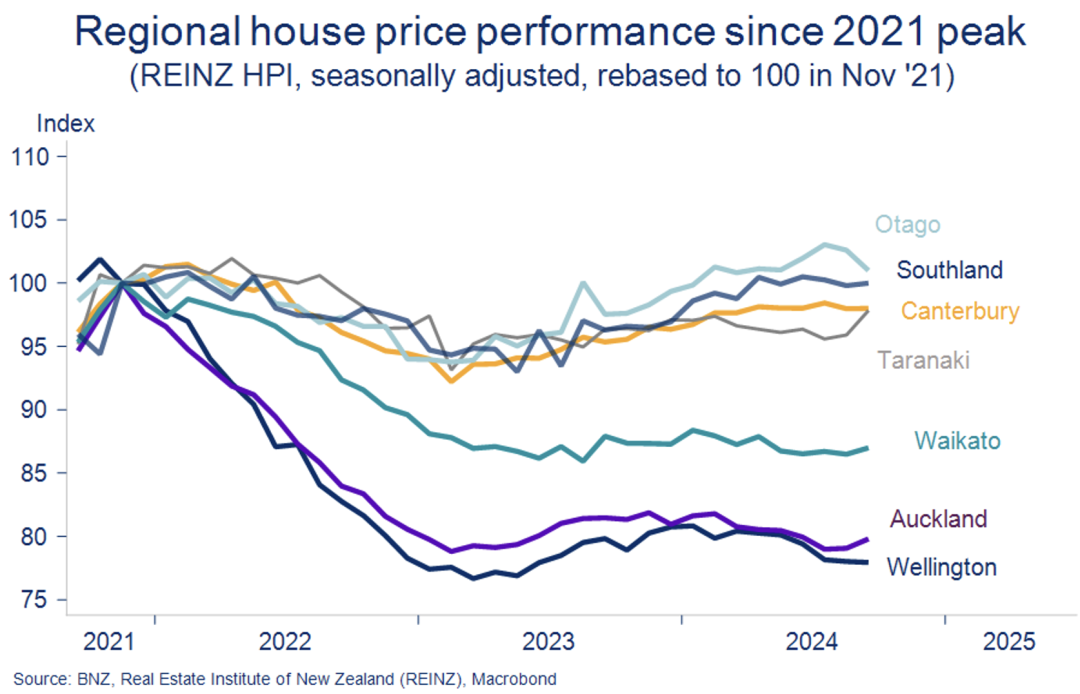
House price trends across New Zealand’s regions since 2021 (Source: BNZ)
The current low-interest-rate environment offers investors an excellent opportunity to enter the market. BNZ forecasts a further OCR cut of 50 basis points in November 2024, with the rate falling to 2.75% by the end of 2025. This trend indicates that the Reserve Bank of New Zealand (RBNZ) will continue lowering interest rates to stimulate the economy and property market. Short-term mortgage rates are expected to have more room to fall than long-term rates, offering investors more attractive financing options.
Economic recovery and the property market reinforce each other
Despite improving market sentiment, the broader economic recovery remains difficult. Pulse check notes that New Zealand’s economic growth indicators suggest a full recovery has yet to begin, even though the outlook has improved. SEEK data for September shows continued declines in job advertisements and a weakening labour market. NZIER’s business survey further confirms growing spare capacity in the labour market, with unemployment potentially rising to 5.6%. This suggests the recovery may be slower than expected, while labour market weakness could affect consumers’ ability to buy homes.
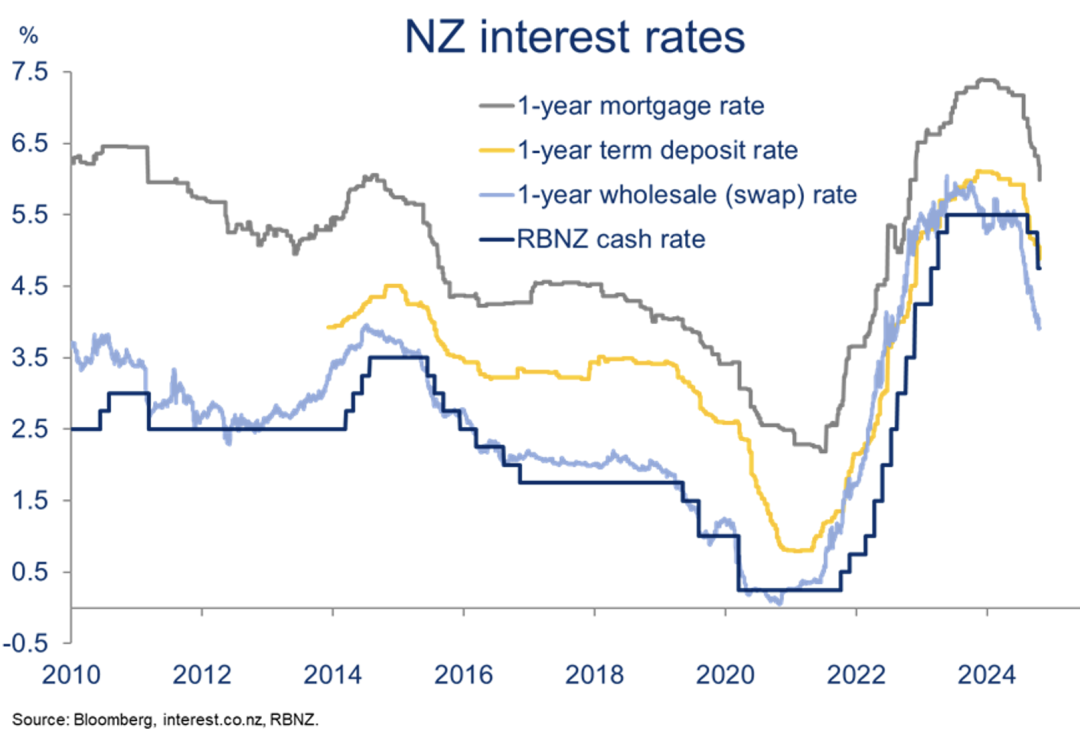
Interest rate trends since 2010 (Source: BNZ)
Meanwhile, easing inflation pressures have created scope for the Reserve Bank to cut the OCR further. The latest Consumer Price Index (CPI) data shows third-quarter inflation of 2.2%, returning to the RBNZ’s 1–3% target range for the first time. Inflation is expected to fall to 2.1% by mid-2025 and remain within a 1.5%–2.0% range in the second half of 2025. This indicates that the RBNZ has made significant progress in controlling inflation, creating room for further interest rate cuts to stimulate the economy.
First-home buyers face growing difficulties
Against this backdrop, investors are gaining ground through unconditional cash offers, creating unprecedented challenges for first-home buyers. Harcourts real estate agent David Ding says intense market competition is forcing buyers to adopt more competitive strategies. With house prices expected to rise 10% next year, many buyers are willing to pay 5% more this year to secure a foothold. Unconditional cash offers have become a particularly attractive way to gain a decisive advantage.
However, this strategy is clearly less favourable to first-home buyers. Financial adviser Gareth Veale says that although interest rate cuts have made loan approvals easier, unconditional cash offers generally suit buyers or investors with property investment experience. First-home buyers, with their limited funds, struggle to compete directly with these experienced purchasers. Many must rely on traditional loan approval and property inspection processes, adding time and uncertainty to transactions and putting them at a competitive disadvantage.
Potential risks for buyers and the importance of due diligence
Although unconditional cash offers can speed up transactions, property lawyer Jonathan Wood warns buyers that they carry potential risks. Skipping property inspections and due diligence can lead to buying a defective property. Homes in New Zealand can have quality issues, and foregoing inspections means buyers may miss the opportunity to identify them. While unconditional cash offers can secure a quick deal, buyers should therefore remain cautious and ensure the necessary checks are completed to avoid problems later.
Market outlook
New Zealand’s property market is undeniably regaining momentum as interest rates fall. However, the recovery will take time, and house prices are expected to remain relatively stable in the short term. As more property investors enter the market, first-home buyers face increasingly difficult challenges. The market’s direction and future house price trends remain uncertain, particularly as interest rates and economic conditions continue to change.