
Tackling the industry’s pain points: an exclusive interview on Myland Partners’ construction industry survival strategy for 2025
New Zealand’s land development industry has faced multiple challenges over recent years. Rapid inflation has driven up material, labour and borrowing costs, while persistent shortages of skilled workers have further extended project timelines and increased budget pressures. Delays in infrastructure delivery have also become a bottleneck, hindering efficient land development.
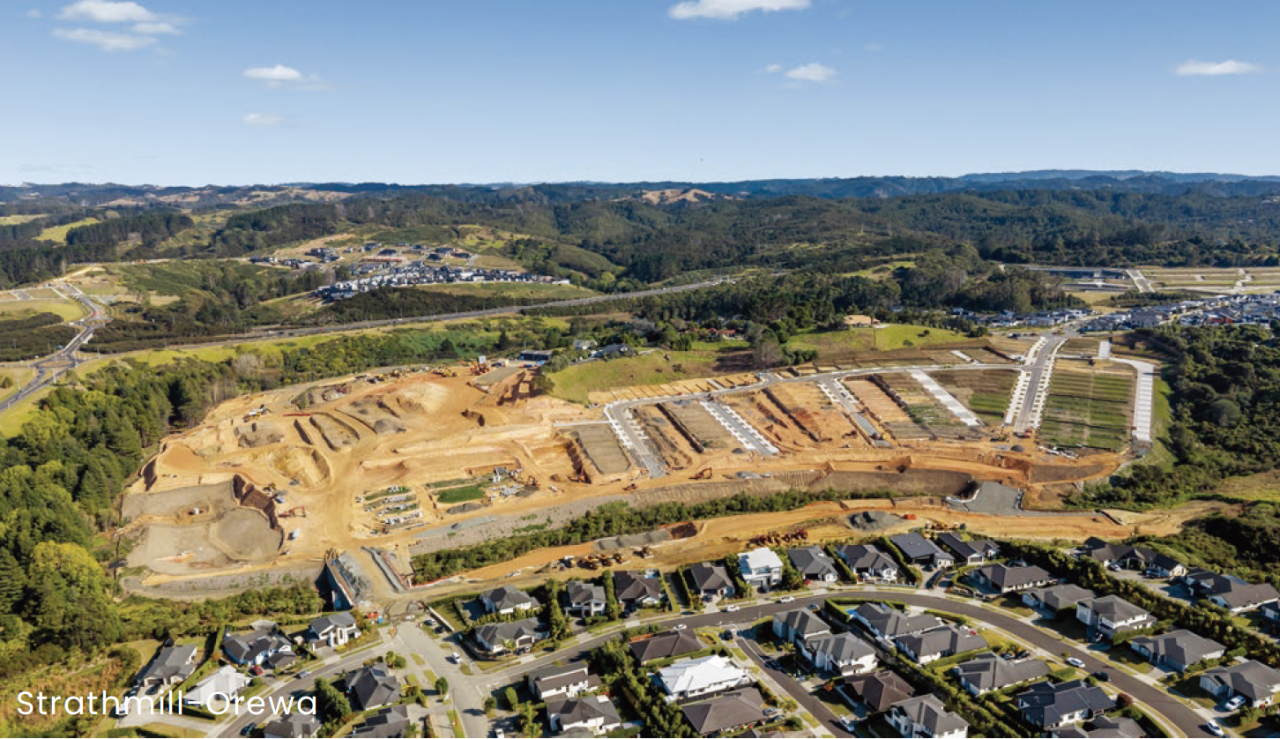
New Zealand’s land development industry has faced multiple challenges over recent years. Rapid inflation has driven up material, labour and borrowing costs, while persistent shortages of skilled workers have further extended project timelines and increased budget pressures. Delays in infrastructure delivery have also become a bottleneck, hindering efficient land development.
Wider economic pressures have compounded the situation: high interest rates have weakened demand for homes, while developers face higher holding costs and increasingly strict lending conditions. Some projects have been forced to halt, leaving confidence across the industry fragile.
Even so, there are signs of hope. Government-led planning reforms and improvements to approval processes are seeking to stimulate supply. Expectations of falling interest rates and returning investor confidence also suggest the market could soon enter a new cycle. In this complex and evolving environment, developers who adapt quickly, manage risk effectively and align with long-term urban planning will be better placed to succeed.
In this exclusive interview, we spoke with Myland Partners chief executive Andrew Fawcet about how the company is tackling infrastructure challenges, accelerating land delivery and reshaping development standards in New Zealand’s evolving residential development market.
Market challenges and response strategies
YIJU: With 2025 approaching, New Zealand’s land development industry faces unprecedented challenges. How does Myland Partners view the current situation?
Andrew Fawcet:There is no denying the pressure on the industry: rising costs, complex regulations and ageing infrastructure are all slowing progress. One particularly significant example is Watercare’s red-zoning policy, which prevents development in areas with insufficient wastewater capacity and greatly increases uncertainty.
But we have chosen to adapt rather than retreat. We assess site feasibility early in a project and work directly with the relevant authorities to address infrastructure gaps or adopt private solutions. Meanwhile, market indicators such as forecasts of a falling Official Cash Rate (OCR) and improving employment are sending positive signals that the cycle is turning.
Our role is to stay ahead of the market. With flexible planning and a substantial development pipeline, we are ready to respond quickly when the market recovers.
Uncertainty over developers’ share of infrastructure costs
YIJU: Rising development contributions are another key concern at present. How are they affecting your projects?
Andrew Fawcet:In some parts of Auckland, development contributions per household unit equivalent (HUE) have soared from NZ$21,000 to NZ$83,000. That is undoubtedly a substantial burden. While these charges help fund infrastructure, increases of this scale and speed expose developers to excessive financial risk in the absence of nationally coordinated planning.
We pay development charges in full, while also taking an active stance: questioning what is unreasonable and calling for reform. Our goal is clear: to protect the viability and affordability of development while maintaining construction quality.
To support our building partners, we absorb these additional costs wherever possible. We also take on the approval risks and uncertainties associated with subdivision, including applications for resource consent, engineering plan approval (EPA) and various compliance certificates, such as 223C, 224C and certificates of acceptance (COA). These highly specialised approval processes require familiarity with council systems to progress smoothly. We handle them ourselves to save builders time and money, allowing them to focus on what they do best: building quality homes.
A proactive strategy: delivering more than land
YIJU: How is Myland Partners maintaining momentum under pressure?
Andrew Fawcet:We focus on what we can control: strategic land acquisition, infrastructure readiness and improved construction efficiency. By choosing greenfield sites in areas of high demand, we ensure our projects meet real market needs.
We do more than sell land. We deliver serviced sections that are ready to build on, including level building platforms, retaining walls and house designs with resource consent. Builders can start immediately, while homeowners save time and money. Our designs support both efficient construction and comfortable living.
We also work closely with local government, engineers and relevant regulators to ensure every site fits seamlessly into long-term urban infrastructure plans.
Looking ahead to 2025: signs of recovery
YIJU: What is your outlook for the market in 2025? How is Myland preparing for a recovery?
Andrew Fawcet:We believe 2025 will be a pivotal year. With falling interest rates, rising buyer confidence and faster approval processes, the industry is ready for recovery.
We are already positioned for it. Several projects have reached the delivery stage, and we continue to participate in industry summits such as NZIBES to stay closely connected with trends, partners and solutions.
We are often recommended for fast-track consenting. With ministerial support, this saves considerable unnecessary time and cost. Once demand returns in full, we will be ready to get moving.
Building with vision and driving reform through action
As New Zealand’s land development industry evolves, Myland Partners is helping lead it forward through innovative solutions, efficient land delivery and active advocacy for reform. The company is actively driving change rather than waiting for it.
From serviced sections and building platforms to policy reform and infrastructure strategies, Myland is redefining what it means to be a new generation of developer. In this cyclical industry, only developers who move early and have the courage to lead can truly shape future communities.
Shaping future communities
In an evolving property development landscape, Myland Partners stands out for its ‘from raw land to community’ approach. The company turns practical challenges into workable solutions, resolves infrastructure bottlenecks and brings new life to land that was previously difficult to develop.
Through efficient coordination, it delivers serviced sections with level building platforms, retaining walls and consented designs, substantially reducing costs, risks and time for builders and homeowners.
Its house designs combine construction efficiency with sustainability, reflecting an approach that is smart, scalable and liveable. By focusing on greenfield development in popular areas, Myland’s projects meet market demand while aligning with urban development plans.
With support from government ministers, the company is often referred into fast-track approval processes, overcoming bureaucratic barriers and shortening development timelines to deliver projects sooner. Beyond physically transforming land, Myland is active in policy, constructively challenging central and local government policies.
As this article shows, Myland is delivering more than land: it is building the framework for New Zealand’s future.