
Could building fewer homes lead to better sales? How a Takapuna development made the right choice
All are new residential developments in good locations on Auckland's North Shore, so why do some sell most of their homes soon after launch while others remain slow to sell after months on the market? A residential development in Takapuna faced a choice familiar to many developers. Planning provisions allowed more homes and greater density, but the development team ultimately chose a different path.
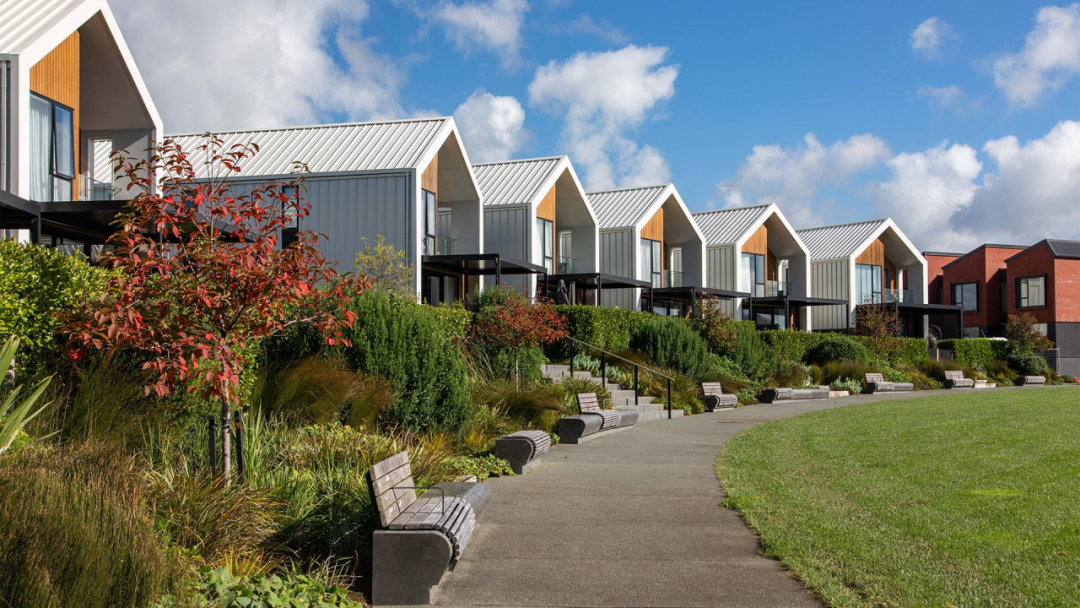
All are new residential developments in good locations on Auckland's North Shore, so why do some sell most of their homes soon after launch while others remain slow to sell after months on the market? A residential development in Takapuna faced a choice familiar to many developers. Planning provisions allowed more homes and greater density, but the development team ultimately chose a different path.
The reason was straightforward. After researching the market in depth, the team found that the most active local buyers were not first-home buyers, but retirees and established families wanting to downsize without compromising their quality of life. Instead of pursuing more homes, they created larger homes with lifts, high-specification finishes and lower maintenance costs. The project met its target buyers' needs precisely and achieved strong sales. This example came from an industry seminar jointly hosted by Barfoot & Thompson and Property Development Solutions (PDS) on 2 July. Jocelyn Yao, a salesperson at Barfoot & Thompson's Howick branch, shared the case at the event. The seminar covered planning, finance, design and sales, but the speakers ultimately arrived at the same conclusion: a development's success increasingly depends on whether the developer truly understands the buyer.
Land alone does not determine a project's value
Over the past few years, many developers have focused on planning approvals, construction costs, financing rates and how many homes a site can accommodate. These factors still matter, but in today's market they are no longer the sole measures of a project's prospects. At the event, PDS director and adviser Dan Oliver shared a line that resonated with many in the audience: “Developers don’t buy land. They’re buying a future business case.” Developers are buying more than land: they are buying a business opportunity that must be viable in the future.
Dan believes that deciding whether land is worth developing requires looking beyond how many homes it can accommodate to whether the finished product meets genuine market demand. From the land acquisition stage, developers are really assessing a business proposition that must work across planning, design, costs and sales. He followed this with another observation: “The deal only works if someone will buy it.” A development is only truly viable when the market is willing to buy.
This highlights the practical reality of property development. Planning, design and costs can all be refined, but if the product does not meet market demand, even the most thorough development plan may struggle to deliver the expected return. Today's developers need to ask more than “How many more homes can this site accommodate?” They must ask, “Will future buyers be willing to pay for this product?” As the question changes, so must the approach to development.
The mistakes developers are most likely to make
While Dan addressed the mindset behind development, Steve Maserow, who has 35 years of property experience, discussed practical issues developers often overlook. In his view, the market has changed rapidly in recent years, but the thinking behind many developments has not kept pace. The following three problems are the most common.
First problem: letting the financial model replace market judgement
Many developers make the same mistake: “Building for the spreadsheet instead of the market.” Sales forecasts and profit models matter when a project is established, but the market will not follow predictions made years earlier. Particularly during a market correction, clinging to old price expectations will only prolong sales and cause developers to miss the best selling window. In a falling market, time is the greatest cost. Rather than waiting for a recovery, developers should adjust pricing promptly in response to real market feedback and work with sales professionals who know the local market well to find the best balance between market acceptance and project value.
Second problem: choosing the wrong people to sell the project
Another common mistake is automatically appointing the agent who helped acquire the land to sell the finished development. Land acquisition and project sales involve different markets and customers, and require different expertise. When choosing a sales team, what matters more is whether they understand the target buyers and local market, and have experience selling comparable developments. Before appointing a team, it is worth comparing several teams' understanding of the project, market strategies and previous experience to find the best fit.
Third problem: building houses while overlooking the living experience
One observation from Steve's presentation stood out: today's buyers are purchasing more than a home; they are purchasing a lifestyle. As Auckland's supply of medium- and high-density housing has grown in recent years, many townhouse developments have become increasingly similar in design and layout. With more choice available, competing on price alone is becoming less effective at attracting buyers. A competitive development needs clear market positioning and attention to the living experience, such as instant hot water systems or EV chargers. Even an ordinary residential development should draw on the character of its local community to create a living experience that truly meets its target buyers' needs.
A successful residential project does more than build houses. It creates an appealing place to live with a sense of community belonging.
A project's prospects are often determined before construction begins
In residential development, success or failure is often shaped by decisions made during planning, rather than after construction begins. From product positioning and target buyers to sales strategy, every step should be grounded in genuine market demand. If you are planning a residential development, consider speaking with the Barfoot & Thompson team before finalising the design, positioning and pricing. Drawing on extensive local market experience and a broad buyer network, Barfoot & Thompson they can help you understand what the market really needs and how to bring your project to market more effectively.