
Does selling above the purchase price really mean a profit? New Zealand property’s ‘profit threshold’ stretches to 10.4 years
If you buy a home for NZ$800,000 and sell it a few years later for NZ$850,000, have you made NZ$50,000?
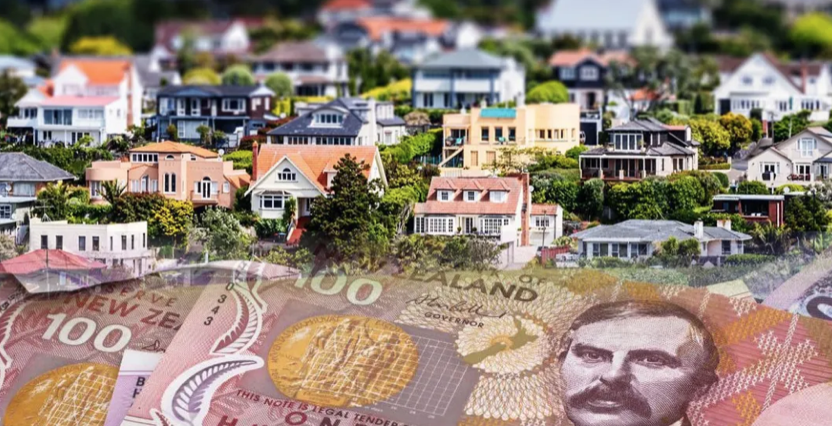
If you buy a home for NZ$800,000 and sell it a few years later for NZ$850,000, have you made NZ$50,000? Looking only at the sale price, the answer seems to be yes. But once you include mortgage interest, council rates, insurance, maintenance, legal fees and agency commission paid over those years, the outcome could be very different.
Cotality’s latest Pain & Gain Report shows that around 13% of properties resold in New Zealand in the second quarter of this year sold below their original purchase price, the highest proportion since the end of 2012. In other words, around one in eight property resales between April and June this year recorded a loss on paper. But the report’s more significant finding concerns how long sellers had owned their properties.
The data shows that sellers who recorded a profit on paper in the second quarter had held their properties for a median of 10.4 years, the longest period since Cotality began tracking this measure in the mid-90s. By contrast, the median holding period for sellers who made a loss was only around four years. This does not mean every property must be held for 10.4 years to make money. But it does show at least one thing: following the house price peak in 2021 and the subsequent years of adjustment, buying a property and selling a few years later for an easy profit has become increasingly difficult.
87% of sellers made a profit on paper, but the reality may differ
Viewed from another angle, 87% of properties resold in the second quarter still fetched more than their purchase price. This suggests that while the market is weak, widespread forced selling has yet to emerge.
Cotality chief property economist Kelvin Davidson believes this housing market adjustment has been relatively gradual, rather than deteriorating sharply as it did after the global financial crisis. Stricter lending assessments in recent years, along with a labour market that retains some resilience, may have reduced the number of owners who need to sell immediately. Many sellers who cannot accept current prices can still choose to hold off and wait for the market to change. This also helps explain why house prices have come under pressure without falling off a cliff. The issue is that Cotality’s definition of a ‘profit’ simply means the sale price exceeded the purchase price. It does not account for owners’ other expenses during their holding period.
Over ten years of ownership, a home may incur hundreds of thousands of New Zealand dollars in mortgage interest, rising council rates, home insurance, routine maintenance and renovation costs. Legal fees and real estate agency commission must also be paid when it is sold. Once inflation is considered, even a sale price well above the purchase price does not necessarily mean the owner has truly made money. New Zealand Property Investors’ Federation spokesperson Matt Ball therefore points out that, after all ownership and transaction costs are deducted, the proportion of sellers making a real loss is likely to be much higher than the 13% shown in the report.
Of course, this does not mean property is no longer worth holding over the long term. For owners who bought more than a decade ago, house price gains over the past ten years have generally been enough to cover most costs. But the situation is very different for owners who bought near the market peak around 2020 to 2021 and need to sell soon. They have not had a sufficiently long period of capital growth, and have also faced rising mortgage rates, insurance premiums and council rates. If a job change, a change in family circumstances or financial pressure forces them to sell now, they can easily become some of those hardest hit by this market adjustment.
Around one in five Auckland property resales makes a loss
Among the main cities, the situation is most pronounced in Auckland and Wellington. In the second quarter of this year, 20.9% of Auckland property resales were below the original purchase price, equivalent to around one in five making a loss. Wellington’s share also reached 18.4%. The median loss on loss-making sales in both cities was NZ$85,000, above the national figure of around NZ$60,000. The real pressure in the current market is concentrated on owners who bought more recently, borrowed a larger share of the purchase price and have held their properties for less time. This also means sellers can have completely different experiences in the same market. Someone who bought ten years ago may simply make a smaller profit; someone who bought at the peak may see their deposit eroded, or find that even selling does not cover the associated costs.
More than 33,000 homes await buyers
Sellers’ growing difficulty in making a smooth exit is linked to the continued accumulation of properties for sale. REINZ data shows that 33,252 homes were awaiting buyers across New Zealand in July this year, up 9.3% on the same time last year. This is not because a large number of new homes suddenly came onto the market. Rather, many properties are taking longer to sell, with older listings accumulating and pushing total inventory higher. In July, the median time to sell a property reached 50 days, two days longer than a year earlier. Inventory in Auckland and Wellington has risen for 30 consecutive months.
Meanwhile, sales volumes remain weak. Because Cotality and REINZ use different statistical measures, they reported year-on-year declines in July sales volumes of around 6% and 10% respectively. But both reflect the same trend: since the start of 2026, buyers have remained cautious and market activity has continued to decline. The current market looks increasingly like a tug of war between buyers and sellers.
Many sellers are unwilling to cut their prices further, preferring to leave their homes on the market and wait. With more than 33,000 properties for sale, buyers have more choice and little need to rush a decision. Sellers are waiting for prices to recover, while buyers are waiting for sellers to give ground. The result is rising inventory, longer selling times and house prices continuing to move sideways. REINZ reported a national median residential sale price of NZ$760,000 in July, down 0.7% year on year. On the surface, house prices have not fallen sharply, but this does not mean the market has recovered. It is more likely a stand-off created by sellers’ reluctance to lower their prices for now.
Pressure on sellers creates opportunities for first-home buyers
For owners who must sell soon, this is clearly a difficult market. For first-home buyers, however, current conditions offer more opportunities. Cotality data shows that first-home buyers accounted for a record 29% of property transactions nationwide in July this year.
House prices have fallen from their highs, there are plenty of properties available, banks still offer a range of low-deposit mortgage options, and KiwiSaver can also be used to buy a first home. Compared with periods of rapidly rising prices, buyers now have more time to check a home’s condition, compare sales records across different areas, and negotiate the price and settlement terms with sellers. Previously, many first-home buyers worried that ‘if I don’t buy today, it will cost more tomorrow’, making them prone to rushed decisions under pressure. That sense of urgency has now eased considerably.
But the 10.4-year holding period also sounds a warning for buyers. When buying a home, it is not enough to consider whether you can put together a deposit and afford the current mortgage repayments. You also need to consider whether you might move, change jobs or alter your family plans over the next few years. If you need to sell soon after buying, agency commission, legal fees and market fluctuations could swallow any profit, even if the purchase price appeared attractive.
Property can still make money, but purchase and sale prices alone no longer tell the whole story
This adjustment does not mean New Zealand property has lost its long-term value. In the second quarter, 87% of sellers still recorded a gain on paper, and most owners who had held their homes for more than ten years still had some capital growth. But reality is overturning the old expectation that ‘buy a home, wait a few years, and you will naturally make money when you sell’. With profitable sellers’ median holding period reaching 10.4 years, around one in five Auckland resales below the purchase price, and more than 33,000 homes nationwide still awaiting buyers, property’s nature as a long-term asset is becoming increasingly clear. In future, assessing whether a property has made money will require more than subtracting the purchase price from the sale price. Interest, council rates, insurance, maintenance, transaction costs and inflation must all be included.
For sellers, the market may not leave enough profit if they have not held the property long enough. For buyers, there is indeed more choice and room to negotiate now. But the real question is not simply ‘am I buying cheaply today?’ It is whether they can afford to keep holding the property if house prices fail to rise significantly over the next few years. That may be the most practical reminder the figure of ‘10.4 years’ offers New Zealand home buyers.
After accounting for mortgage interest, council rates, insurance, maintenance and transaction costs, do you think New Zealand property is still an investment worth holding over the long term?