
NZ$5,000,000 to enter, yet 29% of luxury homes remain restricted: why has New Zealand’s ‘golden visa’ boosted only Auckland and Queenstown?
When New Zealand reopened its residential property market to some overseas high-net-worth individuals, luxury property agents expected a new wave of international buyers.
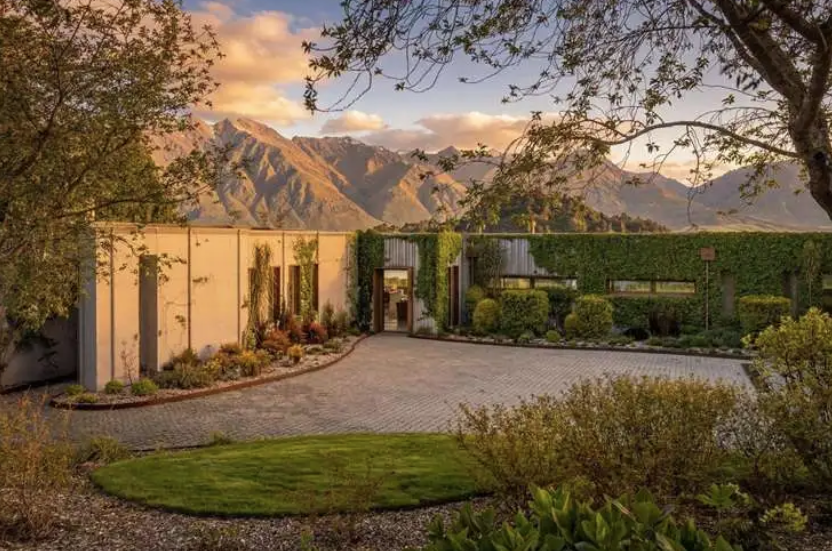
When New Zealand reopened its residential property market to some overseas high-net-worth individuals, luxury property agents expected a new wave of international buyers. Several months on, however, qualifying transactions have been concentrated mainly in Auckland and Queenstown, with many regional cities seeing virtually none of this demand. Under the rules for the Active Investor Plus Visa, known as AIP and also referred to as the ‘golden visa’, eligible overseas investors can buy a single home in New Zealand worth at least NZ$5,000,000. However, the property must not be sensitive land; otherwise, buyers still need additional approval or another qualifying residency status. The NZ$5,000,000 entry threshold already excludes the vast majority of homes. Even properties that meet the price requirement may be classified as sensitive land because of their land area, location or boundaries.
The latest research from Bayleys shows that, among the 652 residential and lifestyle properties priced above NZ$5,000,000 that it analysed, around 29% may involve sensitive land. In other words, even golden visa buyers with a budget exceeding NZ$5,000,000 cannot directly purchase nearly three in ten high-end listings.
Although the policy has opened the door, the actual choice of properties is far smaller than it appears.
Why are 29% of luxury homes still out of reach?
Bayleys analysed lifestyle properties listed across New Zealand for more than NZ$5,000,000 during June 2026, assessing them against the categories of sensitive land criteria most likely to apply.
The results showed that around 20% of listings were non-urban land exceeding 5 hectares, 11% were in marine or coastal areas potentially subject to sensitive land rules, and a further 3% were on specified islands and exceeded the relevant area thresholds. Some properties met several criteria, so the categories overlap. Assessing sensitive land is also more complicated than simply asking whether a property has sea views.
For example, a coastal property or one with sea views is not necessarily sensitive land. Regulators also need to establish the precise relationship between the property boundaries and tidal boundaries. Lakebeds, nature conservation land, reserves managed by New Zealand’s Department of Conservation, and properties adjoining such land may also be subject to different area thresholds. Because the rules are highly technical, descriptions such as ‘waterfront’, ‘lakeside’ or ‘lifestyle property’ in an advertisement often do not establish whether an overseas buyer is eligible to purchase. Buyers and sellers generally need a lawyer or specialist adviser to review the title, land area and boundaries, and sometimes certification from a technical expert is also required.
However, the 29% figure needs to be understood accurately. It does not mean that 29% of all luxury homes in New Zealand cannot be sold. It means that, of the 652 properties with asking prices above NZ$5,000,000 in Bayleys’ study, around 29% may involve sensitive land. Detailed reviews of individual properties could still produce different results. Most buyers of homes above NZ$5,000,000 are also still New Zealand citizens, including New Zealanders living overseas, who are generally unaffected by sensitive land restrictions. Those actually restricted are overseas investors hoping to enter the market through the golden visa.
A nationwide policy, but listings are concentrated in two markets
Compared with sensitive land rules, the uniform NZ$5,000,000 price threshold may be the more direct cause of regional disparities. OneRoof’s analysis of listings this year shows that 463 homes priced above NZ$5,000,000 have come onto the market nationwide. Of these, 324 were in Auckland, accounting for nearly seven in ten, while Otago had 78, mainly in the Queenstown Lakes district. Together, the two regions accounted for 402 properties, the overwhelming majority of relevant listings nationwide.
The choice is considerably smaller elsewhere: the Bay of Plenty had just 21 listings, Canterbury 13 and Waikato 11. Northland, Wellington, Hawke’s Bay and Marlborough each had only single-digit totals. At the time of publication, 25 homes had been sold through the AIP programme, most in Auckland and Queenstown Lakes. This means that, although the policy applies nationwide, only the two regions with New Zealand’s highest house prices have enough listings to form a market of meaningful scale.
Auckland has established high-end residential neighbourhoods, an apartment market, business resources and international transport connections. Queenstown has long attracted overseas high-net-worth individuals with its natural scenery, holiday appeal and international profile. Both markets offer more properties above NZ$5,000,000, along with a relatively ample choice of properties that do not involve sensitive land. Golden visa buyers’ concentration in these two markets is less a coincidence of personal preference than an inevitable outcome of the current rules.
In regional cities, NZ$3,000,000 can already buy a top-tier home
NZ$5,000,000 can buy a high-end home in Auckland, but in many regional New Zealand cities, that price may already exceed the local residential market’s record sale. Property Brokers managing director Guy Mordaunt pointed to Palmerston North, where the highest residential sale was around NZ$3,700,000. In towns such as Taumarunui, Wairoa or Waimate, NZ$1,500,000 may already buy a luxury home with a swimming pool and tennis court.
Overseas investors with the means to buy are not entirely uninterested in these regions, but very few properties meet the NZ$5,000,000 threshold. Even when one does appear, its larger grounds, rural location or proximity to the coast often make it more likely to fall within sensitive land rules. Bayleys’ data reflects this disparity. Its estimates suggest that around 30% of Auckland listings above NZ$5,000,000 may involve sensitive land, compared with just 14% in Otago. By contrast, the proportion was 80% in Northland and 75% in Hawke’s Bay, while Gisborne, Nelson, Marlborough and the West Coast all reached 100% in this sample.
However, some regions have very few listings above NZ$5,000,000, so 100% does not necessarily mean they have large numbers of restricted luxury homes. It is more likely to mean that the handful of high-priced properties in the sample all happened to trigger the relevant rules. This also exposes a contradiction in the current policy: in regions with lower house prices, properties reaching NZ$5,000,000 tend to be larger or in more unusual locations, making them more likely to face sensitive land restrictions.
Should the NZ$5,000,000 threshold vary by region?
Bayleys head of insights Chris Farhi suggests retaining the NZ$5,000,000 threshold in Auckland and Otago, while considering a reduction to NZ$2,000,000 or NZ$3,000,000 elsewhere. Supporters argue that a uniform threshold overlooks the enormous differences in house prices between New Zealand’s regions. Listings above NZ$5,000,000 are not uncommon in Auckland, while in some regional cities a NZ$3,000,000 home may already be among the very best local properties. Reducing the threshold elsewhere to NZ$2,000,000 or NZ$3,000,000 would significantly widen golden visa buyers’ choices and could channel international capital from Auckland and Queenstown into the Bay of Plenty, Waikato, Canterbury and other regional markets. For regional owners hoping to sell high-end homes, an additional pool of overseas buyers with purchasing power is undoubtedly attractive. Supporters of easing the policy also hope that high-net-worth individuals moving to regional cities would boost local spending, business investment and employment. However, regionally differentiated thresholds would also create new questions.
Should different regions use NZ$2,000,000 or NZ$3,000,000? Should thresholds be based on administrative boundaries, median house prices or record high-end residential sales? Would the standards need regular adjustment as market prices change? Would more complex rules increase regulatory costs and create new uncertainty for buyers and sellers? Oliver Road managing director Cam Winter acknowledged that NZ$5,000,000 is a fairly blunt, one-size-fits-all standard, but establishing, calculating and regulating different thresholds for different regions would also be more complicated.
A more pressing question is whether lowering the threshold would stimulate regional economies or mainly intensify competition and push up prices for high-end homes in those areas.
Attracting international capital should involve more than counting luxury home sales
From the property industry’s perspective, lowering the purchase threshold in regional markets could expand the buyer pool and help more high-end properties sell. But the AIP programme’s purpose should go beyond adding overseas buyers to the luxury housing market. New Zealand really wants to attract investors who bring long-term capital, business activity, innovation and jobs. Buying a home can help investors live in New Zealand, but does not necessarily mean they will invest more money in local businesses or regional economies.
Whether to adjust the NZ$5,000,000 threshold therefore cannot be judged solely by the number of luxury homes sold. The Government also needs to assess what high-net-worth investors would bring to regional cities, and how to prevent the policy becoming merely a home-buying channel for wealthy foreigners. The current rules maintain at least two boundaries: the high NZ$5,000,000 threshold limits the policy’s reach, while sensitive land reviews protect land with particular locations, areas or public value. Together, however, these rules have indeed concentrated golden visa buyers’ choices heavily in Auckland and Queenstown. The door has opened, but money has not naturally flowed nationwide. New Zealand’s next question is not simply whether regional purchase thresholds should fall to NZ$2,000,000 or NZ$3,000,000, but what it really wants these overseas investors to contribute to the country and its regional economies. Do you think the golden visa’s property purchase threshold should vary by region? Share your thoughts in the comments.