
An annual salary of 300,000 could still qualify for a 5% deposit: a shortcut for first-home buyers or a high-debt trap?
Could someone earning nearly NZ$300,000 a year still buy their first home with government support and a deposit of just 5%?
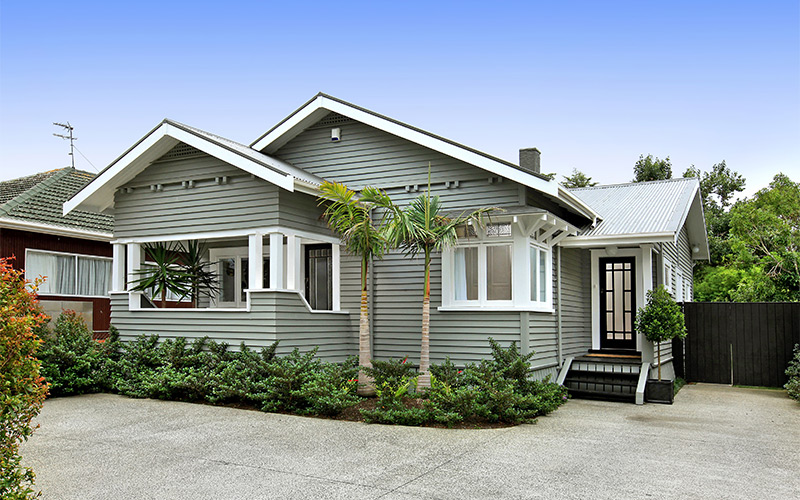
Could someone earning nearly NZ$300,000 a year still buy their first home with government support and a deposit of just 5%?
It may not sound like a conventional housing assistance policy, but it could become one of the broadest changes to eligibility in New Zealand's first-home buyer market in recent years.
The National Party recently announced that, if it wins the election, it will substantially expand the First Home Loan scheme by raising the income cap to a uniform NZ$300,000. The same income threshold would apply to individuals, married couples, partners and friends buying together.
For many young people on decent incomes who still cannot save enough for a deposit, this could offer a shortcut onto the property ladder. But when buyers contribute only 5% of the purchase price themselves and borrow the remaining 95%, greater debt, additional insurance costs and the risk of negative equity come with it.
From 150,000 to 300,000: who would qualify?
The First Home Loan scheme, administered by Kāinga Ora, currently allows eligible first-home buyers to purchase with a minimum deposit of 5%. Loans are issued by participating banks and other lenders, with government backing.
Under the current scheme, a single applicant without dependants must have earned no more than NZ$95,000 before tax over the previous 12 months. Joint applicants, or single applicants with dependants, must have a combined income of no more than NZ$150,000.
These thresholds have not changed since 2022. National argues that rising wages, rents and living costs have left the existing rules excluding many first-home buyers who can afford repayments but lack a sufficient deposit.
If implemented, the new policy would raise the income cap to a uniform NZ$300,000. This means a junior doctor earning NZ$100,000 a year, an electrician and teacher earning NZ$85,000 and NZ$78,000 respectively, or two police officers each earning NZ$77,000, could regain eligibility.
National's housing spokesperson Chris Bishop said first-home buyers have an average annual pre-tax income of around NZ$146,000, meaning roughly half already exceed the current household income threshold of NZ$150,000.
For young families also paying for rent, food, transport and childcare, an annual income of NZ$150,000 may sound substantial, but saving a deposit equal to 20% of a home's price could still take many years.
The policy helps households with ‘decent incomes but insufficient assets’
Raising the income cap to NZ$300,000 also changes the policy's purpose.
Infometrics managing director Gareth Kiernan estimates that around 46% of households earn more than NZ$150,000 a year, but more than nine in ten may still earn less than NZ$300,000. This means the new threshold could allow the vast majority of first-home buyer households to meet the basic income requirement.
The new policy specifically targets buyers with high incomes but few assets: people with stable jobs who could, in theory, repay a mortgage, but have been unable to save a sufficient deposit because they are relatively new to the workforce, pay high rents or cannot access parental support.
Two households on similar incomes could enter the housing market years apart if one receives well over a hundred thousand NZ dollars from parents while the other relies entirely on its own savings. A 5% deposit scheme could narrow this family wealth gap to some extent.
However, meeting the scheme's income criteria does not guarantee bank approval. Lenders will still assess income stability, everyday spending, credit history and other debts, and test whether applicants could keep making repayments at higher interest rates.
The new policy therefore primarily addresses an inability to save a deposit, rather than an inability to afford a mortgage.
Paying 120,000 less upfront means borrowing 120,000 more
For a home priced at NZ$800,000, a conventional 20% deposit would require NZ$160,000. With a deposit of just 5%, the buyer would need only NZ$40,000 — a difference of NZ$120,000.
For a household able to save NZ$30,000 a year, this could mean entering the housing market around four years earlier.
But the NZ$120,000 no longer needed upfront does not disappear; it becomes additional borrowing. A 20% deposit requires a loan of NZ$640,000, while a 5% deposit requires NZ$760,000. Buyers must repay not only the additional 120,000 in principal, but also long-term interest on that borrowing.
First Home Loan borrowers must also currently pay a loan insurance premium equivalent to 1.2% of the loan amount. On a NZ$760,000 loan, this is around NZ$9120; on a NZ$500,000 loan, it is around NZ$6000.
This cost was previously shared by the government and borrowers, but following changes in Budget 2025, borrowers must pay the full amount. A 5% deposit therefore does not mean buying a home cheaply. It reduces the wait to buy, rather than the total cost of housing, turning the pressure to save before purchasing into debt pressure lasting many years afterwards.
Which buyers stand to benefit most?
Experts believe the new policy is most likely to help two groups: buyers in expensive housing markets who earn decent incomes but cannot save deposits fast enough to keep up with prices, and households paying high rents that already have some capacity to service a mortgage.
Cotality chief property economist Kelvin Davidson believes buyers in expensive markets such as Auckland, Queenstown and Tauranga could benefit most. Even after house price corrections, a 20% deposit on an ordinary home in these areas could still run well into the hundreds of thousands of NZ dollars, or exceed two hundred thousand.
However, being able to afford rent does not necessarily mean being able to afford home ownership. Alongside weekly mortgage repayments, owners must pay council rates, insurance and maintenance costs, and manage changes in interest rates. Buyers need to assess long-term cash flow, rather than simply compare mortgage repayments with rent.
Could it push house prices up again?
Expanding a low-deposit loan scheme inevitably raises concerns about whether it could drive house prices higher again.
Most experts believe the policy alone is unlikely to trigger a substantial price rise in the short term. Davidson estimates that around 50% to 60% of first-home buyers already enter the market through other channels with deposits below 20%. The policy would therefore expand government support within an existing low-deposit market, rather than open the floodgates from scratch.
There is also currently a wide choice of listed properties and new homes, banks will continue to assess repayment capacity strictly, and loan insurance premiums will deter some demand.
National expects expanded eligibility could double the scheme's size, adding around NZ$4,000,000 to NZ$6,000,000 in annual fiscal costs. The scheme and its predecessor have helped more than 33,000 households buy homes; between 1 July 2025 and 30 April 2026, more than 7700 applications were approved.
However, approved applications, loans actually issued and completed home purchases are different statistical measures and cannot be directly compared.
If mortgage interest rates fall, housing stock tightens and the scheme's coverage expands substantially, the additional purchasing power could still increase competition for entry-level homes, particularly in markets such as Auckland. Without a matching increase in housing supply, some of the effect of any policy stimulating demand could translate into higher sale prices.
How much negative equity risk comes with a 5% deposit?
A low deposit lets buyers enter the market sooner, but also leaves them with a very thin buffer against falling house prices.
For a home worth NZ$800,000, a 5% deposit is just NZ$40,000. If the price falls by 5%, its paper value drops by NZ$40,000, theoretically enough to wipe out the buyer's entire initial deposit. Once selling costs such as agent commissions and legal fees are considered, the effective buffer is even smaller.
New Zealand experienced a significant house price correction between 2021 and 2023. Simplicity chief economist Shamubeel Eaqub noted that inflation-adjusted house prices had fallen nearly 30% from their peak, showing that prices do not only rise.
However, negative equity does not mean an owner immediately loses their home. Provided borrowers can keep making repayments and do not need to sell at the bottom of the market, falling prices are primarily a paper loss. The truly dangerous combination is high debt, interrupted income, interest rate pressure and a forced sale occurring together.
Kiernan is also concerned that government-backed First Home Loans are not fully subject to ordinary loan-to-value ratio restrictions. Raising the income cap to NZ$300,000 could therefore weaken, to some extent, the Reserve Bank of New Zealand's efforts to limit high loan-to-value lending.
Davidson, meanwhile, believes that after a substantial price correction, the current risk of negative equity is less pronounced than at the market peak. That does not mean the risk has disappeared; it could re-emerge in a future property cycle.
From 66% back to 74%: a 5% deposit alone is not enough
National's long-term goal is to raise New Zealand's home ownership rate from around 66% to 74%, close to its historical high.
Expanding First Home Loan could help some young people own a home sooner, but cannot achieve that goal alone. House prices that are high relative to incomes, rents and living costs squeezing savings, insufficient housing supply, rising construction costs, and unstable incomes and employment all affect home ownership rates.
The policy also has a clear electoral context. The coalition government abolished the First Home Grant in 2024. The grant previously offered eligible first-home buyers cash support of up to NZ$5000 for an existing home and up to NZ$10,000 for a new build.
National argues that cash grants were too broadly targeted, while low-deposit loans address the deposit barrier more directly. Labour leader Chris Hipkins said widening loan eligibility was good policy in itself, but criticised National for cutting first-home buyer support two years ago and only renewing its focus on this group as the election approached.
It must be stressed that this proposal remains a National Party election pledge and has not been formally implemented. The final rules and timing still depend on the election result and subsequent policy documents.
For many young people, the barrier to home ownership may indeed be an inability to save the initial deposit, rather than an inability to meet monthly repayments. Expanding First Home Loan could help them cross that threshold, but cannot remove the risks arising from changes in house prices, interest rates and incomes.
It could put the keys to a new home in some first-home buyers' hands several years earlier, but those keys come with a larger, longer-term loan.
Whether the new policy becomes a stepping stone towards higher home ownership or leads more households towards heavy debt cannot be judged solely by the enticing figure of a ‘5% deposit’. It also depends on whether buyers truly have the capacity to service debt over the long term, and whether New Zealand can continue providing enough affordable homes while expanding demand.