
Is the worst of the economic hardship over? New Zealand Prime Minister: There is no better country in the world than New Zealand
On 8 September 2026, New Zealand Prime Minister Christopher Luxon attended an event at the Employers and Manufacturers Association (EMA) in Auckland, outlining his view of New Zealand: a country emerging from economic hardship while facing a more unstable world.
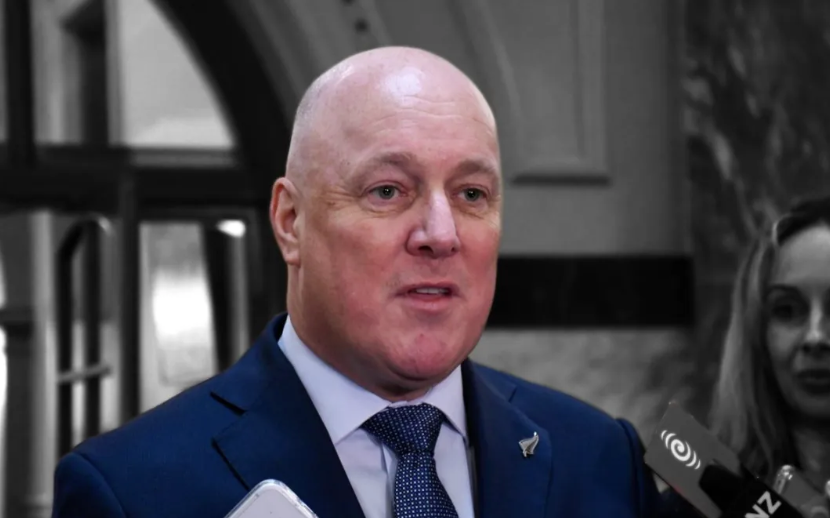
On 8 September 2026, New Zealand Prime Minister Christopher Luxon attended an event at the Employers and Manufacturers Association (EMA) in Auckland, outlining his view of New Zealand: a country emerging from economic hardship while facing a more unstable world. His message emphasised fiscal discipline and structural reform, while also expressing firm confidence in New Zealanders and the country's potential.
His central argument remained consistent: New Zealand has been through a difficult period, and the external environment has become more dangerous. But he believes the country still has exceptionally favourable conditions for development, provided government, businesses and communities focus on long-term prosperity, resilience and delivery.
A world moving from ‘rules’ to ‘power’
At the event, Luxon began by discussing the international environment. In his view, the global situation is becoming more volatile, uncertain and chaotic. Trade conflicts, wars in the Middle East and Ukraine, supply chain disruptions and increasingly assertive major powers are all shaping today's international environment.
He believes the world is moving from an order maintained by rules to an order determined by power. For a small country such as New Zealand, that shift has major implications. He noted that the rules-based international system established after the Second World War gave smaller countries an opportunity to engage with major powers on relatively equal terms. If power increasingly replaces commonly accepted rules, larger countries will have greater scope to dominate smaller ones.
Luxon acknowledged that New Zealand cannot control every geopolitical change. What it can do is work with like-minded countries to promote a rules-based international system suited to a new era, while strengthening its own national foundations.
He also drew a direct link between national security and economic performance. The war in Ukraine has already affected global food prices, while instability around the Strait of Hormuz affects fuel supplies and costs.
“Without peace and security, we will not have prosperity; the reverse is also true,” he said.
Luxon therefore said New Zealand needs to identify which infrastructure and production capabilities are strategically important. Citing government support for Golden Bay Cement, he explained why New Zealand needs to retain critical domestic production capacity. At the same time, businesses themselves must invest and improve productivity. He stressed that national resilience cannot serve as a justification for propping up poorly managed businesses or those unable to operate sustainably.
Why Luxon remains optimistic
Despite global instability, Luxon does not share the pessimistic outlook. New Zealand is in the Indo-Pacific, where he expects a substantial share of future global economic growth and an expanding middle class to be concentrated. As incomes across the region rise, demand will grow for higher-quality food, education, tourism, technology and professional services — areas in which New Zealand is competitive.
He said New Zealand's exports had increased by NZ$12,000,000,000 over the past two years, and noted that the country recorded its first trade surplus in five years in April this year. He also described New Zealand as a relatively safe destination for international capital, supported by sound institutions, abundant natural resources and capable people.
In Luxon's view, “trade is really the local economy”, because export growth ultimately supports jobs, wages and spending in communities. He described securing a free trade agreement with India as a major goal for the government's first term and said it would continue pursuing more trade agreements.
He identified five areas for improving national prosperity:
First: establish a world-class education system;
Second: build a stronger science system to add more value to products and services;
Third: develop modern, reliable infrastructure;
Fourth: reduce regulatory red tape;
Fifth: substantially expand trade and investment.
He presented these measures as structural reforms New Zealand must carry out, rather than short-term election policies. For decades, neither political camp has truly resolved these enduring problems while in government.
The economy: recovery, growth and rebuilding confidence
Luxon's assessment of the domestic economy was cautiously optimistic. He acknowledged that New Zealand households and businesses had faced inflation, high interest rates, recession and rising unemployment in succession, making for a severe series of shocks. However, he believes New Zealand is now entering an economic upswing as some comparable economies begin to weaken.
Citing forecasts, he said New Zealand's economy was expected to grow by an average of around 2.7% over the next four years, with 220,000 additional jobs and wage growth outpacing inflation. His broader goal is not simply to restore economic activity after a recession, but to make New Zealand wealthier and more productive, enabling it to sustain better public services while giving individuals more choices.
Luxon also linked economic confidence to New Zealand's ability to retain and attract people aged 25 to 40. He said the country needs to offer this generation a sufficiently attractive “value proposition”, including affordable housing, good education, reliable healthcare, safe communities, job opportunities and the prospect of building wealth over time. Housing reform is part of that. Luxon believes high house prices are primarily a supply problem caused by restrictive planning rules. Citing Christchurch after the earthquakes, he argued that making more land and housing available, alongside infrastructure, science and technology development, could improve housing affordability while creating higher-value jobs.
Energy, infrastructure and the ability to deliver
Luxon described energy as one of the biggest constraints on New Zealand's economic growth. His goal is to secure an abundant, reasonably priced electricity supply by rapidly expanding renewable generation, while retaining enough dependable generation capacity and fuel reserves to cope with “dry years” when conditions for hydro generation are poor.
He said more renewable generation capacity had been added over the past two years than in the preceding eight years combined. In the latest quarter, renewables accounted for 96.4% of New Zealand's electricity supply. However, because wind, solar and hydro generation fluctuate, the country still needs reliable backup energy. He described coal stockpiles at Huntly, strategic diesel reserves and a potential liquefied natural gas (LNG) import facility as important safeguards against energy shortages and surging electricity prices.
Infrastructure development raises another related issue: New Zealand often cancels, changes or delays major projects when governments change. Luxon supports greater cross-party agreement on infrastructure, with the Infrastructure Commission playing a larger role in identifying national infrastructure priorities, while the government decides on funding and financing arrangements.
He believes some important decisions need institutional arrangements that provide greater insulation from day-to-day party politics.
“There is no better country in the world than New Zealand”
Luxon ended the conversation on a deeply personal and highly optimistic note.
He acknowledged that New Zealanders have endured repeated shocks in recent years: the pandemic, extreme weather, inflation, recession, international tariffs and wars. Yet his conversations with other national leaders have reinforced his belief that New Zealand remains a very special place with considerable advantages in facing these challenges.
“There is no better country in the world than New Zealand,” he told the audience. He said progress requires a growth mindset and the involvement of business, political and community leaders, rather than placing all hope in any single person or institution. His final appeal captured the tone of the entire conversation: “Never give up on New Zealand, and never give up on New Zealanders.”
After more than two years as Prime Minister, he said he was more optimistic than ever about the country's future direction.
That optimism, of course, does not mean the work is finished. Luxon acknowledged that New Zealand still faces household cost-of-living pressures, fiscal constraints, high energy prices, infrastructure delays, insufficient savings and a difficult international environment. His view is that the country now clearly recognises many of its underlying problems and has the people, institutions and opportunities needed to address them.
The real challenge ahead, as he repeatedly emphasised throughout the conversation, comes down to one word: delivery.